



Preliminary associations between brain derived neurotrophic factor, memory impairment, functional cognition, and depressive symptoms following severe TBI
Supporting Files

-
Aug 13 2015
-
Available in CDC Stacks on 2017-06-01T00:00:00Z
Details
-
Alternative Title:Neurorehabil Neural Repair
-
Personal Author:
-
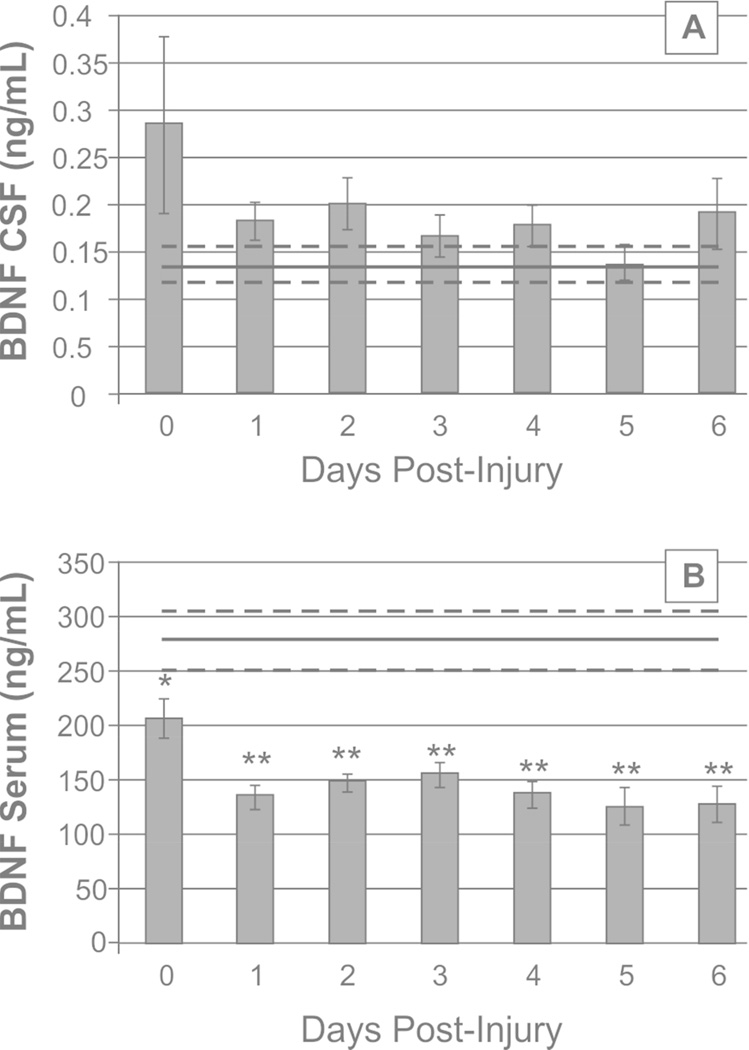
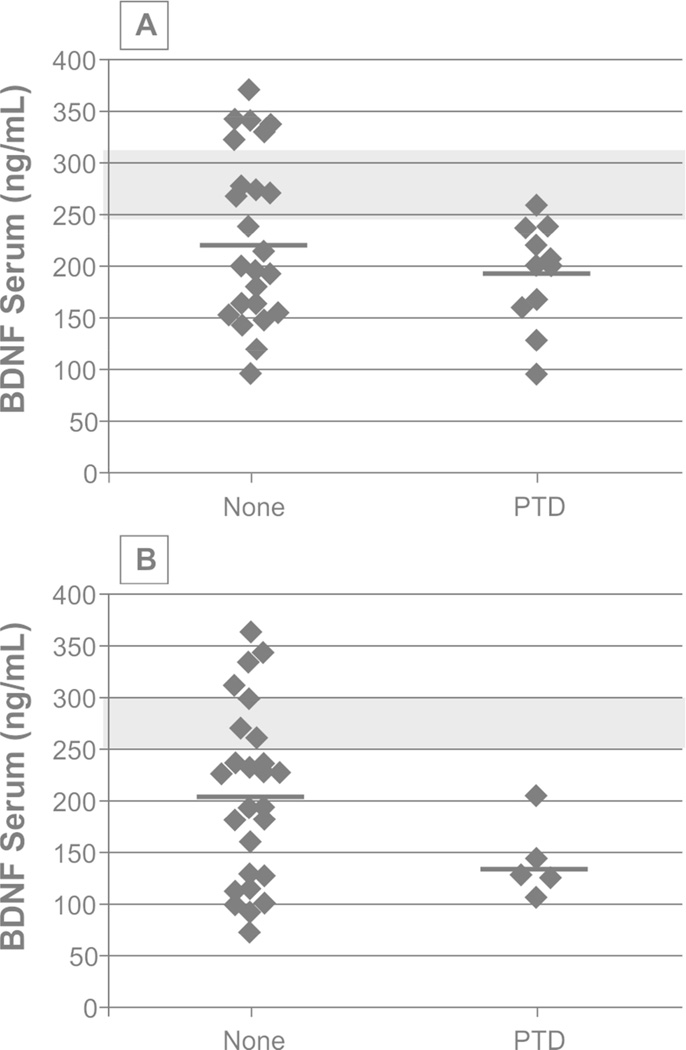
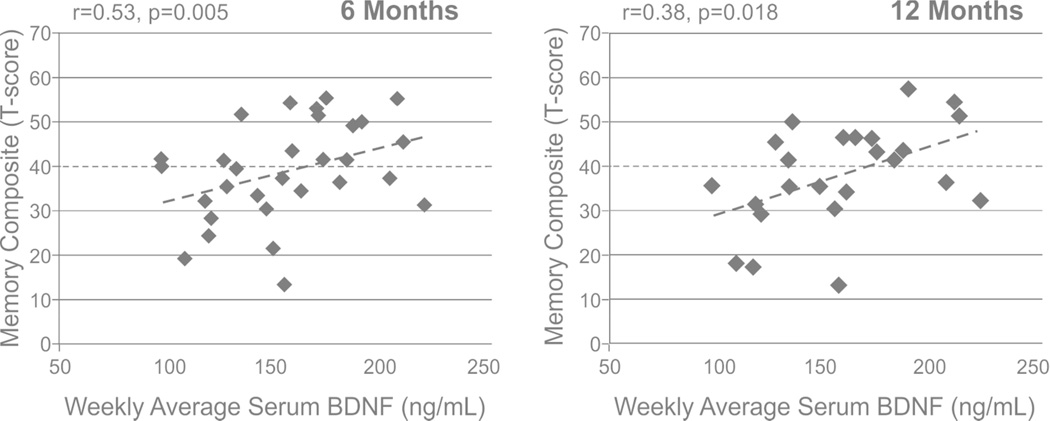
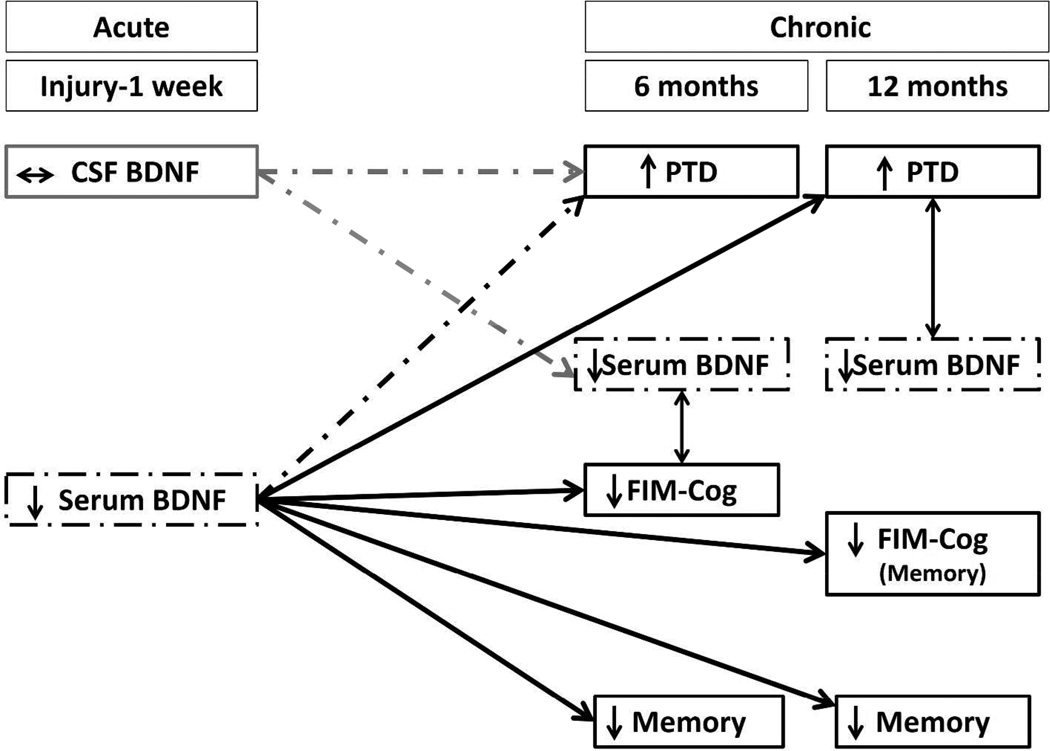
Description:Background ; Traumatic brain injury (TBI) often leads to mood and cognitive complications, impacting functional recovery. Understanding neurobiological alterations common in post-TBI depression (PTD) and cognition may identify novel biomarkers for TBI complications. Brain-derived neurotrophic factor (BDNF) is a likely target based on evidence of reduced BDNF signaling in experimental TBI and depression models and its role in learning and memory. ; Objective ; Evaluate BDNF as a biomarker for PTD, cognitive impairment, and functional cognition in a prospective cohort with severe TBI. ; Methods ; Participants with TBI (n=113) were evaluated for PTD (Patient Health Questionnaire-9), cognitive impairment (cognitive composite score) and functional cognition (Functional Independence Measure–Cognition, FIM-Cog). BDNF levels were measured in cerebrospinal fluid (CSF) and serum 0–6 days post-injury and in serum at 6 and 12 months post-injury. ; Results ; Serum BDNF was reduced after TBI versus controls at all time-points. Acute serum BDNF positively correlated with Memory composites (6 months: r=0.43, p=0.019, n=30; 12 months: r=0.53, p=0.005, n=26) and FIM-Memory scores (6 months: r=0.35, p=0.019, n=45; 12 months: r=0.38, p=0.018, n=38). Acute serum BDNF negatively correlated with 12 month PHQ-9 scores (r=−0.38, p=0.044, n=29). At 12 months, chronic serum BDNF tended to be lower in participants with PTD (p=0.07) and correlated with PHQ-9 scores (r=−0.41, p=0.019, n=32). ; Conclusions ; Acute BDNF associations with memory recovery may implicate hippocampal damage/degeneration. Comparatively, BDNF associations with PTD status were not as strong as associations with PTD severity. Further investigation may delineate longitudinal BDNF patterns, and BDNF responsive treatments, reflecting mood and cognitive recovery following TBI.
-
Subjects:
-
Source:Neurorehabil Neural Repair. 30(5):419-430.
-
Pubmed ID:26276123
-
Pubmed Central ID:PMC4752939
-
Document Type:
-
Funding:
-
Volume:30
-
Issue:5
-
Download URL:
-
File Type:
 [PDF - 1.13 MB]
 -
Collection(s):
-
Main Document Checksum:urn:sha-512:9ef277bc32bfe36a71a5319fd504f16f6863e2c9c89e0d4f0fc113df229962c8eeb9b172ae6d0979fa2ab35f4dcf62e7dab383bf24b6b9a72ccaa9d39f69f907
Supporting Files


 Was this page helpful?
 Found an issue?

CDC STACKS serves as an archival repository of CDC-published products including
scientific findings, journal articles, guidelines, recommendations, or other public health information authored or
co-authored by CDC or funded partners.
As a repository, CDC STACKS retains documents in their original published format to ensure public access to scientific information.
As a repository, CDC STACKS retains documents in their original published format to ensure public access to scientific information.
You May Also Like
COLLECTION
CDC Public Access