


Human cathelicidin, LL-37, inhibits respiratory syncytial virus infection in polarized airway epithelial cells
Supporting Files
Public Domain

-
Jan 05 2016
-
Details
-
Alternative Title:BMC Res Notes
-
Personal Author:
-
Description:Background
Respiratory syncytial virus (RSV) is a major cause of severe lower respiratory tract illness in young children worldwide. Treatment options for severe RSV disease remain limited and the development of therapeutic treatment strategies remains a priority. LL-37, a small cationic host defense peptide involved in anti-inflammatory and anti-bacterial responses, reduces replication of or infection by multiple viruses, including influenza virus, in vitro, and protects against lethal challenge with influenza virus in vivo. LL-37 also protects against RSV infection of HEp-2 cells in vitro; however, HEp-2 are not reflective of polarized airway epithelial cells and respond differently to RSV infection. An air–liquid interface (ALI) Calu-3 model that more closely mimics the human airway epithelium was established. Using this in vitro model, the effectiveness of LL-37 in preventing RSV infection and replication was examined.
Results
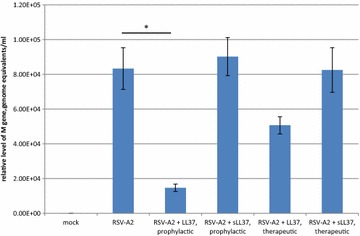
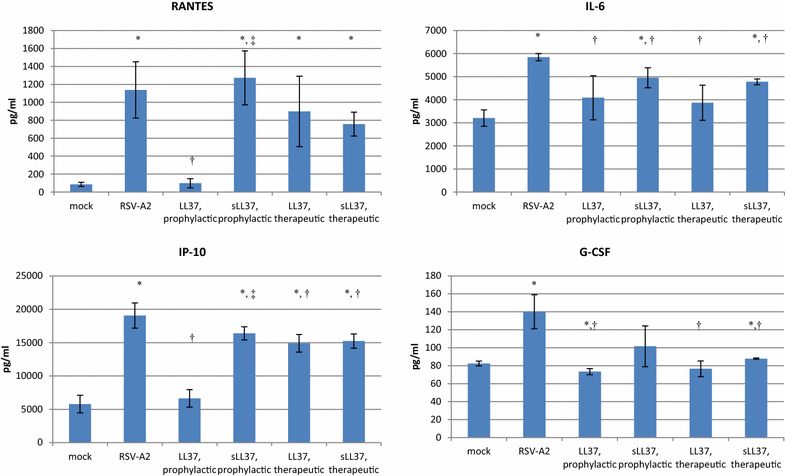
LL-37, when pre-incubated with virus prior to RSV infection (prophylactic), significantly reduced the level of viral genome detected in infected Calu-3 cells, and decreased chemokine expression associated with RSV infection in vitro. In contrast, therapeutic treatment of RSV-infected ALI Calu-3 at 24 h and 3 days post-infection had minimal impact on RSV infection.
Conclusions
Differences in the efficacy of LL-37 at reducing RSV infection under prophylactic and therapeutic conditions may in part be ascribed to differences in the method of peptide exposure. However, the efficacy of LL-37 at reducing RSV infection under prophylactic conditions indicates that further studies examining the efficacy of LL-37 as a small peptide inhibitor of RSV are warranted.
-
Subjects:
-
Source:BMC Res Notes. 9.
-
Pubmed ID:26732674
-
Pubmed Central ID:PMC4700635
-
Document Type:
-
Volume:9
-
Collection(s):
-
Main Document Checksum:urn:sha256:7c2589ffe9a3535e5b6e1c66a811e2d20660e733ad29a922b688ffc5b0e48d53
-
Download URL:
-
File Type:
 [PDF
- 849.12 KB
]
[PDF
- 849.12 KB
]
Supporting Files


ON THIS PAGE


CDC STACKS serves as an archival repository of CDC-published products including
scientific findings,
journal articles, guidelines, recommendations, or other public health information authored or
co-authored by CDC or funded partners.
As a repository, CDC STACKS retains documents in their original published format to ensure public access to scientific information.
As a repository, CDC STACKS retains documents in their original published format to ensure public access to scientific information.
You May Also Like
COLLECTION
CDC Public Access