


Pharmacokinetics of mefloquine and its effect on sulfamethoxazole and trimethoprim steady-state blood levels in intermittent preventive treatment (IPTp) of pregnant HIV-infected women in Kenya
Supporting Files
Public Domain

-
Jan 05 2016
-
File Language:
English
Details
-
Alternative Title:Malar J
-
Personal Author:
-
Description:Background
Intermittent preventive treatment in pregnancy with sulfadoxine/pyrimethamine is contra-indicated in HIV-positive pregnant women receiving sulfamethoxazole/trimethoprim prophylaxis. Since mefloquine is being considered as a replacement for sulfadoxine/pyrimethamine in this vulnerable population, an investigation on the pharmacokinetic interactions of mefloquine, sulfamethoxazole and trimethoprim in pregnant, HIV-infected women was performed.
Methods
A double-blinded, placebo-controlled study was conducted with 124 HIV-infected, pregnant women on a standard regimen of sulfamethoxazole/trimethoprim prophylaxis. Seventy-two subjects received three doses of mefloquine (15 mg/kg) at monthly intervals. Dried blood spots were collected from both placebo and mefloquine arms four to 672 h post-administration and on day 7 following a second monthly dose of mefloquine. A novel high-performance liquid chromatographic method was developed to simultaneously measure mefloquine, sulfamethoxazole and trimethoprim from each blood spot. Non-compartmental methods using a naïve-pooled data approach were used to determine mefloquine pharmacokinetic parameters.
Results
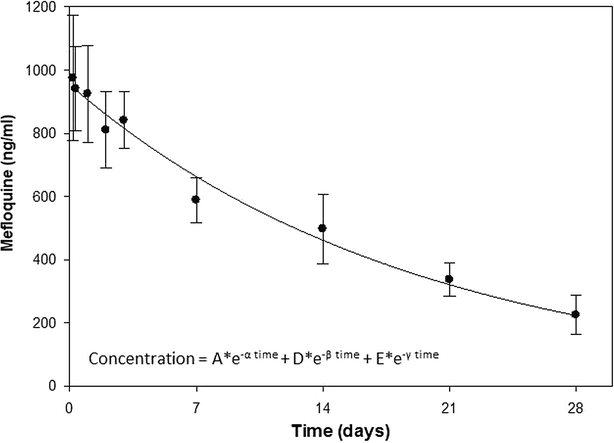
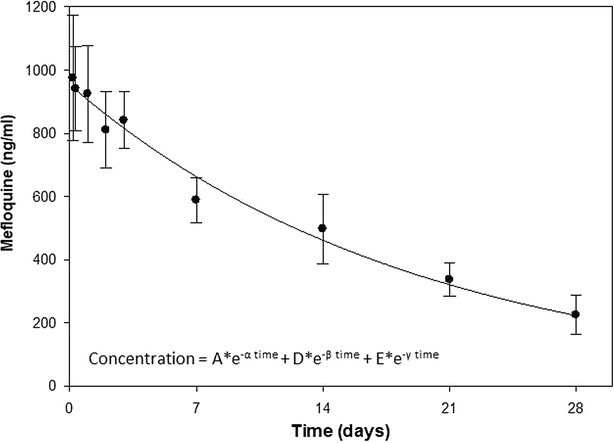
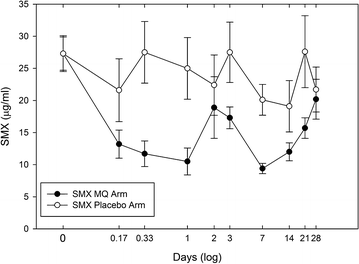
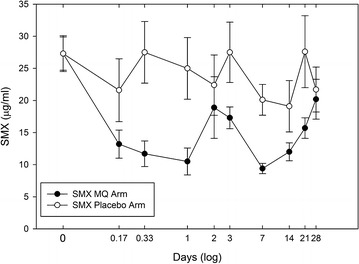
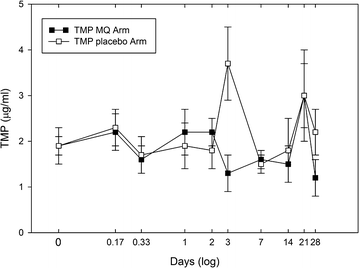
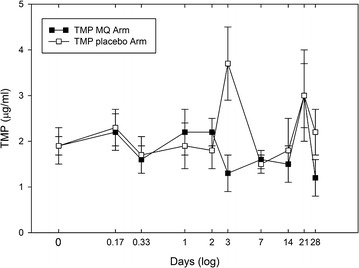
Sulfamethoxazole/trimethoprim prophylaxis did not noticeably influence mefloquine pharmacokinetics relative to reported values. The mefloquine half-life, observed clearance (CL/f), and area-under-the-curve (AUC0→∞) were 12.0 days, 0.035 l/h/kg and 431 µg-h/ml, respectively. Although trimethoprim steady-state levels were not significantly different between arms, sulfamethoxazole levels showed a significant 53 % decrease after mefloquine administration relative to the placebo group and returning to pre-dose levels at 28 days.
Conclusions
Although a transient decrease in sulfamethoxazole levels was observed, there was no change in hospital admissions due to secondary bacterial infections, implying that mefloquine may have provided antimicrobial protection.
-
Subjects:
-
Source:Malar J. 15.
-
Pubmed ID:26732683
-
Pubmed Central ID:PMC4700759
-
Document Type:
-
Place as Subject:
-
Volume:15
-
Collection(s):
-
Main Document Checksum:urn:sha256:b0c4badd83e2cb0a653800c8be6e76afd6374e4eda3e04bd7ed7cc5e3279ac49
-
Download URL:
-
File Type:
 [PDF
- 1.04 MB
]
[PDF
- 1.04 MB
]
Supporting Files


File Language:
English
ON THIS PAGE

CDC STACKS serves as an archival repository of CDC-published products including
scientific findings,
journal articles, guidelines, recommendations, or other public health information authored or
co-authored by CDC or funded partners.
As a repository, CDC STACKS retains documents in their original published format to ensure public access to scientific information.
As a repository, CDC STACKS retains documents in their original published format to ensure public access to scientific information.
You May Also Like
COLLECTION
CDC Public Access