


Exposures and symptoms among workers after an offsite train derailment and vinyl chloride release
Supporting Files

-
2015
-
Details
-
Alternative Title:Am J Disaster Med
-
Personal Author:
-
Description:Objective
In 2012 in New Jersey, a train derailment resulted in the puncture of a tanker car carrying liquid vinyl chloride under pressure, and a resulting airborne vinyl chloride plume drifted onto the grounds of a nearby refinery. This report details the investigation of exposures and symptoms among refinery workers.
Design and setting
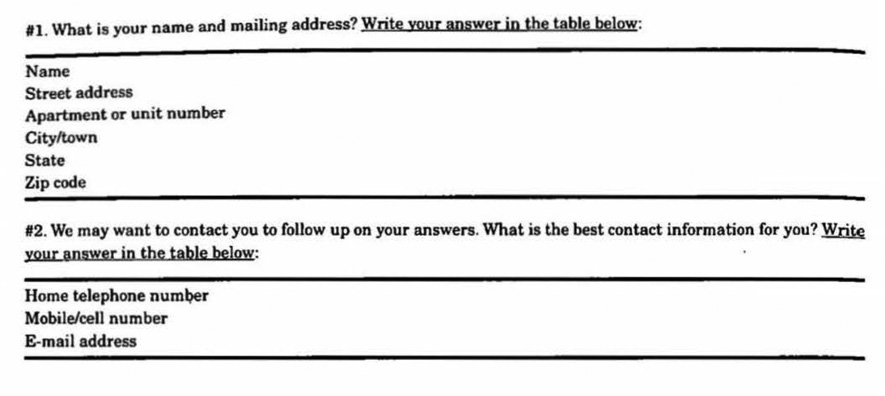
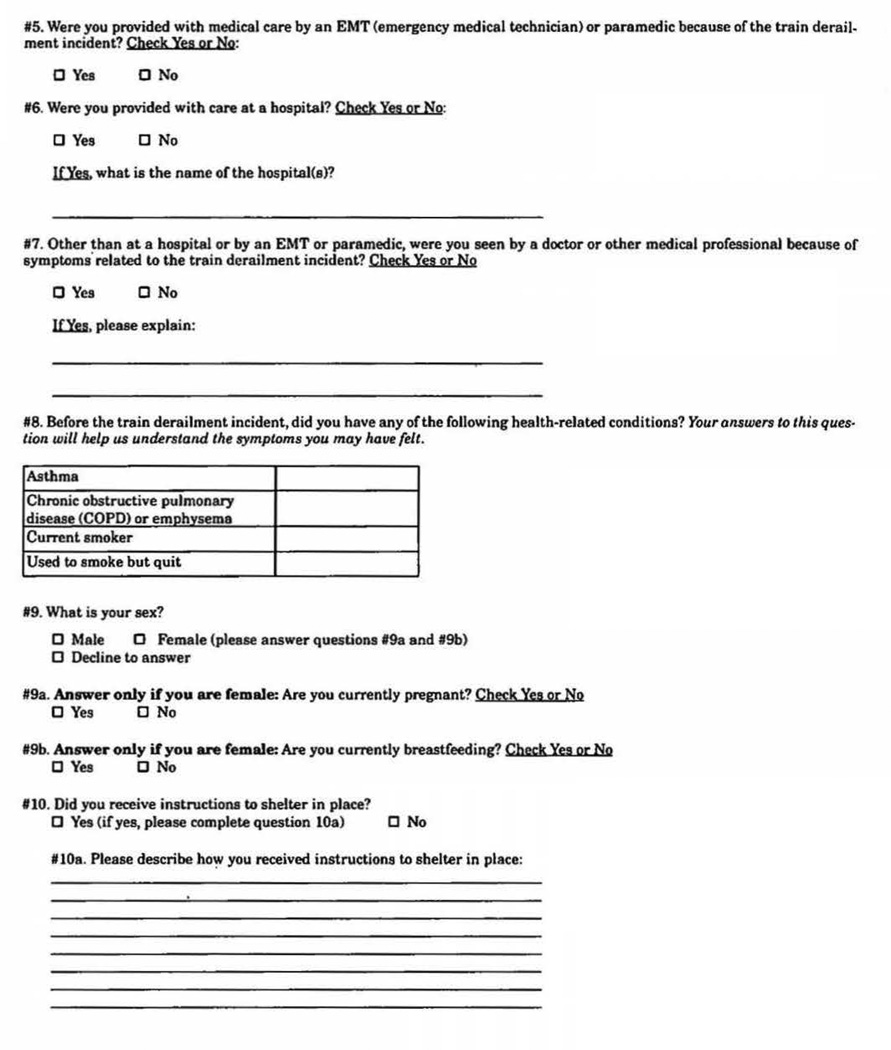
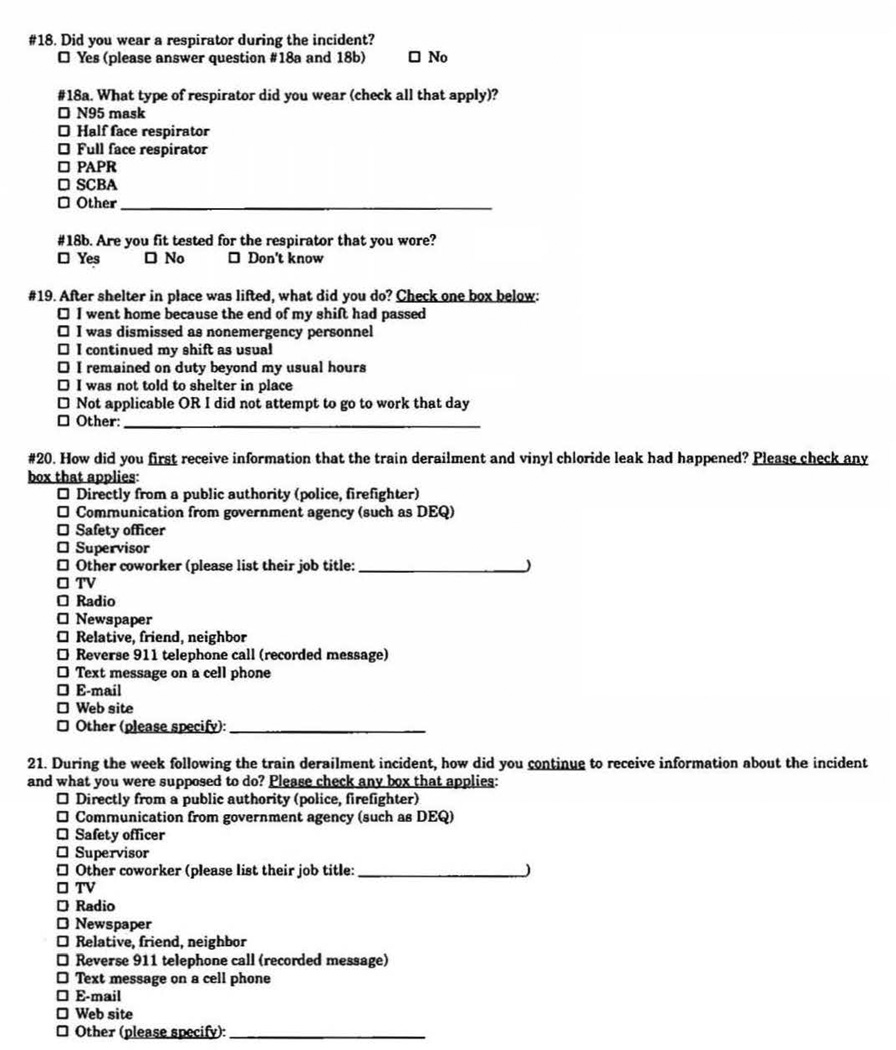
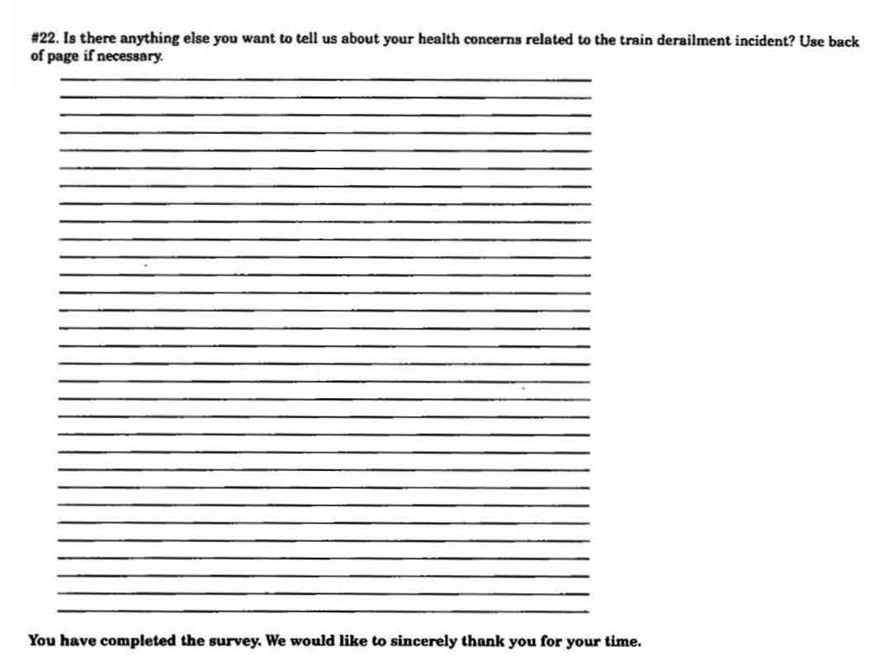
The investigation team met with refinery workers to discuss their experience after the derailment and provided workers a self-administered survey to document symptoms and worker responses during the incident. Associations among categorical variables and experiencing symptoms were evaluated using Fisher’s exact test.
Participants
Twenty-six of 155 (17 percent) workers present at the refinery or driving on the access road the date the spill occurred completed the survey.
Main outcome measure(s)
Any self-reported symptom following exposure from the vinyl chloride release.
Results
Fifteen workers (58 percent) reported ≥1 symptom, most commonly headache (12, 46 percent). Three (12 percent) reported using respiratory protection. No differences in reporting symptoms were observed by location during the incident or by the building in which workers sheltered. Workers who moved from one shelter to another during the incident (ie, broke shelter) were more likely to report symptoms (Fisher’s exact test, p = 0.03); however, there are only limited data regarding vinyl chloride concentrations in shelters versus outside.
Conclusions
Breaking shelter might result in greater exposures and managers and health and safety officers of vulnerable facilities with limited physical access should consider developing robust shelter-in-place plans and alternate emergency egress plans. Workers should consider using respiratory protection if exiting a shelter is necessary during a chemical incident.
-
Subjects:
-
Source:Am J Disaster Med. 10(2):153-165.
-
Pubmed ID:26312496
-
Pubmed Central ID:PMC4705857
-
Document Type:
-
Funding:
-
Volume:10
-
Issue:2
-
Collection(s):
-
Main Document Checksum:urn:sha256:5c9f5d504e894ff5d9aa5d29f2df9ba19aa3c2cff1f13367cc64d210d9d720c7
-
Download URL:
-
File Type:
 [PDF
- 5.42 MB
]
[PDF
- 5.42 MB
]
Supporting Files


ON THIS PAGE




CDC STACKS serves as an archival repository of CDC-published products including
scientific findings,
journal articles, guidelines, recommendations, or other public health information authored or
co-authored by CDC or funded partners.
As a repository, CDC STACKS retains documents in their original published format to ensure public access to scientific information.
As a repository, CDC STACKS retains documents in their original published format to ensure public access to scientific information.
You May Also Like
COLLECTION
CDC Public Access