


Eco-geographical differentiation among Colombian populations of the Chagas disease vector Triatoma dimidiata (Hemiptera: Reduviidae)
Supporting Files

-
Sep 11 2013
-
Details
-
Alternative Title:Infect Genet Evol
-
Personal Author:
-
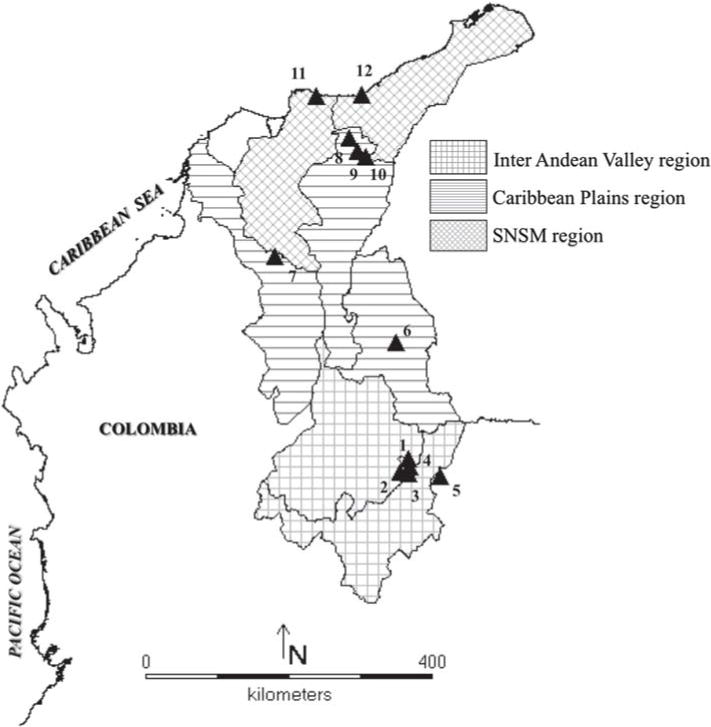
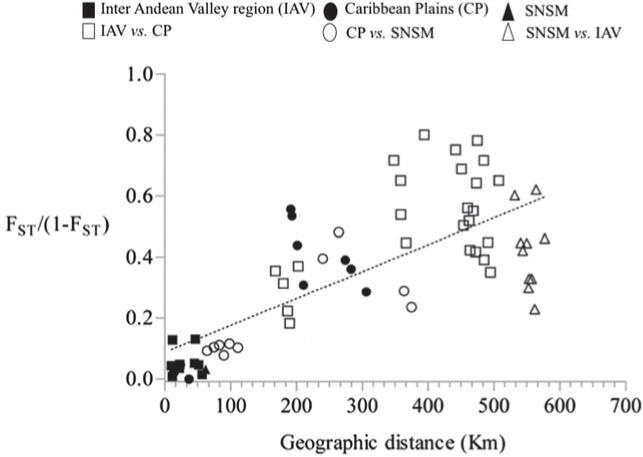
Description:Triatoma dimidiata is currently the main vector of Chagas disease in Mexico, most Central American countries and several zones of Ecuador and Colombia. Although this species has been the subject of several recent phylogeographic studies, the relationship among different populations within the species remains unclear. To elucidate the population genetic structure of T. dimidiata in Colombia, we analyzed individuals from distinct geographical locations using the cytochrome c oxidase subunit 1 gene and 7 microsatellite loci. A clear genetic differentiation was observed among specimens from three Colombian eco-geographical regions: Inter Andean Valleys, Caribbean Plains and Sierra Nevada de Santa Marta mountain (SNSM). Additionally, evidence of genetic subdivision was found within the Caribbean Plains region as well as moderate gene flow between the populations from the Caribbean Plains and SNSM regions. The genetic differentiation found among Colombian populations correlates, albeit weakly, with an isolation-by-distance model (IBD). The genetic heterogeneity among Colombian populations correlates with the eco-epidemiological and morphological traits observed in this species across regions within the country. Such genetic and epidemiological diversity should be taken into consideration for the development of vector control strategies and entomological surveillance.
-
Subjects:
-
Source:Infect Genet Evol. 20:352-361.
-
Pubmed ID:24035810
-
Pubmed Central ID:PMC4705547
-
Document Type:
-
Funding:
-
Volume:20
-
Collection(s):
-
Main Document Checksum:urn:sha256:569c8f08b5d20d9a4469df1e940e5dafd8d02d5844d51d687608e8604120dfc7
-
Download URL:
-
File Type:
 [PDF
- 452.01 KB
]
[PDF
- 452.01 KB
]
Supporting Files


ON THIS PAGE






CDC STACKS serves as an archival repository of CDC-published products including
scientific findings,
journal articles, guidelines, recommendations, or other public health information authored or
co-authored by CDC or funded partners.
As a repository, CDC STACKS retains documents in their original published format to ensure public access to scientific information.
As a repository, CDC STACKS retains documents in their original published format to ensure public access to scientific information.
You May Also Like
COLLECTION
CDC Public Access