


Epidemiological Investigation of a Youth Suicide Cluster: Delaware 2012
Supporting Files

-
1 2013
-
File Language:
English
Details
-
Alternative Title:Del Med J
-
Personal Author:
-
Description:Methods
Data were obtained from the Delaware Office of the Medical Examiner, law enforcement, emergency departments, and inpatient records. Key informants from youth-serving organizations in the community were interviewed to better understand local context and perceptions of youth suicide.
Results
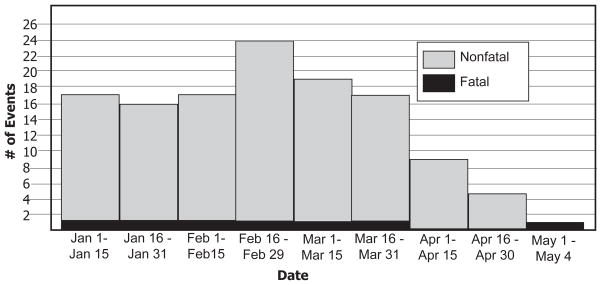
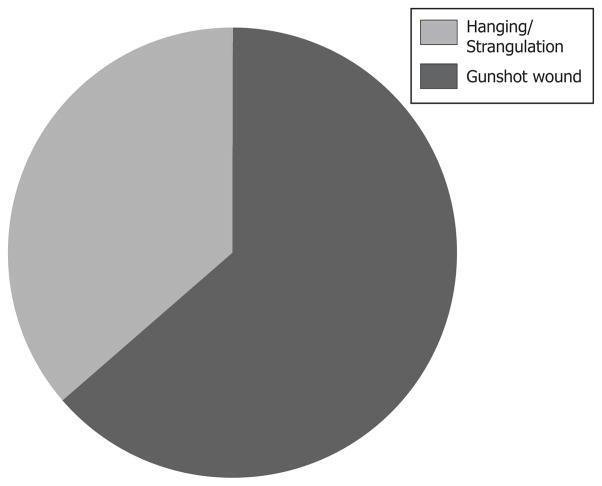
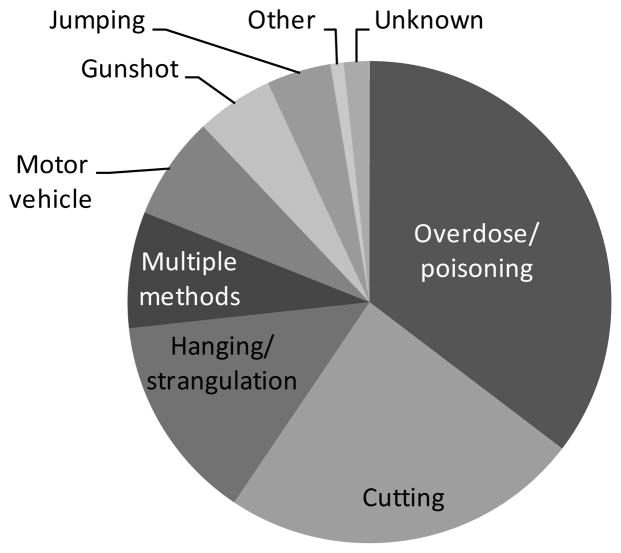
Eleven fatal and 116 nonfatal suicide attempts were identified for the first quarter of 2012 in Kent and Sussex counties. The median age was higher for the fatalities (18 years) than the nonfatal attempts (16 years). More males died by suicide, and more females nonfatally attempted suicide. Fatal methods were either hanging or firearm, while nonfatal methods were diverse, led by overdose/poisoning and cutting. All decedents had two or more precipitating circumstances. Seventeen of 116 nonfatal cases reported that a peer/friend recently died by or attempted suicide. Local barriers to youth services and suicide prevention were identified.
Discussion
Several features were similar to previous clusters: Occurrence among vulnerable youth, rural or suburban setting, and precipitating negative life events. Distribution by sex and method were consistent with national trends for both fatalities and nonfatalities. References to the decedents in the context of nonfatal attempts support the concept of ‘point clusters’ (social contiguity to other suicidal youth as a risk factor for vulnerable youth) as a framework for understanding clustering of youth suicidal behavior.
-
Subjects:
-
Source:Del Med J. 85(1):15-19
-
Pubmed ID:23513329
-
Pubmed Central ID:PMC4702518
-
Document Type:
-
Funding:
-
Place as Subject:
-
Volume:85
-
Issue:1
-
Collection(s):
-
Main Document Checksum:urn:sha256:91ca073a8f1211ddccc929c220a5de6cd4c0f893b0193db424fff25ba24f8289
-
Download URL:
-
File Type:
 [PDF
- 277.31 KB
]
[PDF
- 277.31 KB
]
Supporting Files


File Language:
English
ON THIS PAGE

CDC STACKS serves as an archival repository of CDC-published products including
scientific findings,
journal articles, guidelines, recommendations, or other public health information authored or
co-authored by CDC or funded partners.
As a repository, CDC STACKS retains documents in their original published format to ensure public access to scientific information.
As a repository, CDC STACKS retains documents in their original published format to ensure public access to scientific information.
You May Also Like
COLLECTION
CDC Public Access