


Firearm injuries in the United States
Supporting Files

-
Jun 24 2015
-
File Language:
English
Details
-
Alternative Title:Prev Med
-
Personal Author:
-
Description:Objective
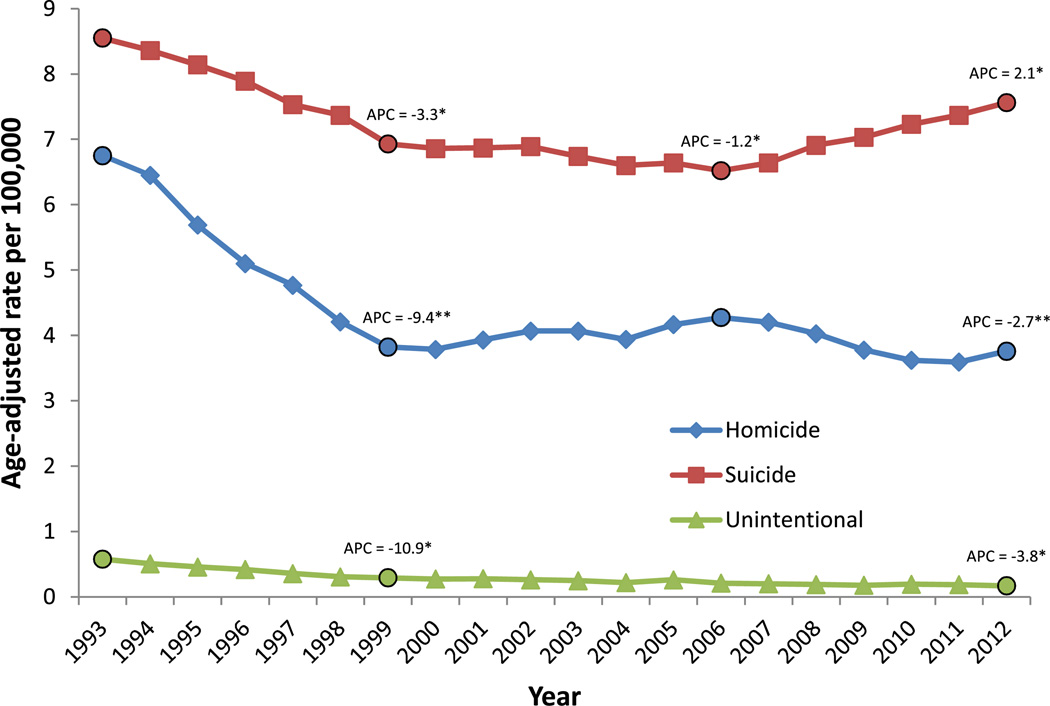
This paper examines the epidemiology of fatal and nonfatal firearm violence in the United States. Trends over two decades in homicide, assault, self-directed and unintentional firearm injuries are described along with current demographic characteristics of victimization and health impact.
Method
Fatal firearm injury data were obtained from the National Vital Statistics System (NVSS). Nonfatal firearm injury data were obtained from the National Electronic Injury Surveillance System (NEISS). Trends were tested using Joinpoint regression analyses. CDC Cost of Injury modules were used to estimate costs associated with firearm deaths and injuries.
Results
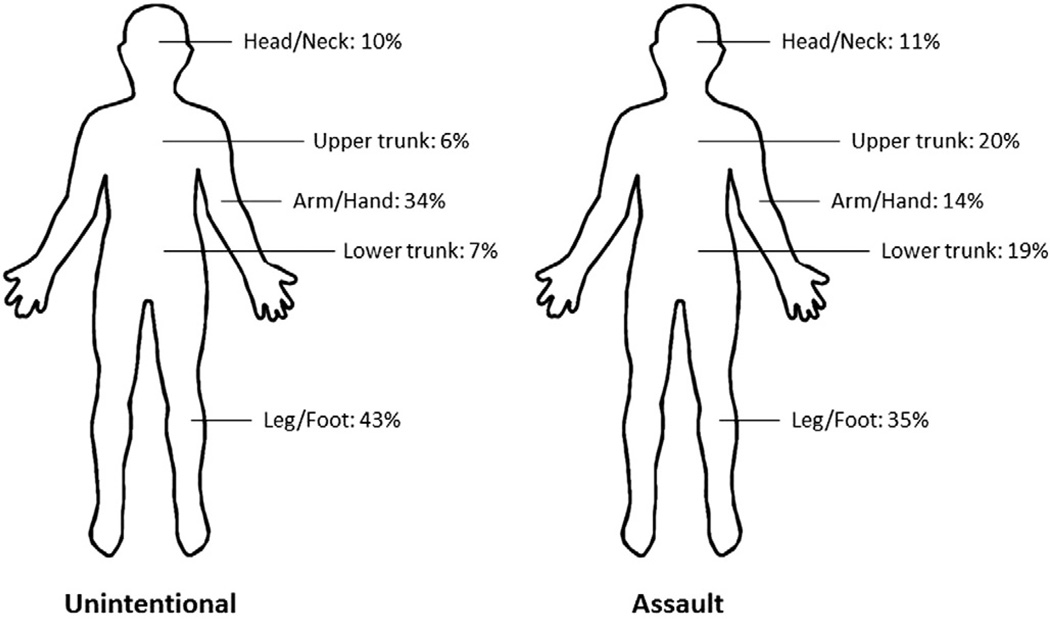
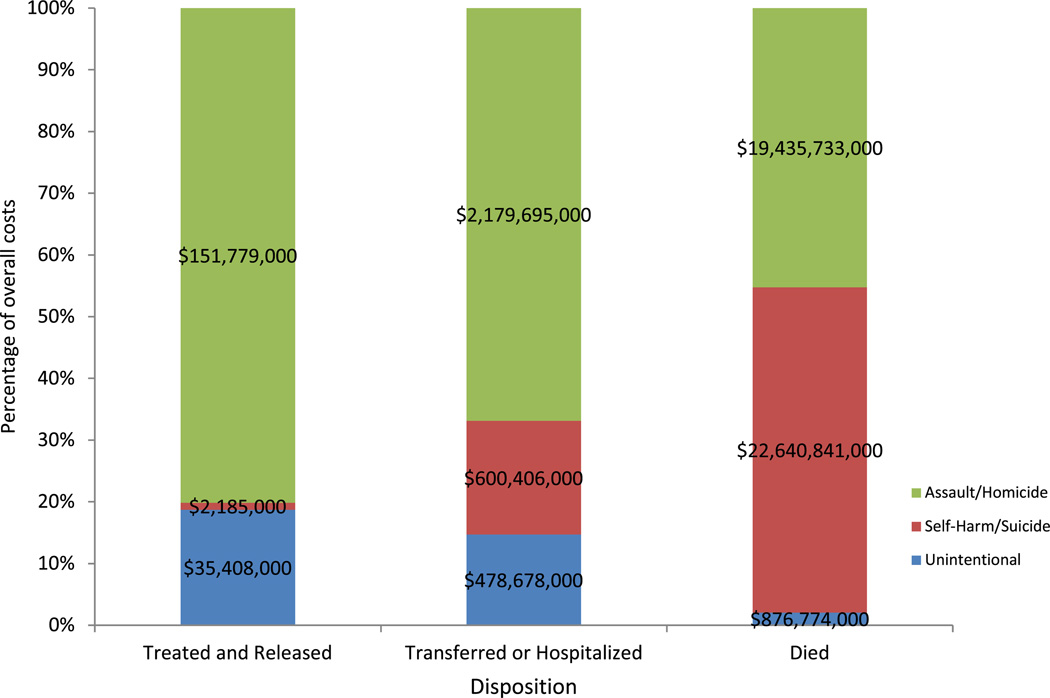
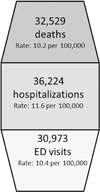
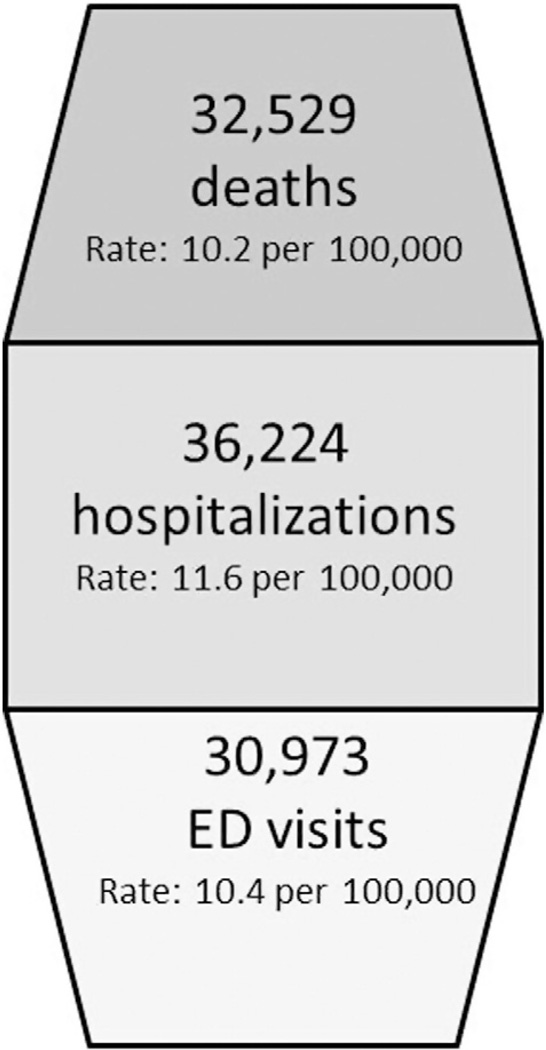
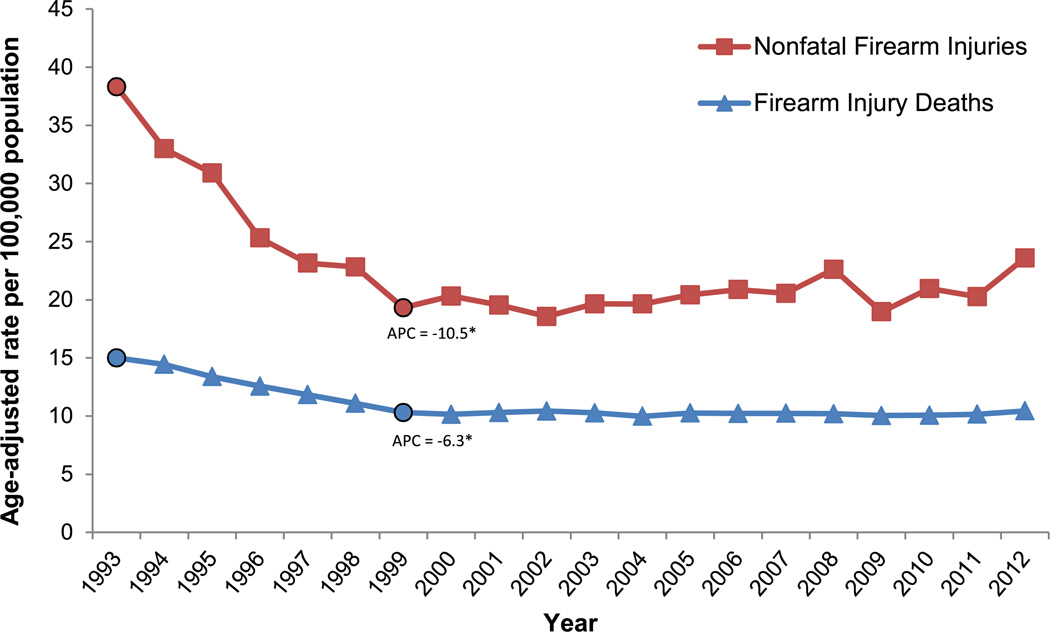
More than 32,000 persons die and over 67,000 persons are injured by firearms each year. Case fatality rates are highest for self-harm related firearm injuries, followed by assault-related injuries. Males, racial/ethnic minority populations, and young Americans (with the exception of firearm suicide) are disproportionately affected. The severity of such injuries is distributed relatively evenly across outcomes from outpatient treatment to hospitalization to death. Firearm injuries result in over $48 billion in medical and work loss costs annually, particularly fatal firearm injuries. From 1993 to 1999, rates of firearm violence declined significantly. Declines were seen in both fatal and nonfatal firearm violence and across all types of intent. While unintentional firearm deaths continued to decline from 2000 to 2012, firearm suicides increased and nonfatal firearm assaults increased to their highest level since 1995.
Conclusion
Firearm injuries are an important public health problem in the United States, contributing substantially each year to premature death, illness, and disability. Understanding the nature and impact of the problem is only a first step toward preventing firearm violence. A science-driven approach to understand risk and protective factors and identify effective solutions is key to achieving measurable reductions in firearm violence.
-
Subjects:
-
Source:Prev Med. 79:5-14.
-
Pubmed ID:26116133
-
Pubmed Central ID:PMC4700838
-
Document Type:
-
Funding:
-
Place as Subject:
-
Volume:79
-
Collection(s):
-
Main Document Checksum:urn:sha256:1f7f57cacb73dc01fd7f1bbbe7e603c8579efb2c0e9ba8c46892933ac6d9c25a
-
Download URL:
-
File Type:
 [PDF
- 1.53 MB
]
[PDF
- 1.53 MB
]
Supporting Files


File Language:
English
ON THIS PAGE



CDC STACKS serves as an archival repository of CDC-published products including
scientific findings,
journal articles, guidelines, recommendations, or other public health information authored or
co-authored by CDC or funded partners.
As a repository, CDC STACKS retains documents in their original published format to ensure public access to scientific information.
As a repository, CDC STACKS retains documents in their original published format to ensure public access to scientific information.
You May Also Like
COLLECTION
CDC Public Access