



NAP1 Strain Type Predicts Outcomes from Clostridium difficile Infection
Supporting Files

-
5 2014 ; 5-2014
-
Available in CDC Stacks on 2016-01-01T00:00:00Z
File Language:
English
Details
-
Alternative Title:Clin Infect Dis
-
Personal Author:See, Isaac ; Mu, Yi ; Cohen, Jessica ; Beldavs, Zintars G. ; Winston, Lisa G. ; Dumyati, Ghinwa ; Holzbauer, Stacy ; Dunn, John ; Farley, Monica M. ; Lyons, Carol ; Johnston, Helen ; Phipps, Erin ; Perlmutter, Rebecca ; Anderson, Lydia ; Gerding, Dale N. ; Lessa, Fernanda C.
-
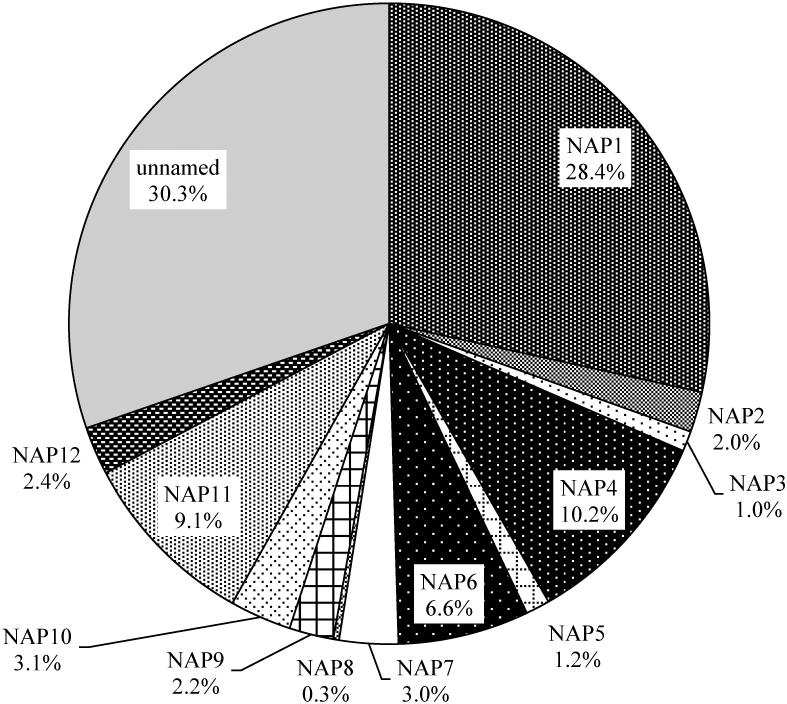
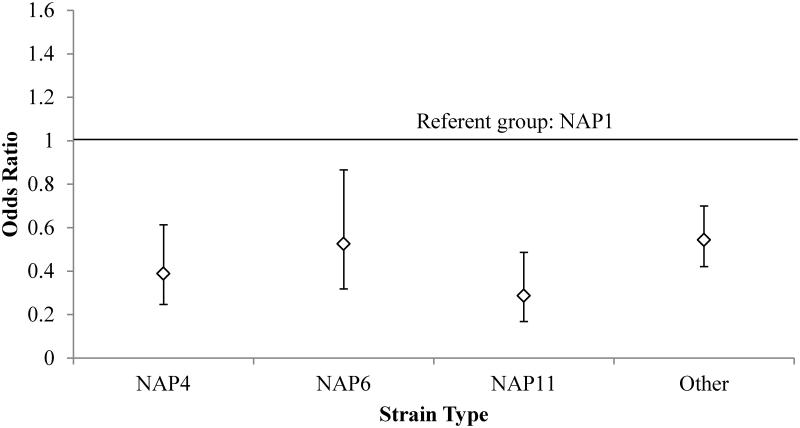
Description:Background ; Studies conflict regarding the importance of the fluoroquinolone-resistant North American pulsed-field gel electrophoresis type 1 (NAP1) strain in Clostridium difficile infection (CDI) outcome. We describe strain types causing CDI and evaluate their association with patient outcomes. ; Methods ; CDI cases were identified from population-based surveillance. Multivariate regression models were used to evaluate the associations of strain type with severe disease (ileus, toxic megacolon, or pseudomembranous colitis within 5 days; or white blood cell count ≥15,000/mm3 within one day of positive test), severe outcome (intensive care unit admission after positive test, colectomy for C. difficile infection, or death within 30 days of positive test), and death within 14 days of positive test. ; Results ; Strain typing results were available for 2,057 cases. Severe disease occurred in 363 (17.7%) cases, severe outcome in 100 (4.9%), and death within 14 days in 56 (2.7%). The most common strain types were NAP1 (28.4%), NAP4 (10.2%) and NAP11 (9.1%). In unadjusted analysis, NAP1 was associated with greater odds of severe disease than other strains. After controlling for patient risk factors, healthcare exposure, and antibiotic use, NAP1 was associated with severe disease (adjusted odds ratio aOR 1.74, 95% confidence interval CI, 1.36–2.22), severe outcome (aOR 1.66, 95% CI, 1.09–2.54), and death within 14 days (aOR 2.12, 95% CI, 1.22–3.68). ; Conclusion ; NAP1 was the most prevalent strain and a predictor of severe disease, severe outcome, and death. Strategies to reduce NAP1 prevalence, such as antibiotic stewardship to reduce fluoroquinolone use, might reduce CDI morbidity.
-
Subjects:
- Aged
- Anti-Bacterial Agents
- Bacterial Typing Techniques
- Clostridioides difficile
- Clostridium Infections
- Drug Resistance, Bacterial
- Electrophoresis, Gel, Pulsed-Field
- Enterocolitis, Pseudomembranous
- Female
- Fluoroquinolones
- Hospitalization
- Humans
- Megacolon, Toxic
- Middle Aged
- Population Surveillance
- Prevalence
- Risk Factors
- Treatment Outcome
-
Keywords:
-
Source:Clin Infect Dis. 58(10):1394-1400
-
Pubmed ID:24604900
-
Pubmed Central ID:PMC4697926
-
Document Type:
-
Funding:U50CK000198/CK/NCEZID CDC HHSUnited States/ ; U50CK000195/CK/NCEZID CDC HHSUnited States/ ; CC999999/Intramural CDC HHSUnited States/ ; U50CK000204/CK/NCEZID CDC HHSUnited States/ ; U50CK000205/CK/NCEZID CDC HHSUnited States/ ; U50CK000196/CK/NCEZID CDC HHSUnited States/ ; U50CK000201/CK/NCEZID CDC HHSUnited States/ ; U50CK000197/CK/NCEZID CDC HHSUnited States/ ; U50CK000203/CK/NCEZID CDC HHSUnited States/ ; U50CK000194/CK/NCEZID CDC HHSUnited States/ ; U50CK000199/CK/NCEZID CDC HHSUnited States/
-
Volume:58
-
Issue:10
-
Download URL:
-
File Type:
 [PDF - 681.25 KB]
 -
Collection(s):
-
Main Document Checksum:urn:sha256:055d433bb5ed7f7c6ecb0f7ec83dbf460633b33c31723d82eac0887bb389a953
Supporting Files


File Language:
English
 Was this page helpful?
 Found an issue?


CDC STACKS serves as an archival repository of CDC-published products including
scientific findings, journal articles, guidelines, recommendations, or other public health information authored or
co-authored by CDC or funded partners.
As a repository, CDC STACKS retains documents in their original published format to ensure public access to scientific information.
As a repository, CDC STACKS retains documents in their original published format to ensure public access to scientific information.
You May Also Like
COLLECTION
CDC Public Access