



Evaluation of Laser-Induced Breakdown Spectroscopy (LIBS) for Measurement of Silica on Filter Samples of Coal Dust
Supporting Files

-
Nov 2012
-
Available in CDC Stacks on 2015-12-23T00:00:00Z
File Language:
English
Details
-
Alternative Title:Appl Spectrosc
-
Personal Author:
-
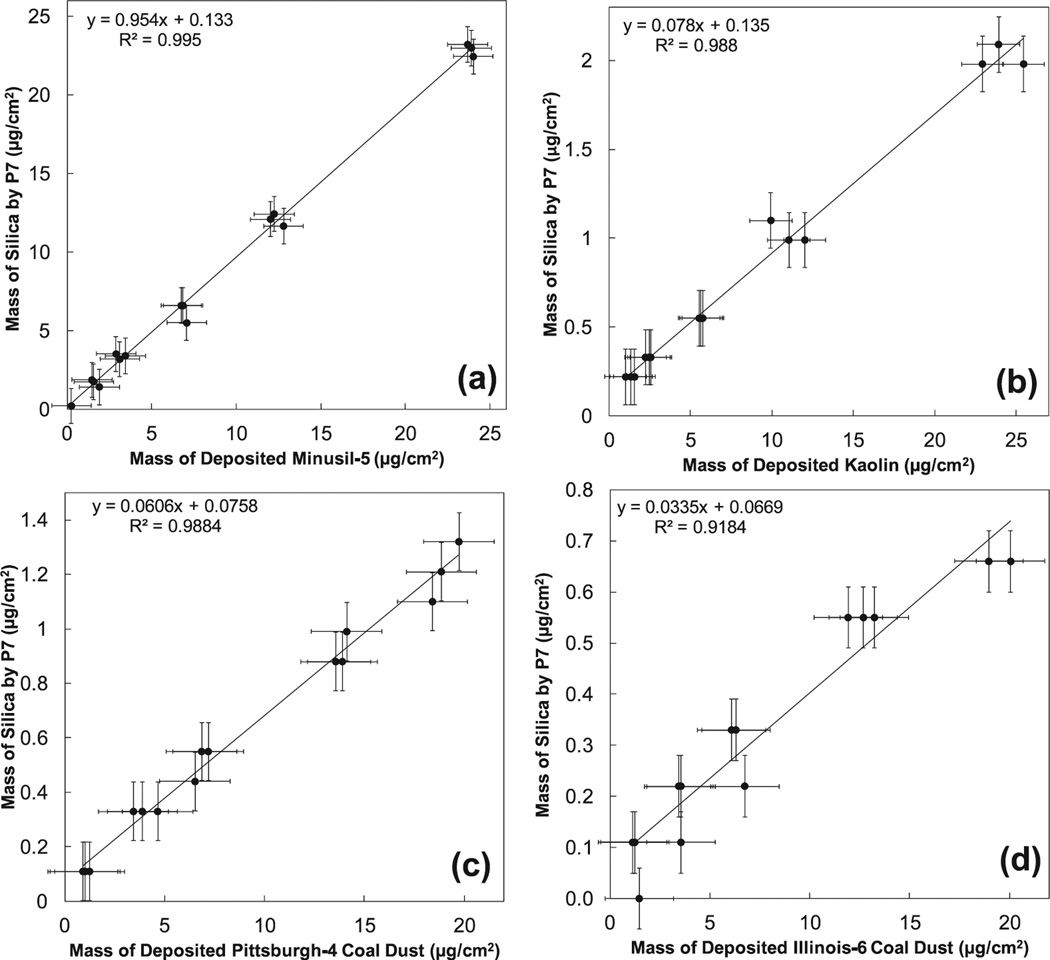
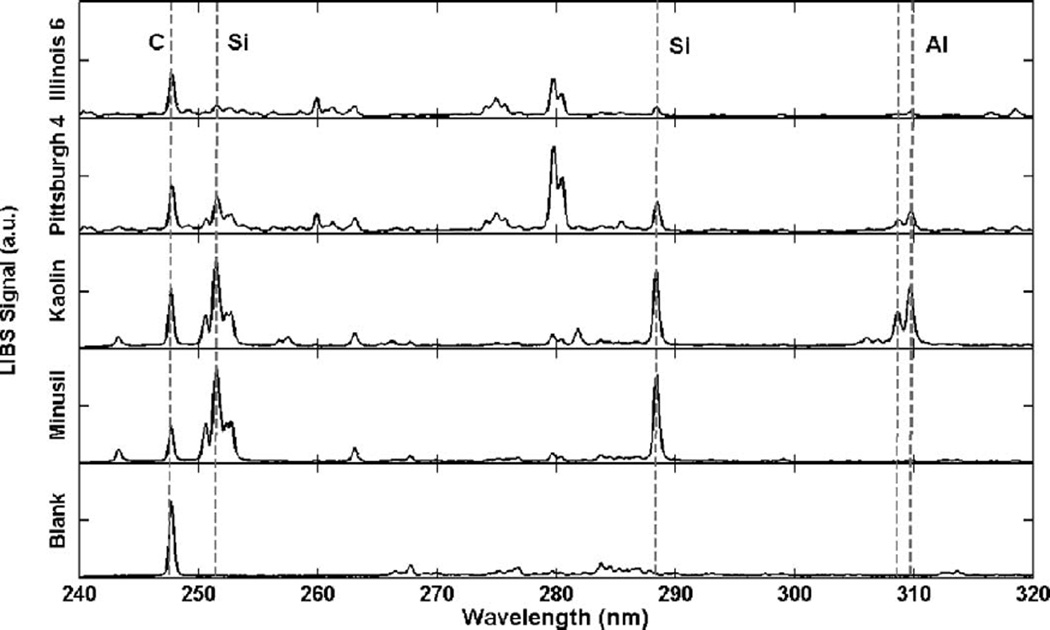
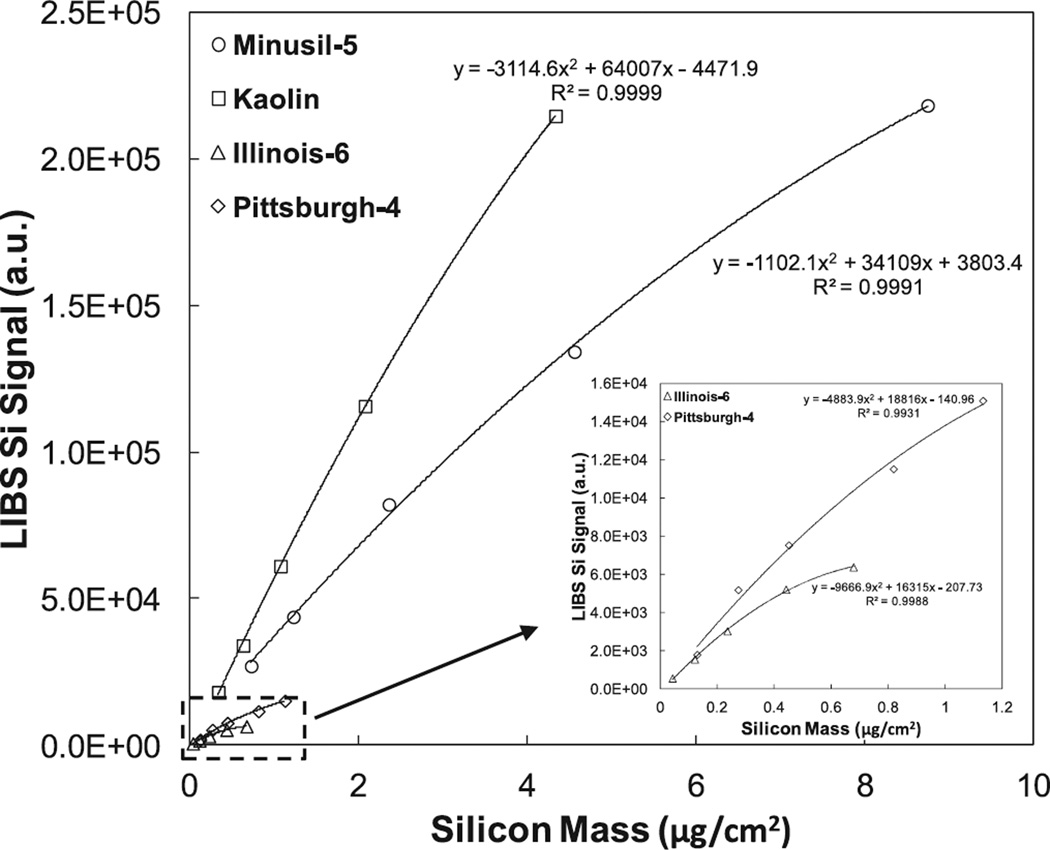
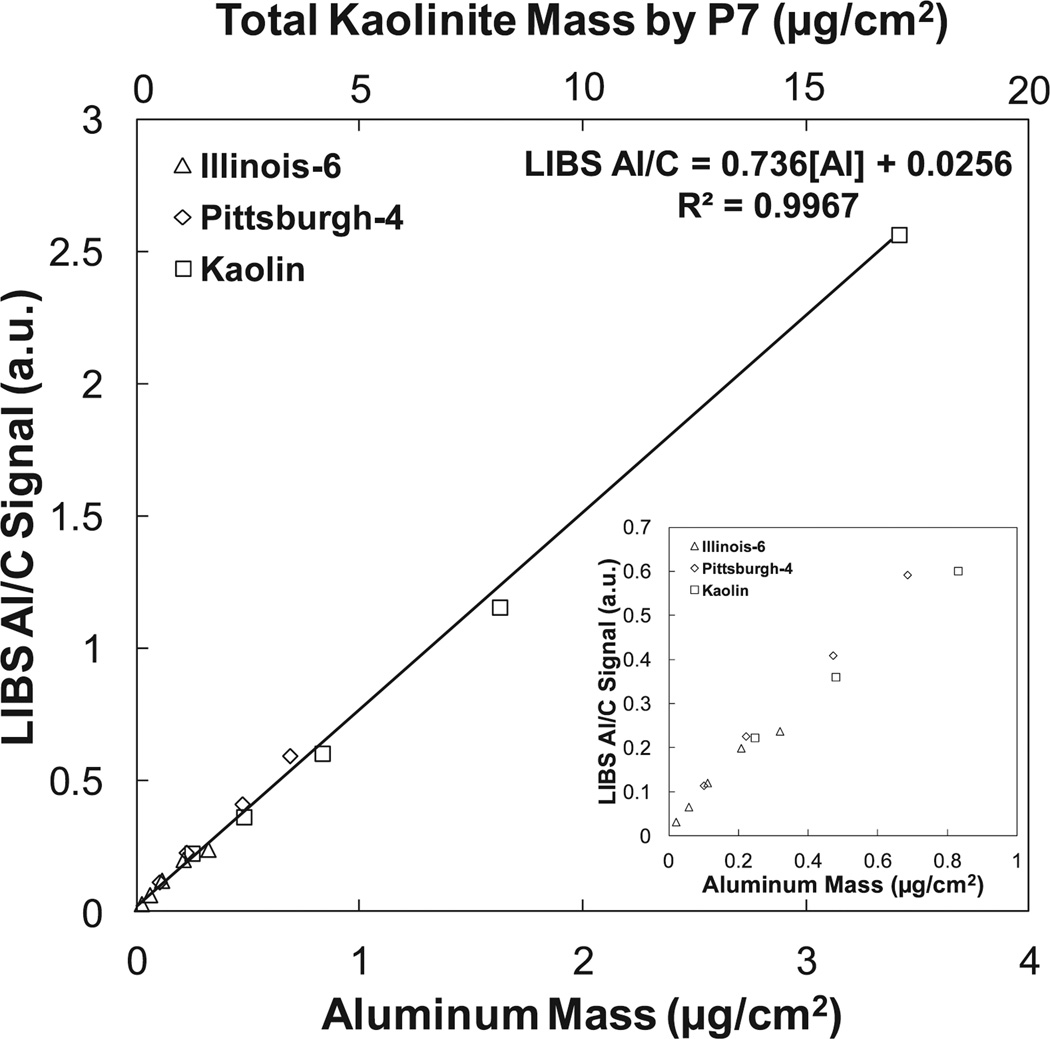
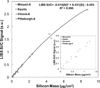
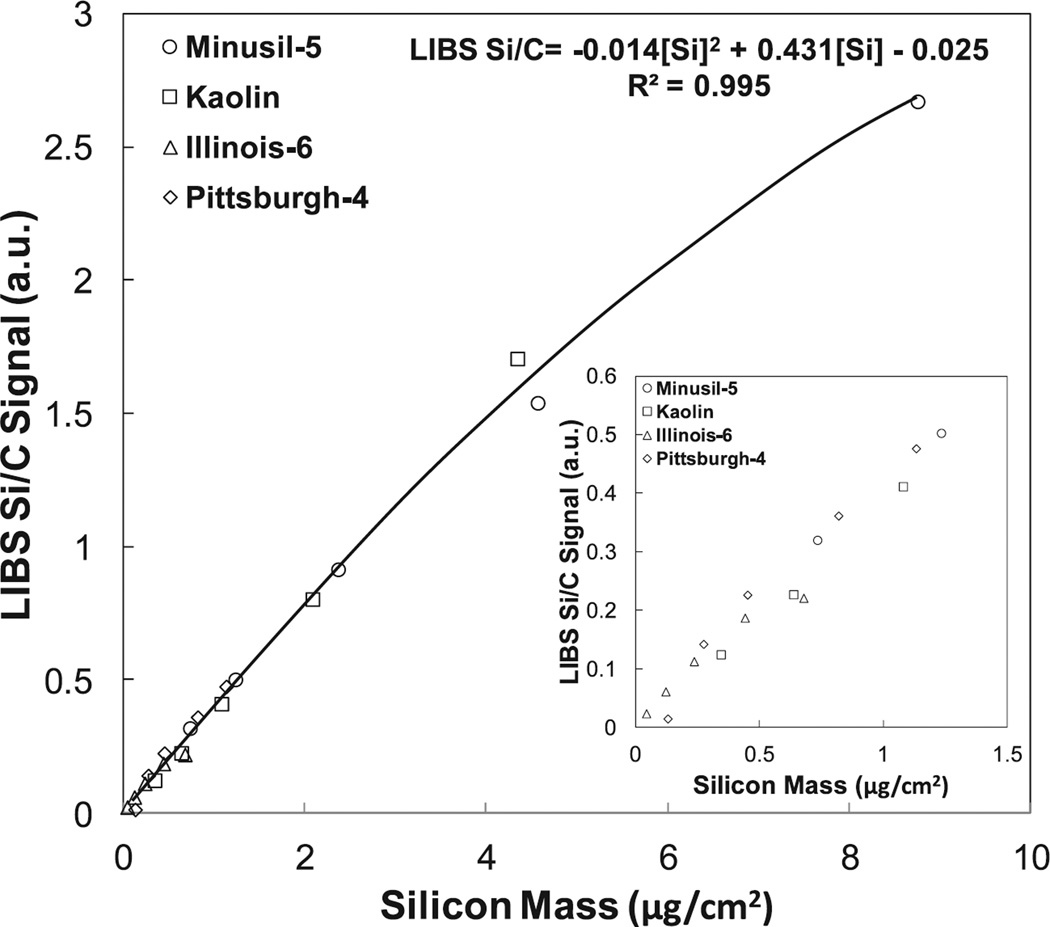
Description:Airborne silica dust (quartz) is common in coal mines and represents a respiratory hazard that can lead to silicosis, a potentially fatal lung disease. With an eye toward developing a portable monitoring device for rapid analysis of silica dust, laser-induced breakdown spectroscopy (LIBS) was used to quantify quartz in coal dust samples collected on filter media. Pure silica (Min-U-Sil™ 5), Georgia kaolin, and Pittsburgh-4 and Illinois-6 coal dusts were deposited separately and at multiple mass loadings onto 37-mm polyvinylchloride (PVC) filters. LIBS-generated silicon emission was monitored at 288.16 nm, and non-silica contributions to that signal from kaolinite were removed by simultaneously detecting aluminum. Measurements of the four samples were used to calculate limits of detection (LOD) for silicon and aluminum of approximately 0.08 μg/cm(2) and 0.05 μg/cm(2), respectively (corresponding to 0.16 μg/cm(2) and 0.20 μg/cm(2) for silica and kaolinite, respectively). Relative errors of prediction are around 10%. Results demonstrate that LIBS can dependably quantify silica on filter samples of coal dust and confirm that accurate quantification can be achieved for very lightly loaded samples, which supports the potential application of LIBS for rapid, in-field monitoring.
-
Subjects:
-
Source:Appl Spectrosc. 66(11):1286-1293.
-
Pubmed ID:23146184
-
Pubmed Central ID:PMC4689623
-
Document Type:
-
Funding:
-
Volume:66
-
Issue:11
-
Download URL:
-
File Type:
 [PDF - 2.79 MB]
 -
Collection(s):
-
Main Document Checksum:urn:sha256:8cc3c68b9d3a3116acd4bef6bde02ae909960766ee631c36596f11fa7e2fa207
Supporting Files


File Language:
English
 Was this page helpful?
 Found an issue?



CDC STACKS serves as an archival repository of CDC-published products including
scientific findings, journal articles, guidelines, recommendations, or other public health information authored or
co-authored by CDC or funded partners.
As a repository, CDC STACKS retains documents in their original published format to ensure public access to scientific information.
As a repository, CDC STACKS retains documents in their original published format to ensure public access to scientific information.
You May Also Like
COLLECTION
CDC Public Access