


ALTERATIONS IN CARDIOMYOCYTE FUNCTION AFTER PULMONARY TREATMENT WITH STAINLESS STEEL WELDING FUME IN RATS
Supporting Files

-
2014
-
Details
-
Alternative Title:J Toxicol Environ Health A
-
Personal Author:
-
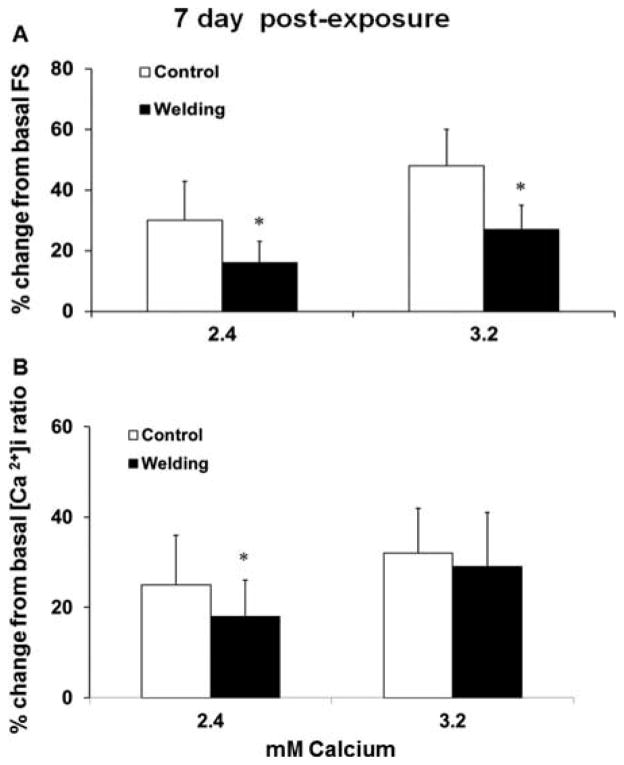
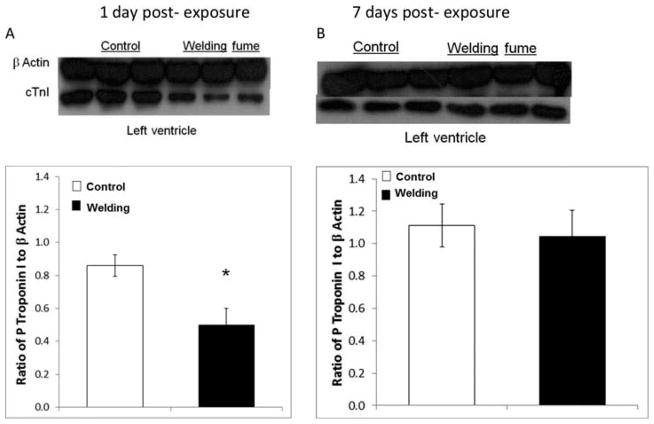
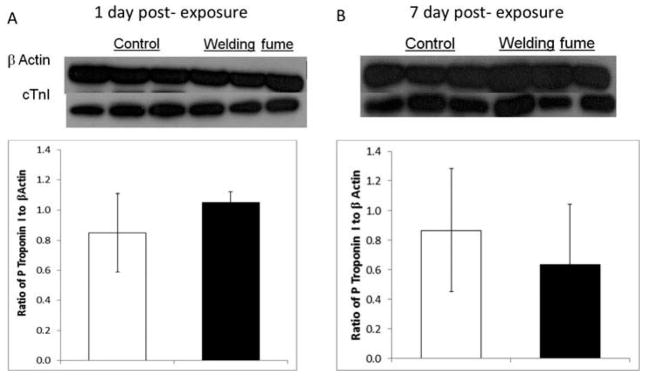
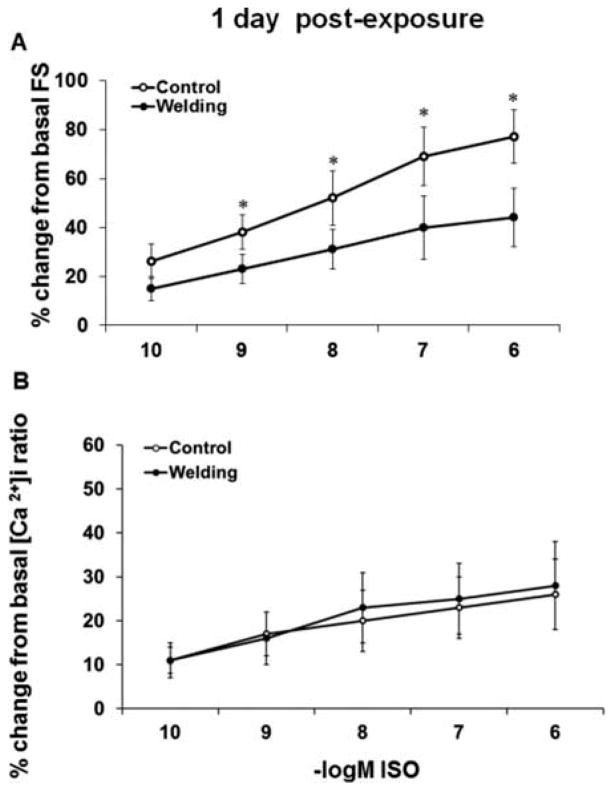
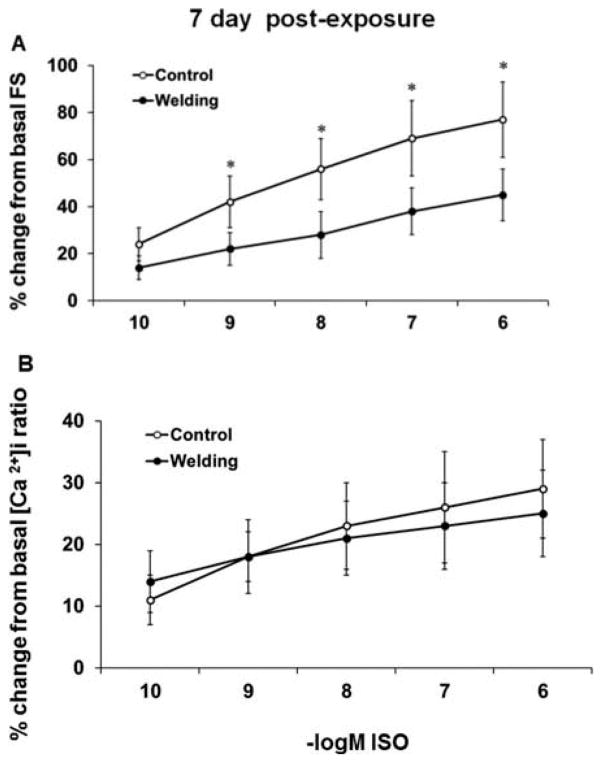
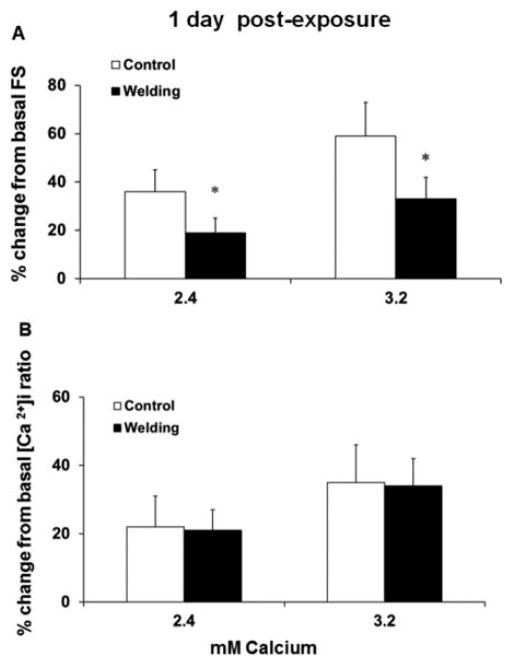
Description:Welding fume is composed of a complex of different metal particulates. Pulmonary exposure to different welding fumes may exert a negative impact on cardiac function, although the underlying mechanisms remain unclear. To explore the effect of welding fumes on cardiac function, Sprague-Dawley rats were exposed by intratracheal instillation to 2 mg/rat of manual metal arc hard surfacing welding fume (MMA-HS) once per week for 7 wk. Control rats received saline. Cardiomyocytes were isolated enzymatically at d 1 and 7 postexposure. Intracellular calcium ([Ca(2+)]i) transients (fluorescence ratio) were measured on the stage of an inverted phase-contrast microscope using a myocyte calcium imaging/cell length system. Phosphorylation levels of cardiac troponin I (cTnI) were determined by Western blot. The levels of nonspecific inflammatory marker C-reactive protein (CRP) and proinflammatory cytokine interleukin-6 (IL-6) in serum were measured by enzyme-linked immunosorbent assay (ELISA). Contraction of isolated cardiomyocytes was significantly reduced at d 1 and d 7 postexposure. Intracellular calcium levels were decreased in response to extracellular calcium stimulation at d 7 postexposure. Changes of intracellular calcium levels after isoprenaline hydrochloride (ISO) stimulation were not markedly different between groups at either time point. Phosphorylation levels of cTnI in the left ventricle were significantly lower at d 1 postexposure. The serum levels of CRP were not markedly different between groups at either time point. Serum levels of IL-6 were not detectable in both groups. Cardiomyocyte alterations observed after welding fume treatment were mainly due to alterations in intracellular calcium handling and phosphorylation levels of cTnI.
-
Subjects:
-
Source:J Toxicol Environ Health A. 77(12):705-715.
-
Pubmed ID:24786677
-
Pubmed Central ID:PMC4687892
-
Document Type:
-
Funding:
-
Volume:77
-
Issue:12
-
Collection(s):
-
Main Document Checksum:urn:sha256:6a320e570b3fd4cf311be4f9e6245302968bd4dca82c7652e5475f5657eafe71
-
Download URL:
-
File Type:
 [PDF
- 846.92 KB
]
[PDF
- 846.92 KB
]
Supporting Files


ON THIS PAGE





CDC STACKS serves as an archival repository of CDC-published products including
scientific findings,
journal articles, guidelines, recommendations, or other public health information authored or
co-authored by CDC or funded partners.
As a repository, CDC STACKS retains documents in their original published format to ensure public access to scientific information.
As a repository, CDC STACKS retains documents in their original published format to ensure public access to scientific information.
You May Also Like
COLLECTION
CDC Public Access