


Prenatal Exposure to Perfluoroalkyl Acids and Serum Testosterone Concentrations at 15 Years of Age in Female ALSPAC Study Participants
Supporting Files

-
Jun 02 2015
-
Details
-
Alternative Title:Environ Health Perspect
-
Personal Author:
-
Description:Background
Exposure to perfluorooctane sulfonic acid (PFOS) or to perfluorooctanoic acid (PFOA) increases mouse and human peroxisome proliferator–activated receptor alpha (PPARα) subtype activity, which influences lipid metabolism. Because cholesterol is the substrate from which testosterone is synthesized, exposure to these substances has the potential to alter testosterone concentrations.
Objectives
We explored associations of total testosterone and sex hormone–binding globulin (SHBG) concentrations at age 15 years with prenatal exposures to PFOS, PFOA, perfluorohexane sulfonic acid (PFHxS), and perfluoronanoic acid (PFNA) in females.
Methods
Prenatal concentrations of the perfluoroalkyl acids (PFAAs) were measured in serum collected from pregnant mothers at enrollment (1991–1992) in the Avon Longitudinal Study of Parents and Children (ALSPAC). The median gestational age when the maternal blood sample was obtained was 16 weeks (interquartile range, 11–28 weeks). Total testosterone and SHBG concentrations were measured in serum obtained from their daughters at 15 years of age. Associations between prenatal PFAAs concentrations and reproductive outcomes were estimated using linear regression models (n = 72).
Results
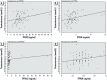
Adjusted total testosterone concentrations were on average 0.18-nmol/L (95% CI: 0.01, 0.35) higher in daughters with prenatal PFOS in the upper concentration tertile compared with daughters with prenatal PFOS in the lower tertile. Adjusted total testosterone concentrations were also higher in daughters with prenatal concentrations of PFOA (β = 0.24; 95% CI: 0.05, 0.43) and PFHxS (β = 0.18; 95% CI: 0.00, 0.35) in the upper tertile compared with daughters with concentrations in the lower tertile. We did not find evidence of associations between PFNA and total testosterone or between any of the PFAAs and SHBG.
Conclusions
Our findings were based on a small study sample and should be interpreted with caution. However, they suggest that prenatal exposure to some PFAAs may alter testosterone concentrations in females.
Citation
Maisonet M, Calafat AM, Marcus M, Jaakkola JJ, Lashen H. 2015. Prenatal exposure to perfluoroalkyl acids and serum testosterone concentrations at 15 years of age in female ALSPAC study participants. Environ Health Perspect 123:1325–1330; http://dx.doi.org/10.1289/ehp.1408847
-
Subjects:
-
Source:Environ Health Perspect. 123(12):1325-1330.
-
Pubmed ID:26034840
-
Pubmed Central ID:PMC4671244
-
Document Type:
-
Funding:
-
Volume:123
-
Issue:12
-
Collection(s):
-
Main Document Checksum:urn:sha256:6fed88d1f922e0629dfb8cd2d299cf2034e1dfe72f0b0631c24050cf19bf1444
-
Download URL:
-
File Type:
 [PDF
- 329.15 KB
]
[PDF
- 329.15 KB
]
Supporting Files


ON THIS PAGE


CDC STACKS serves as an archival repository of CDC-published products including
scientific findings,
journal articles, guidelines, recommendations, or other public health information authored or
co-authored by CDC or funded partners.
As a repository, CDC STACKS retains documents in their original published format to ensure public access to scientific information.
As a repository, CDC STACKS retains documents in their original published format to ensure public access to scientific information.
You May Also Like
COLLECTION
CDC Public Access