


Use of vaccines as probes to define disease burden
Supporting Files

-
Feb 17 2014
Details
-
Alternative Title:Lancet
-
Personal Author:
-
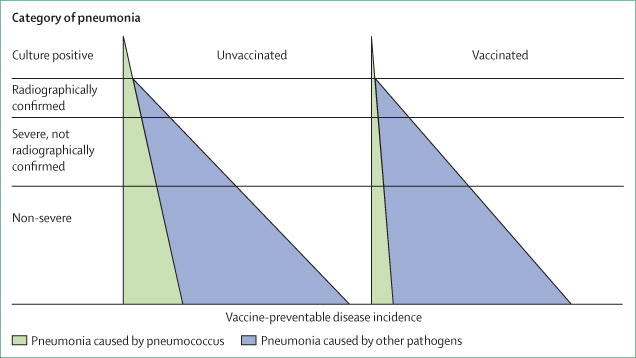
Description:Vaccine probe studies have emerged in the past 15 years as a useful way to characterise disease. By contrast, traditional studies of vaccines focus on defining the vaccine effectiveness or efficacy. The underlying basis for the vaccine probe approach is that the difference in disease burden between vaccinated and unvaccinated individuals can be ascribed to the vaccine-specific pathogen. Vaccine probe studies can increase understanding of a vaccine's public health value. For instance, even when a vaccine has a seemingly low efficacy, a high baseline disease incidence can lead to a large vaccine-preventable disease burden and thus that population-based vaccine introduction would be justified. So far, vaccines have been used as probes to characterise disease syndromes caused by Haemophilus influenzae type b, pneumococcus, rotavirus, and early infant influenza. However, vaccine probe studies have enormous potential and could be used more widely in epidemiology, for example, to define the vaccine-preventable burden of malaria, typhoid, paediatric influenza, and dengue, and to identify causal interactions between different pathogens.
-
Subjects:
-
Source:Lancet. 383(9930):1762-1770.
-
Pubmed ID:24553294
-
Pubmed Central ID:PMC4682543
-
Document Type:
-
Funding:
-
Volume:383
-
Issue:9930
-
Collection(s):
-
Main Document Checksum:urn:sha256:ff195ec460b2c8dcdfdd5638a3b3e3eaaedd4f970fc661ee382b7c9e02b076fb
-
Download URL:
-
File Type:
 [PDF
- 203.93 KB
]
[PDF
- 203.93 KB
]
Supporting Files


ON THIS PAGE

CDC STACKS serves as an archival repository of CDC-published products including
scientific findings,
journal articles, guidelines, recommendations, or other public health information authored or
co-authored by CDC or funded partners.
As a repository, CDC STACKS retains documents in their original published format to ensure public access to scientific information.
As a repository, CDC STACKS retains documents in their original published format to ensure public access to scientific information.
You May Also Like
COLLECTION
CDC Public Access