


Pulmonary Toxicity, Distribution, and Clearance of Intratracheally Instilled Silicon Nanowires in Rats
Supporting Files

-
2012
-
Details
-
Alternative Title:J Nanomater
-
Personal Author:
-
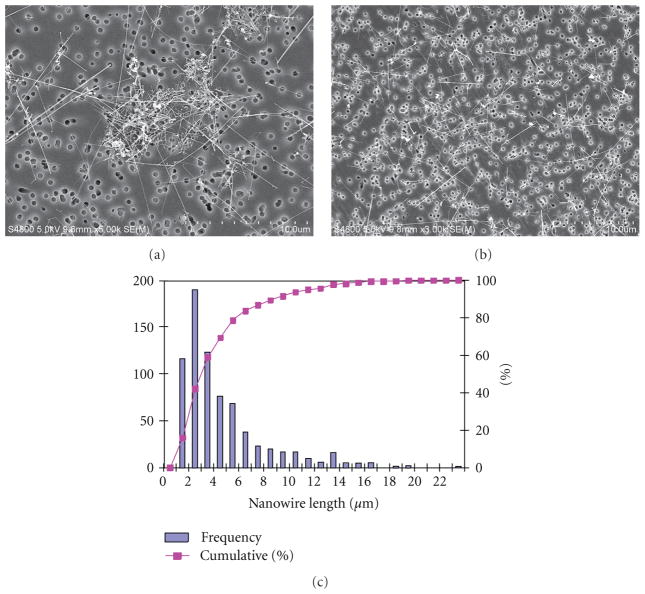
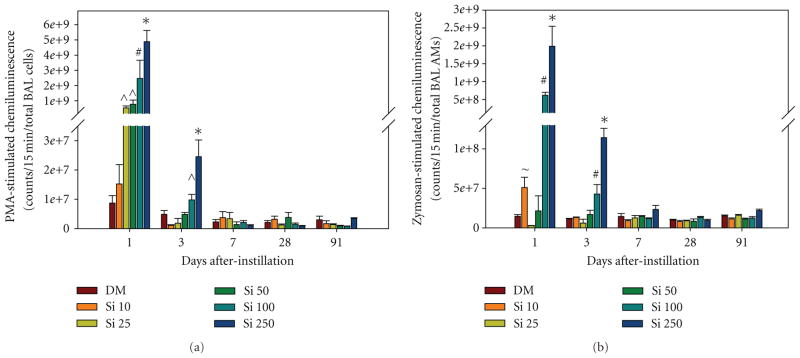
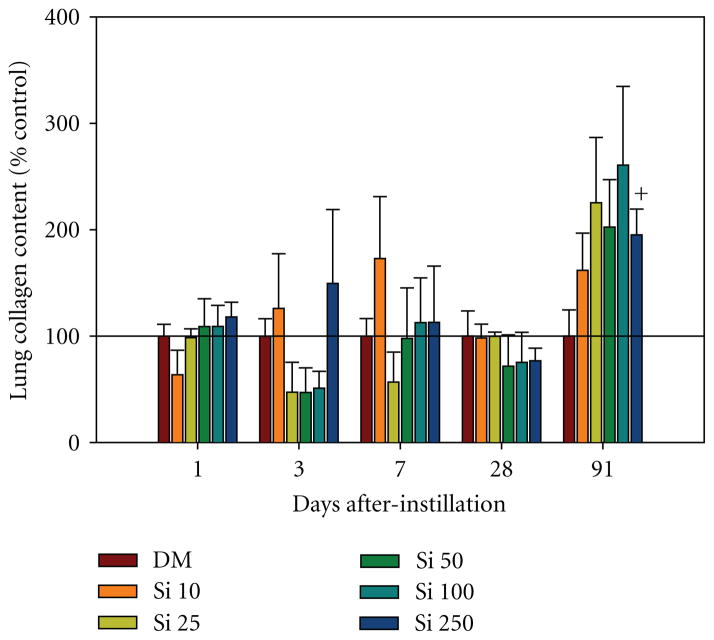
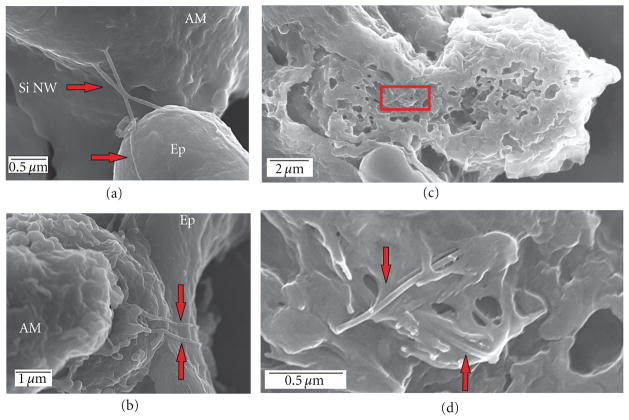
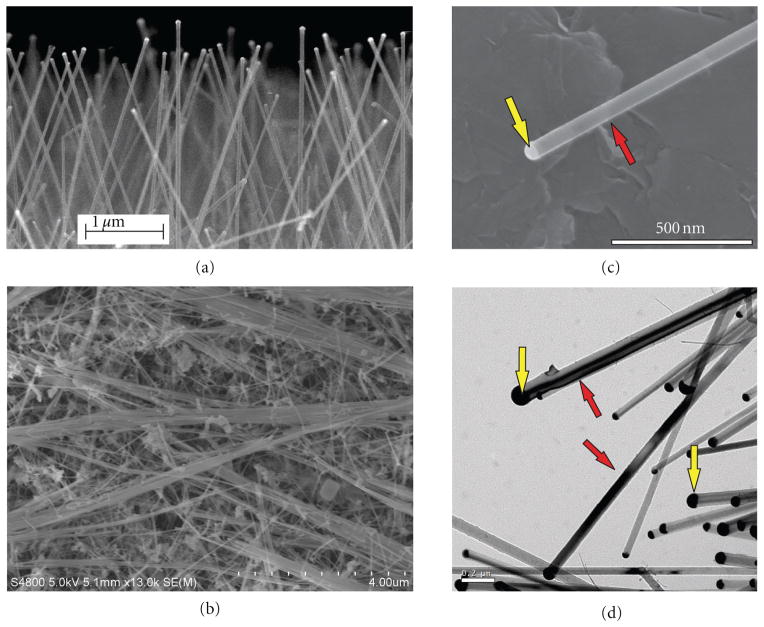
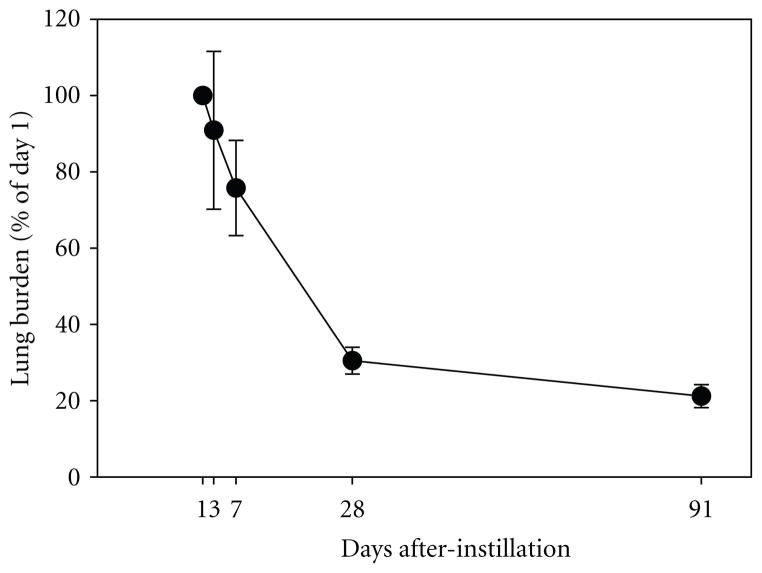
Description:Silicon nanowires (Si NWs) are being manufactured for use as sensors and transistors for circuit applications. The goal was to assess pulmonary toxicity and fate of Si NW using an in vivo experimental model. Male Sprague-Dawley rats were intratracheally instilled with 10, 25, 50, 100, or 250 μg of Si NW (~20-30 nm diameter; ~2-15 μm length). Lung damage and the pulmonary distribution and clearance of Si NW were assessed at 1, 3, 7, 28, and 91 days after-treatment. Si NW treatment resulted in dose-dependent increases in lung injury and inflammation that resolved over time. At day 91 after treatment with the highest doses, lung collagen was increased. Approximately 70% of deposited Si NW was cleared by 28 days with most of the Si NW localized exclusively in macrophages. In conclusion, Si NW induced transient lung toxicity which may be associated with an early rapid particle clearance; however, persistence of Si NW over time related to dose or wire length may lead to increased collagen deposition in the lung.
-
Subjects:
-
Source:J Nanomater. 2012.
-
Pubmed ID:26640479
-
Pubmed Central ID:PMC4668952
-
Document Type:
-
Funding:
-
Volume:2012
-
Collection(s):
-
Main Document Checksum:urn:sha256:5425d1bc2252bbe704489bbf75977f5c16bf3086ecf63106bd21f5a962ac32ca
-
Download URL:
-
File Type:
 [PDF
- 2.27 MB
]
[PDF
- 2.27 MB
]
Supporting Files


ON THIS PAGE







CDC STACKS serves as an archival repository of CDC-published products including
scientific findings,
journal articles, guidelines, recommendations, or other public health information authored or
co-authored by CDC or funded partners.
As a repository, CDC STACKS retains documents in their original published format to ensure public access to scientific information.
As a repository, CDC STACKS retains documents in their original published format to ensure public access to scientific information.
You May Also Like
COLLECTION
CDC Public Access