


Characterization of a Vortex Shaking Method for Aerosolizing Fibers
Supporting Files

-
2013
File Language:
English
Details
-
Alternative Title:Aerosol Sci Technol
-
Personal Author:
-
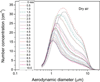
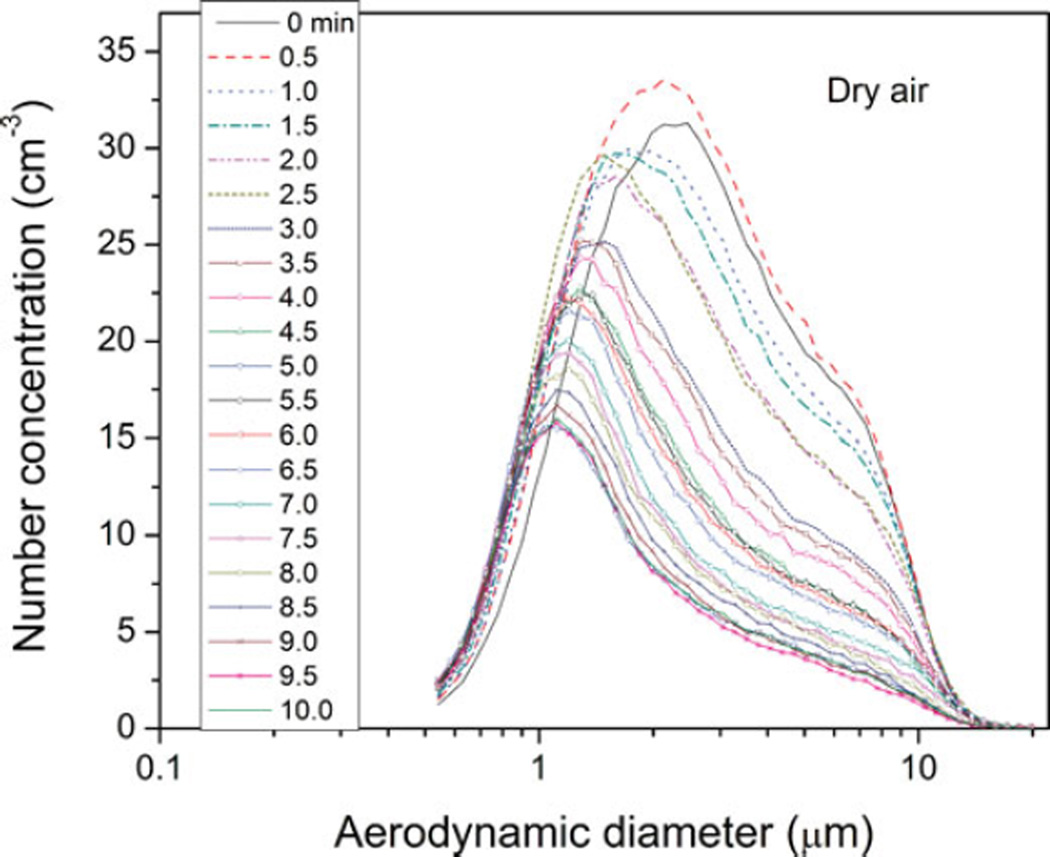
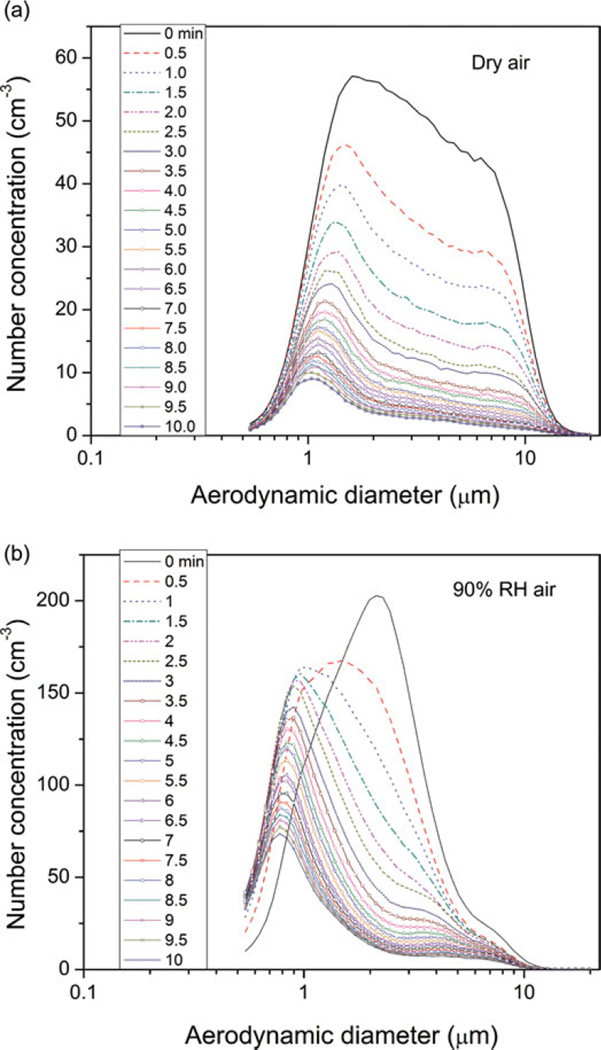
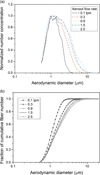
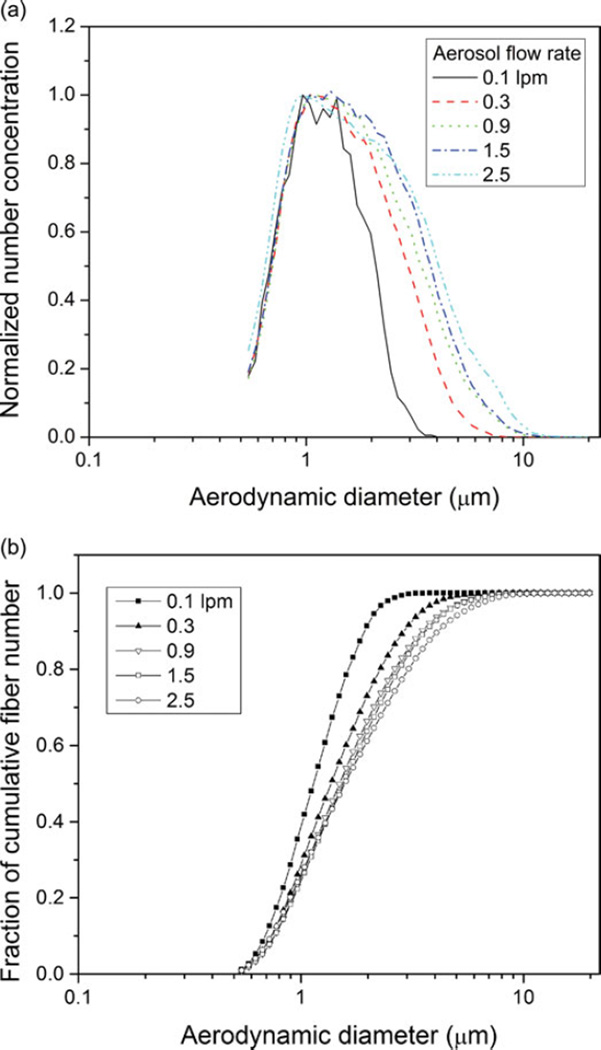
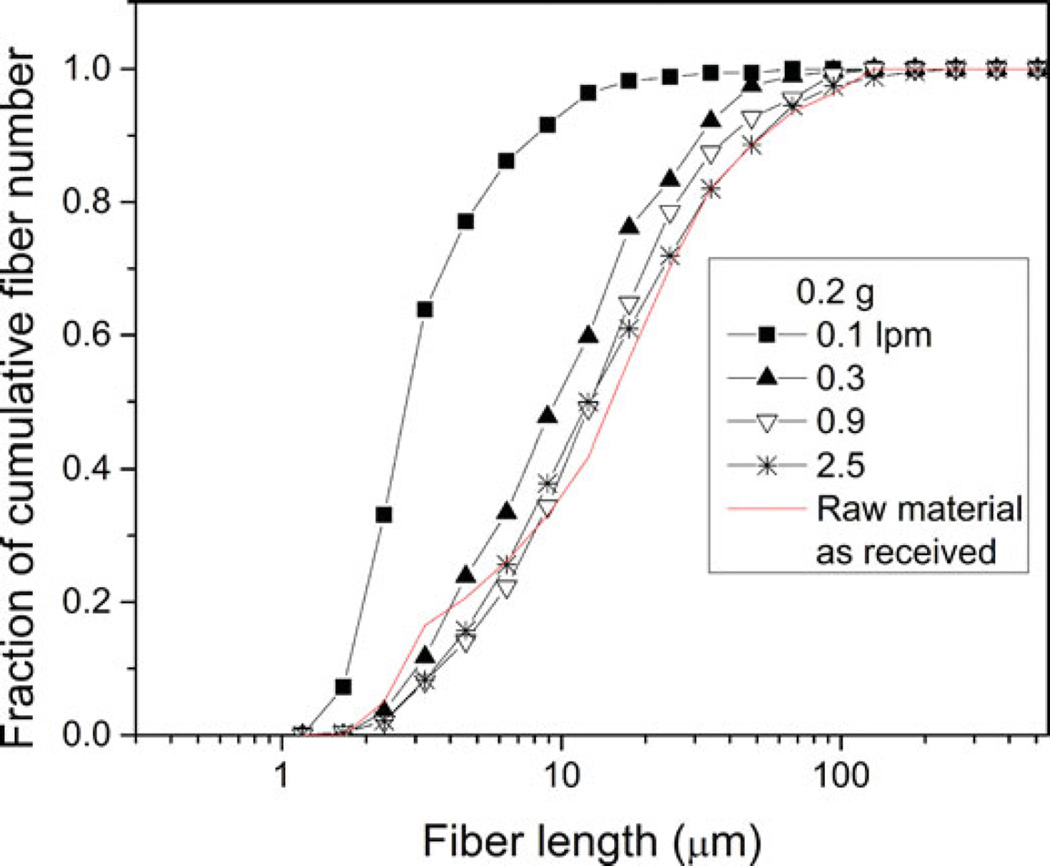
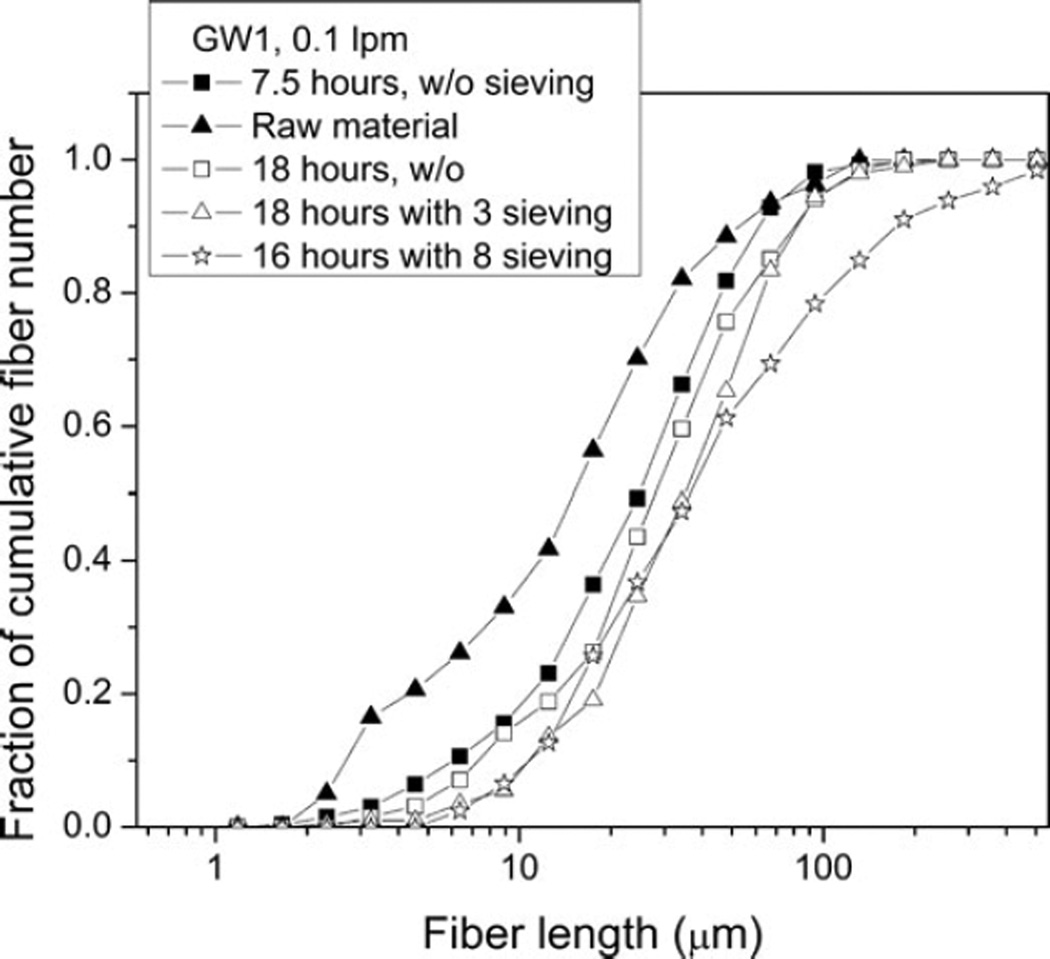
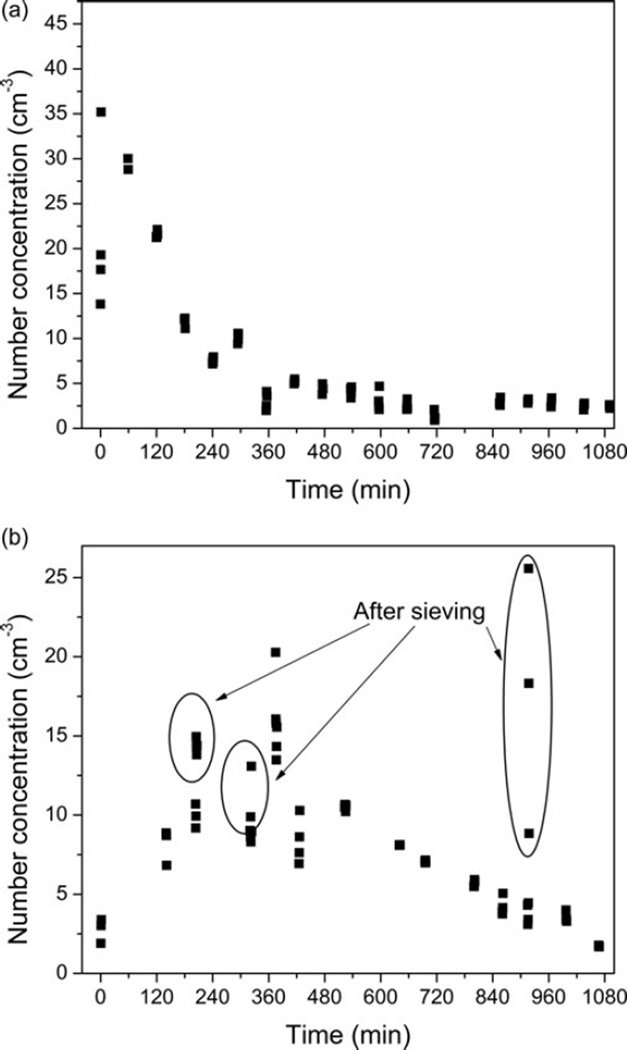
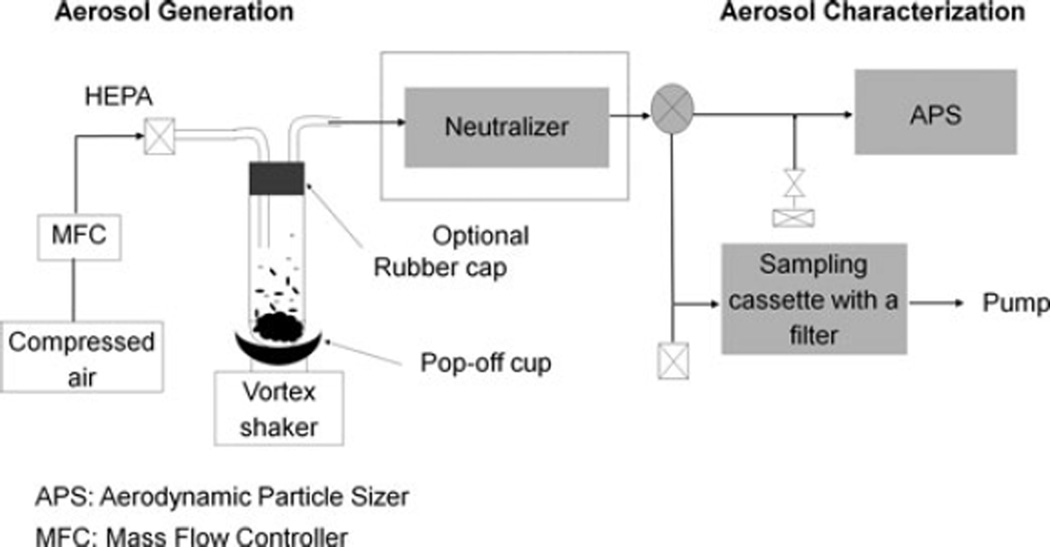
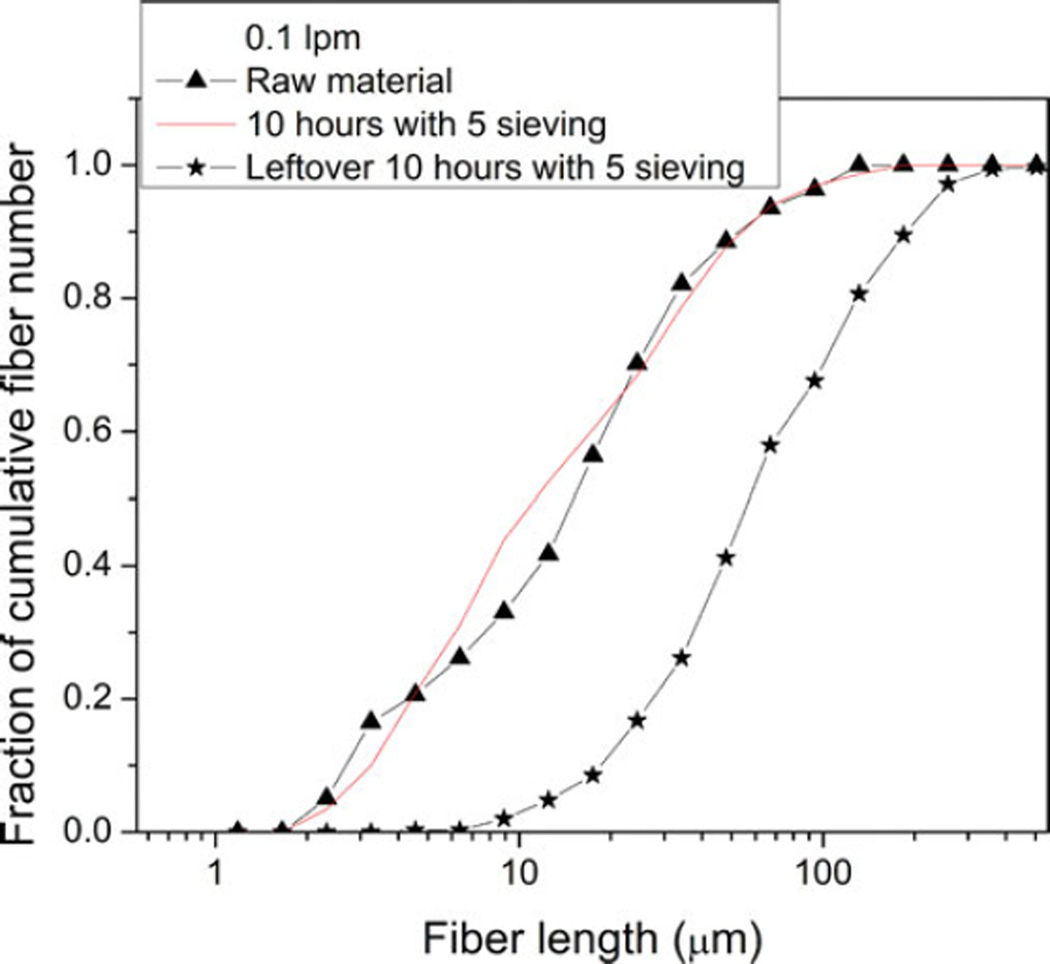
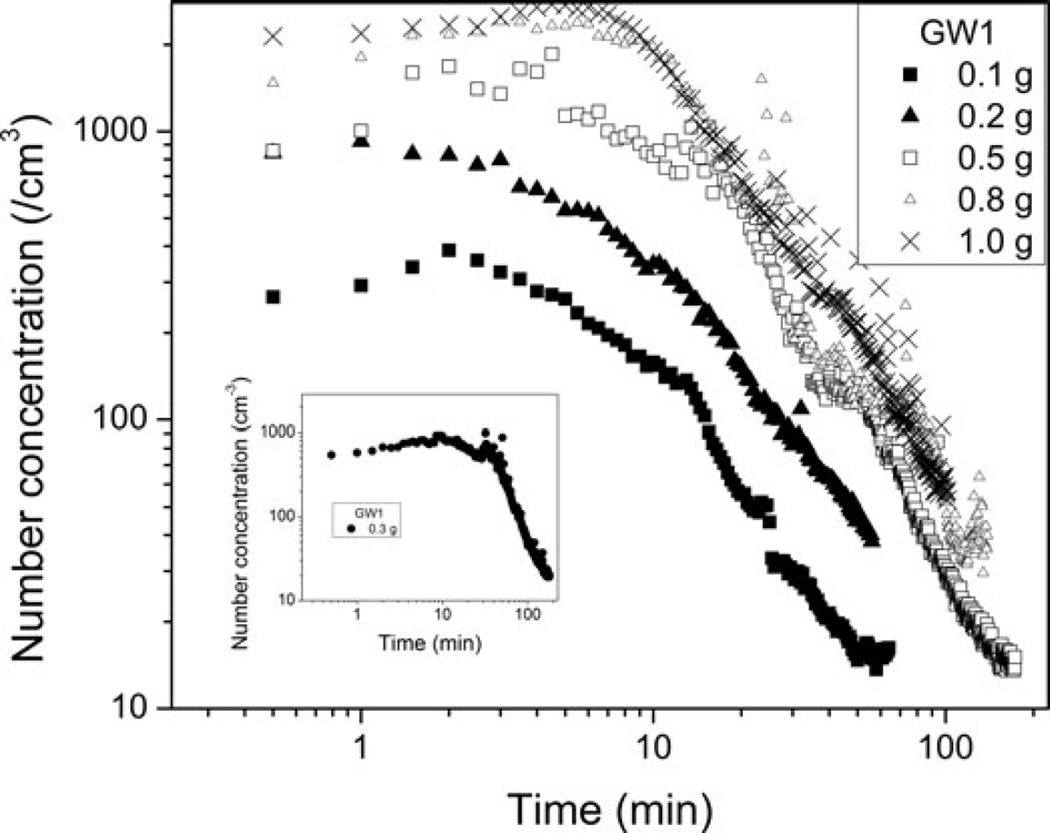
Description:Generation of well-dispersed, well-characterized fibers is important in toxicology studies. A vortex-tube shaking method is investigated using glass fibers to characterize the generated aerosol. Controlling parameters that were studied included initial batch amounts of glass fibers, preparation of the powder (e.g., preshaking), humidity, and airflow rate. Total fiber number concentrations and aerodynamic size distributions were typically measured. The aerosol concentration is only stable for short times (| < 10 min) and then falls precipitously, with concomitant changes in the aerosol aerodynamic size distribution; the plateau concentration and its duration both increase with batch size. Preshaking enhances the initial aerosol concentration and enables the aerosolization of longer fibers. Higher humidity strongly affects the particle size distribution and the number concentration, resulting in a smaller modal diameter and a higher number concentration. Running the vortex shaker at higher flow rates (| > 0.3 lpm), yields an aerosol with a particle size distribution representative of the batch powder; running the vortex shaker at a lower aerosol flow rate (| ~ 0.1 lpm) only aerosolizes the shorter fibers. These results have implications for the use of the vortex shaker as a standard aerosol generator.
-
Source:Aerosol Sci Technol. 47(12):1293-1301
-
Pubmed ID:26635428
-
Pubmed Central ID:PMC4666563
-
Document Type:
-
Funding:
-
Volume:47
-
Issue:12
-
Collection(s):
-
Main Document Checksum:urn:sha256:ace6c6f53b9b426f6f2b7c0387b01d6577536c7f319b775bb39c4d349a4777fe
-
Download URL:
-
File Type:
 [PDF
- 3.31 MB
]
[PDF
- 3.31 MB
]
Supporting Files


File Language:
English
ON THIS PAGE





CDC STACKS serves as an archival repository of CDC-published products including
scientific findings,
journal articles, guidelines, recommendations, or other public health information authored or
co-authored by CDC or funded partners.
As a repository, CDC STACKS retains documents in their original published format to ensure public access to scientific information.
As a repository, CDC STACKS retains documents in their original published format to ensure public access to scientific information.