


Molecular evolution of measles viruses circulated in Taiwan 1992-2008
Supporting Files
Public Domain

-
Dec 10 2009
-
File Language:
English
Details
-
Alternative Title:Virol J
-
Personal Author:
-
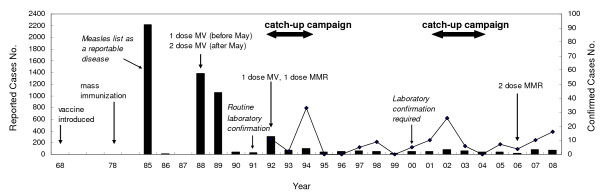
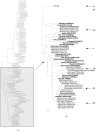
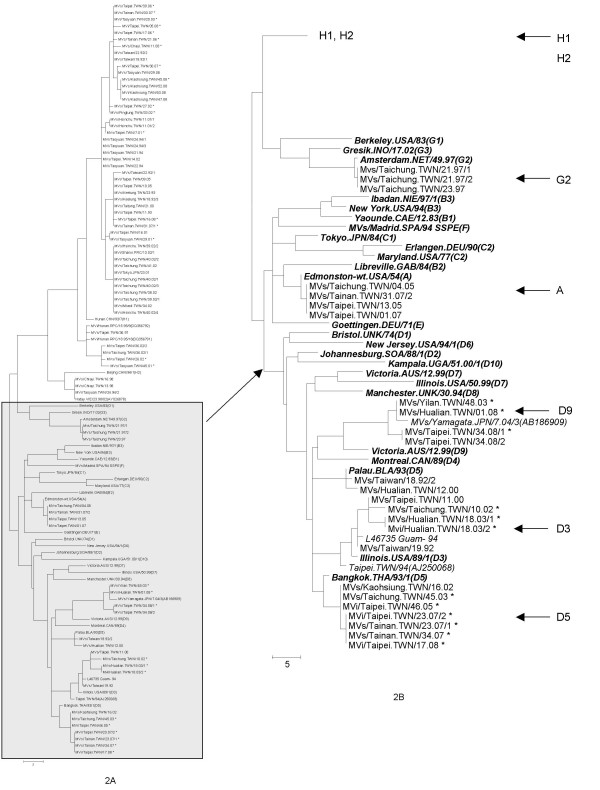
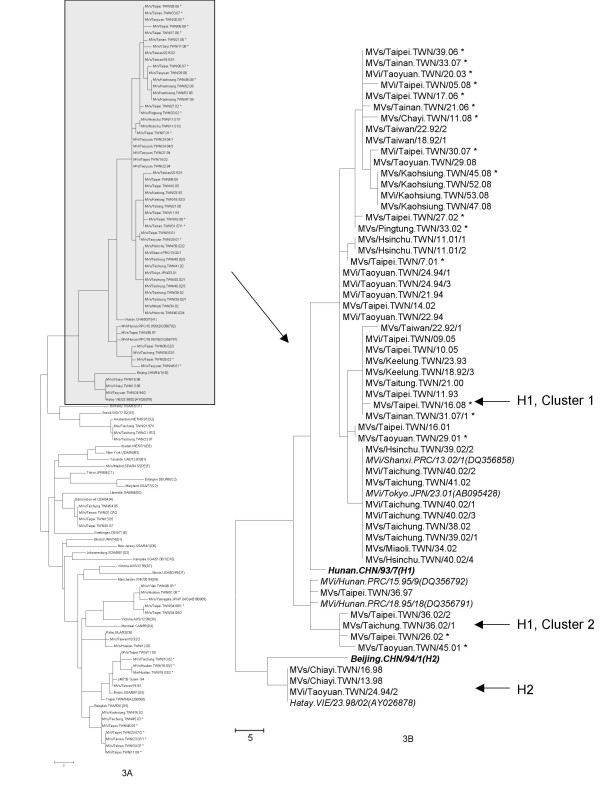
Description:Genetic analyses of viral samples from 74 laboratory confirmed measles cases occurring in Taiwan during 1992-2008 identified six viral genotypes D3, D5, D9, G2, H1 and H2. The most frequently detected genotype, H1, was associated with outbreaks in 1994 and 2002, and was the likely indigenous genotype in 1992. In response to the outbreaks, two catch-up campaigns were launched and a routine second dose of measles, mumps, and rubella vaccine at entry to elementary school was introduced. The vaccination campaigns successfully reduced the number of measles cases in Taiwan, and many of the more recent cases can be traced to importations, primarily from other Asian countries. A number of measles genotypes which were associated with outbreaks in other Asian countries were detected among the more recent cases. The more recent genotype H1 viruses had sequences that were identical to those currently circulating in China or associated with international importation of virus.
-
Subjects:
-
Source:Virol J. 2009; 6:219.
-
Document Type:
-
Place as Subject:
-
Volume:6
-
Collection(s):
-
Main Document Checksum:urn:sha-512:1dfbe67a99a4324cac018e34fa040157f258a48c62110354ad421f295b2f18d333b2fbdece9adccad69b2b066072b96d4c80b6c4b8f1f768b1199bb83cf55b5a
-
Download URL:
-
File Type:
 [PDF
- 323.71 KB
]
[PDF
- 323.71 KB
]
Supporting Files


File Language:
English
ON THIS PAGE


CDC STACKS serves as an archival repository of CDC-published products including
scientific findings,
journal articles, guidelines, recommendations, or other public health information authored or
co-authored by CDC or funded partners.
As a repository, CDC STACKS retains documents in their original published format to ensure public access to scientific information.
As a repository, CDC STACKS retains documents in their original published format to ensure public access to scientific information.
You May Also Like
COLLECTION
CDC Public Access