



Glutathione Reaction Products with a Chemical Allergen, Methylene-diphenyl Diisocyanate, Stimulate Alternative Macrophage Activation and Eosinophilic Airway Inflammation
Supporting Files

-
-
By Show All

-
-
Available in CDC Stacks on
Details
-
Alternative Title:Chem Res Toxicol
-
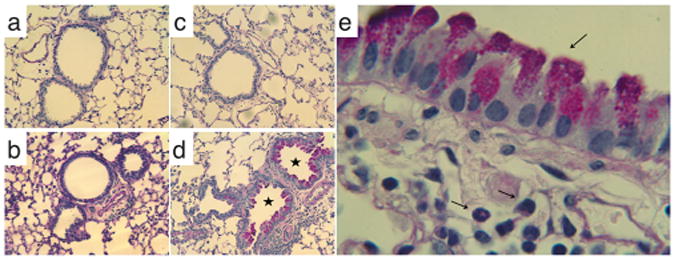
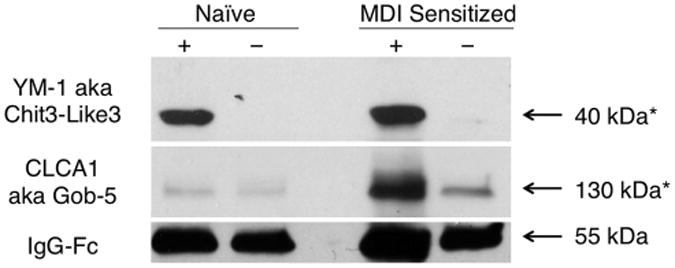
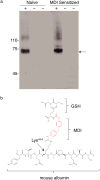
Description:Isocyanates have been a leading chemical cause of occupational asthma since their utility for generating polyurethane was first recognized over 60 years ago, yet the mechanisms of isocyanate asthma pathogenesis remain unclear. The present study provides in vivo evidence that a GSH mediated pathway underlies asthma-like eosinophilic inflammatory responses to respiratory tract isocyanate exposure. In naïve mice, a mixture of GSH reaction products with the chemical allergen, methylene-diphenyl diisocyanate (MDI), induced innate immune responses, characterized by significantly increased airway levels of Chitinase YM-1 and IL-12/IL-23β (but not α) subunit. However, in mice immunologically sensitized to MDI via prior skin exposure, identical GSH-MDI doses induced substantially greater inflammatory responses, including significantly increased airway eosinophil numbers and mucus production, along with IL-12/IL-23β, chitinases, and other indicators of alternative macrophage activation. The "self"-protein albumin in mouse airway fluid was uniquely modified by GSH-MDI at position (414)K, a preferred site of MDI reactivity on human albumin. The (414)K-MDI conjugation appears to covalently cross-link GSH to albumin via GSH's NH2-terminus, a unique conformation possibly resulting from cyclized mono(GSH)-MDI or asymmetric (S,N'-linked) bis(GSH)-MDI conjugates. Together, the data support a possible thiol mediated transcarbamoylating mechanism linking MDI exposure to pathogenic eosinophilic inflammatory responses.
-
Subjects:
-
Pubmed ID:25635619
-
Pubmed Central ID:PMC4667722
-
Document Type:
-
Funding:
-
Volume:28
-
Issue:4
-
Download URL:
-
File Type:
 [PDF - 519.84 KB]
-
Collection(s):
-
Main Document Checksum:urn:sha256:35680e03dbca8cf068d2a39241c819cf5fe48c5bbf7939d7aff196eeea044bc2
Supporting Files


 Was this page helpful?
 Found an issue?






CDC STACKS serves as an archival repository of CDC-published products including
scientific findings, journal articles, guidelines, recommendations, or other public health information authored or
co-authored by CDC or funded partners.
As a repository, CDC STACKS retains documents in their original published format to ensure public access to scientific information.
As a repository, CDC STACKS retains documents in their original published format to ensure public access to scientific information.
You May Also Like
COLLECTION
CDC Public Access