


Nephrology care prior to end-stage renal disease and outcomes among new ESRD patients in the USA
Supporting Files
Public Domain

-
Nov 03 2015
-
Details
-
Alternative Title:Clin Kidney J
-
Personal Author:
-
Description:Background
Longer nephrology care before end-stage renal disease (ESRD) has been linked with better outcomes.
Methods
We investigated whether longer pre-end-stage renal disease (ESRD) nephrology care was associated with lower mortality at both the patient and state levels among 443 761 incident ESRD patients identified in the USA between 2006 and 2010.
Results
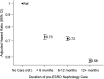
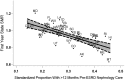
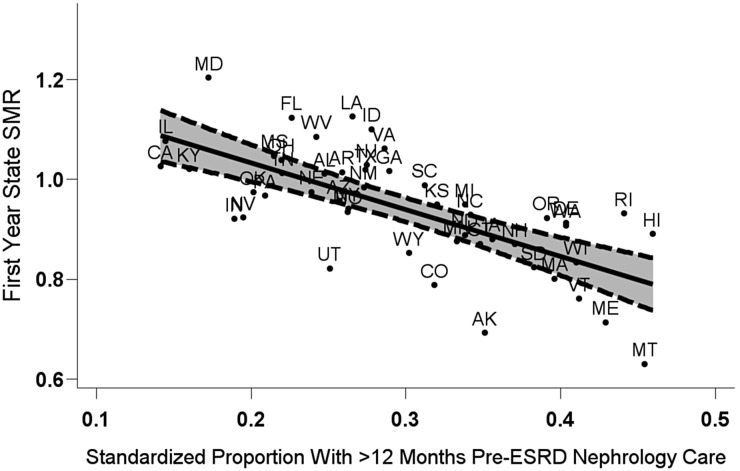
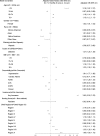
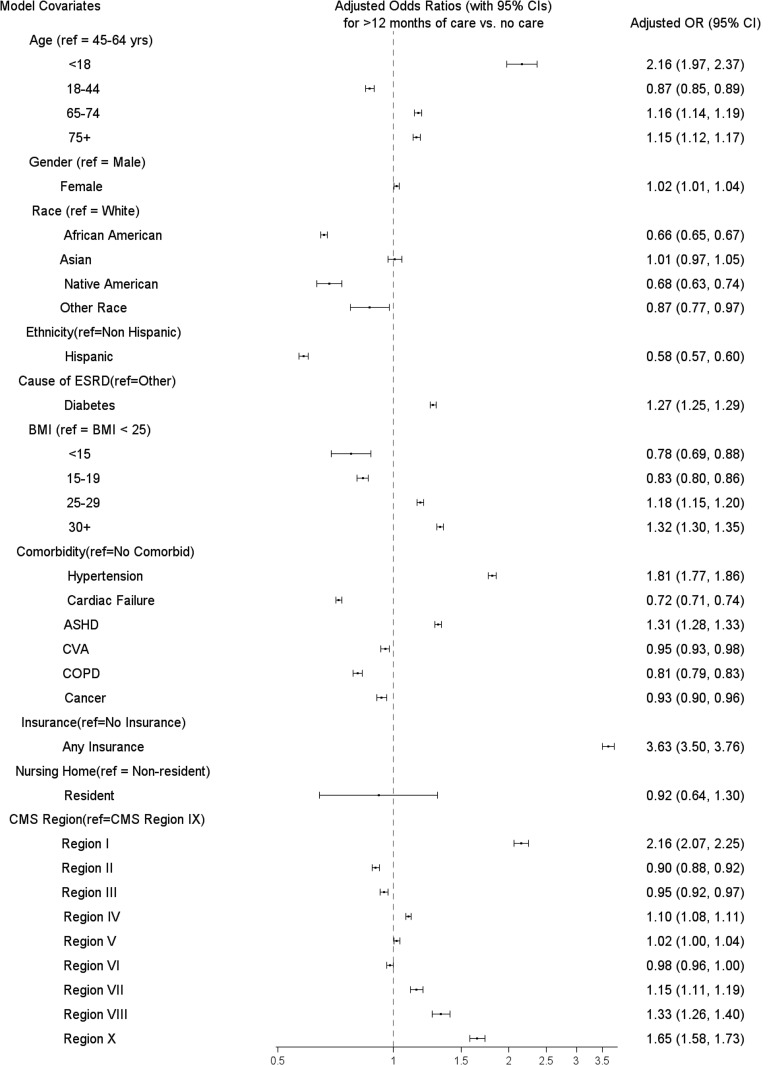
Overall, 33% of new ESRD patients had received no prior nephrology care, while 28% had received care for >12 months. At the patient level, predictors of >12 months of nephrology care included having health insurance, white race, younger age, diabetes, hypertension and US region. Longer pre-ESRD nephrology care was associated with lower first-year mortality (adjusted hazard ratio = 0.58 for >12 months versus no care; 95% confidence interval 0.57–0.59), higher albumin and hemoglobin, choice of peritoneal dialysis and native fistula and discussion of transplantation options. Living in a state with a 10% higher proportion of patients receiving >12 months of pre-ESRD care was associated with a 9.3% lower relative mortality rate, standardized for case mix (R2 = 0.47; P < 0.001).
Conclusions
This study represents the largest cohort of incident ESRD patients to date. Although we did not follow patients before ESRD onset, our findings, both at the individual patient and state levels, reflect the importance of early nephrology care among those with chronic kidney disease.
-
Subjects:
-
Source:Clin Kidney J. 2015; 8(6):772-780.
-
Pubmed ID:26613038
-
Pubmed Central ID:PMC4655805
-
Document Type:
-
Volume:8
-
Issue:6
-
Collection(s):
-
Main Document Checksum:urn:sha256:d163482af874412d59bc64470fada9afbfb08d76856f16d3578020380dc02cf8
-
Download URL:
-
File Type:
 [PDF
- 600.52 KB
]
[PDF
- 600.52 KB
]
Supporting Files


ON THIS PAGE


CDC STACKS serves as an archival repository of CDC-published products including
scientific findings,
journal articles, guidelines, recommendations, or other public health information authored or
co-authored by CDC or funded partners.
As a repository, CDC STACKS retains documents in their original published format to ensure public access to scientific information.
As a repository, CDC STACKS retains documents in their original published format to ensure public access to scientific information.
You May Also Like
COLLECTION
CDC Public Access