


PHQ-8 Days: a measurement option for DSM-5 Major Depressive Disorder (MDD) severity
Supporting Files
Public Domain

-
Apr 28 2011
-
Details
-
Alternative Title:Popul Health Metr
-
Personal Author:
-
Description:Background
Proposed draft diagnostic criteria for the fifth edition of the Diagnostic and Statistical Manual of Mental Disorders (DSM-5) suggest that dimensional assessments can supplement dichotomous diagnoses by incorporating measures of severity, frequency, and duration, providing the ability to monitor changes in symptoms over time and to guide appropriate treatment.
Methods
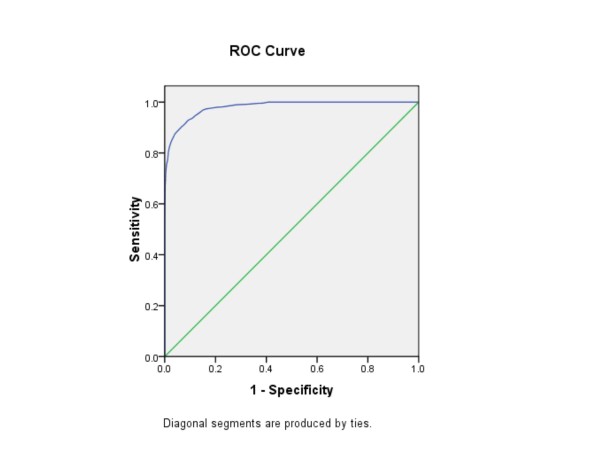
This report is based on data from the Behavioral Risk Factor Surveillance System 2006 from 198,678 survey participants who responded to all eight Patient Health Questionnaire (PHQ-8) items. We evaluated use of the days version of the PHQ-8 to determine an optimal cut-point for identifying respondents with depression and to evaluate the performance characteristics of the PHQ-8 at this cut-point.
Results
A PHQ-8 score of 55 or more days was determined to be the optimal cut-point when compared to the DSM-derived PHQ-8 algorithm for a major depressive episode (five or more symptoms present "more than half the days," at least one of which must be anhedonia or depression). In the full sample, the sensitivity and the specificity of this cut-point were 0.91 (0.90-0.93) and 0.99 (0.99-0.99), respectively.
Conclusion
The days version of the PHQ-8 may be a valuable dimensional alternative to the traditional PHQ-8 by offering finer granularity of dimensionality (a score of 0 to 112).
-
Subjects:
-
Source:Popul Health Metr. 2011; 9:11.
-
Document Type:
-
Volume:9
-
Collection(s):
-
Main Document Checksum:urn:sha-512:74e9892f2ee7bba1c4306502552936e74d439fe61e91ecdde2999e7aaea7697090ca8811fa41f22f3e100336ddfba24c6c02d0a885568db3e2c1e4f709266f96
-
Download URL:
-
File Type:
 [PDF
- 303.01 KB
]
[PDF
- 303.01 KB
]
Supporting Files


ON THIS PAGE


CDC STACKS serves as an archival repository of CDC-published products including
scientific findings,
journal articles, guidelines, recommendations, or other public health information authored or
co-authored by CDC or funded partners.
As a repository, CDC STACKS retains documents in their original published format to ensure public access to scientific information.
As a repository, CDC STACKS retains documents in their original published format to ensure public access to scientific information.
You May Also Like
COLLECTION
CDC Public Access