


Projection of the year 2050 burden of diabetes in the US adult population: dynamic modeling of incidence, mortality, and prediabetes prevalence
Supporting Files
Public Domain

-
Oct 22 2010
-
File Language:
English
Details
-
Alternative Title:Popul Health Metr
-
Personal Author:
-
Description:Background
People with diabetes can suffer from diverse complications that seriously erode quality of life. Diabetes, costing the United States more than $174 billion per year in 2007, is expected to take an increasingly large financial toll in subsequent years. Accurate projections of diabetes burden are essential to policymakers planning for future health care needs and costs.
Methods
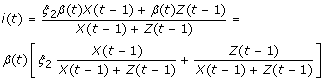
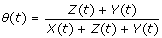
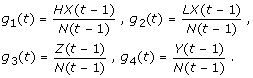
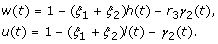
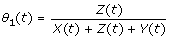
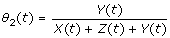
Using data on prediabetes and diabetes prevalence in the United States, forecasted incidence, and current US Census projections of mortality and migration, the authors constructed a series of dynamic models employing systems of difference equations to project the future burden of diabetes among US adults. A three-state model partitions the US population into no diabetes, undiagnosed diabetes, and diagnosed diabetes. A four-state model divides the state of "no diabetes" into high-risk (prediabetes) and low-risk (normal glucose) states. A five-state model incorporates an intervention designed to prevent or delay diabetes in adults at high risk.
Results
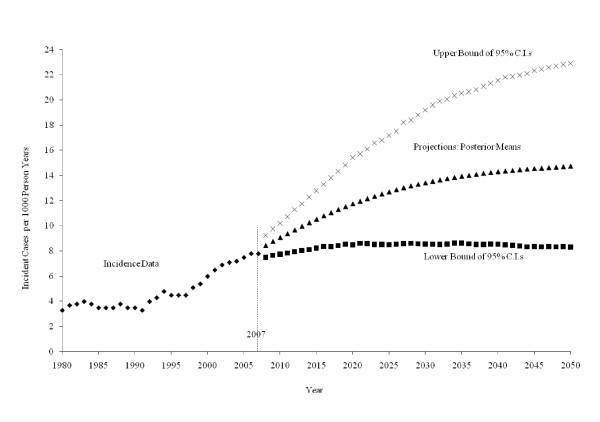
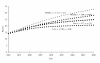
The authors project that annual diagnosed diabetes incidence (new cases) will increase from about 8 cases per 1,000 in 2008 to about 15 in 2050. Assuming low incidence and relatively high diabetes mortality, total diabetes prevalence (diagnosed and undiagnosed cases) is projected to increase from 14% in 2010 to 21% of the US adult population by 2050. However, if recent increases in diabetes incidence continue and diabetes mortality is relatively low, prevalence will increase to 33% by 2050. A middle-ground scenario projects a prevalence of 25% to 28% by 2050. Intervention can reduce, but not eliminate, increases in diabetes prevalence.
Conclusions
These projected increases are largely attributable to the aging of the US population, increasing numbers of members of higher-risk minority groups in the population, and people with diabetes living longer. Effective strategies will need to be undertaken to moderate the impact of these factors on national diabetes burden. Our analysis suggests that widespread implementation of reasonably effective preventive interventions focused on high-risk subgroups of the population can considerably reduce, but not eliminate, future increases in diabetes prevalence.
-
Subjects:
-
Source:Popul Health Metr. 2010; 8:29.
-
Document Type:
-
Volume:8
-
Collection(s):
-
Main Document Checksum:urn:sha-512:b1c75c4a8c6d3a3ac5d9cf90e83a2e926dc52574dc397ed39f8bf0e7fa5b1c9e77d866fbd23755a67382d42703ba3b39e0e5041e9594a7d3dae2db1d4ab5b751
-
Download URL:
-
File Type:
 [PDF
- 424.92 KB
]
[PDF
- 424.92 KB
]
Supporting Files


File Language:
English
ON THIS PAGE


























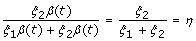


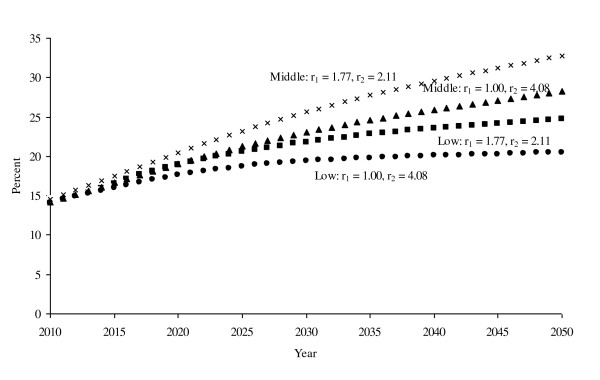
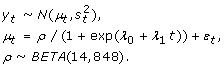



CDC STACKS serves as an archival repository of CDC-published products including
scientific findings,
journal articles, guidelines, recommendations, or other public health information authored or
co-authored by CDC or funded partners.
As a repository, CDC STACKS retains documents in their original published format to ensure public access to scientific information.
As a repository, CDC STACKS retains documents in their original published format to ensure public access to scientific information.
You May Also Like
COLLECTION
CDC Public Access