


Pulmonary Proteome and Protein Networks in Response to the Herbicide Paraquat in Rats
Supporting Files

-
5 2015
-
File Language:
English
Details
-
Alternative Title:J Proteomics Bioinform
-
Personal Author:
-
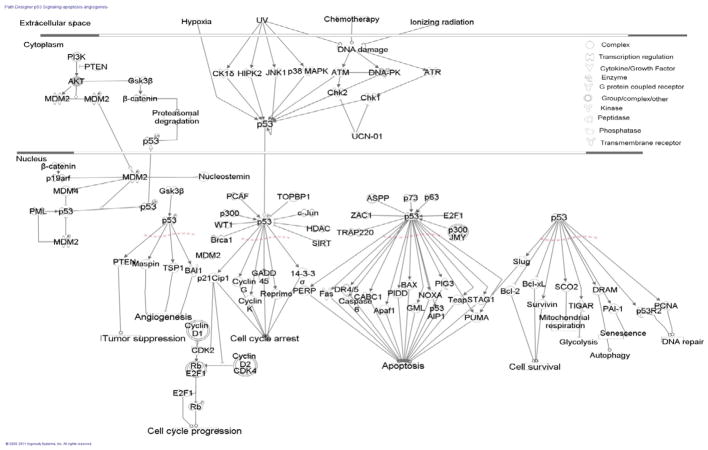
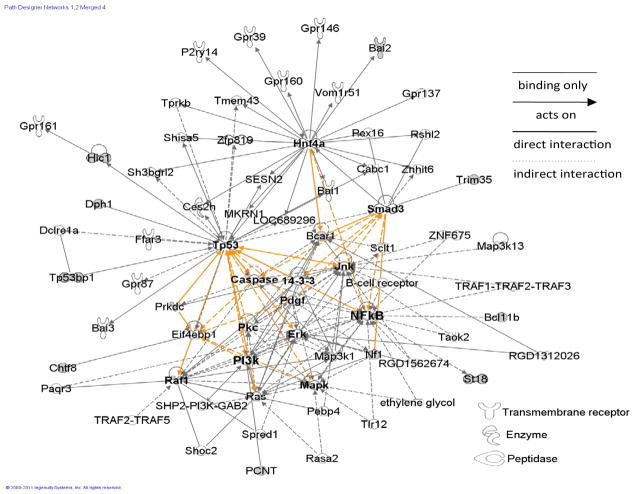
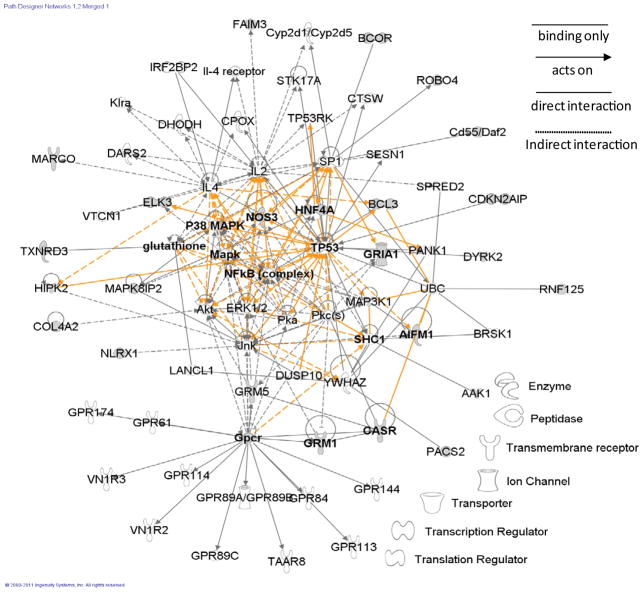
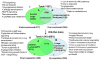
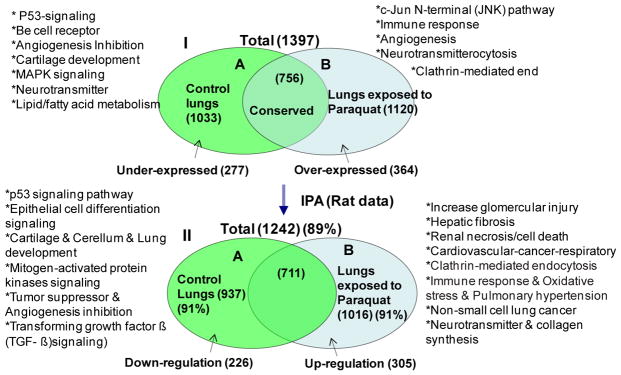
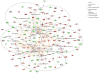
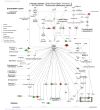
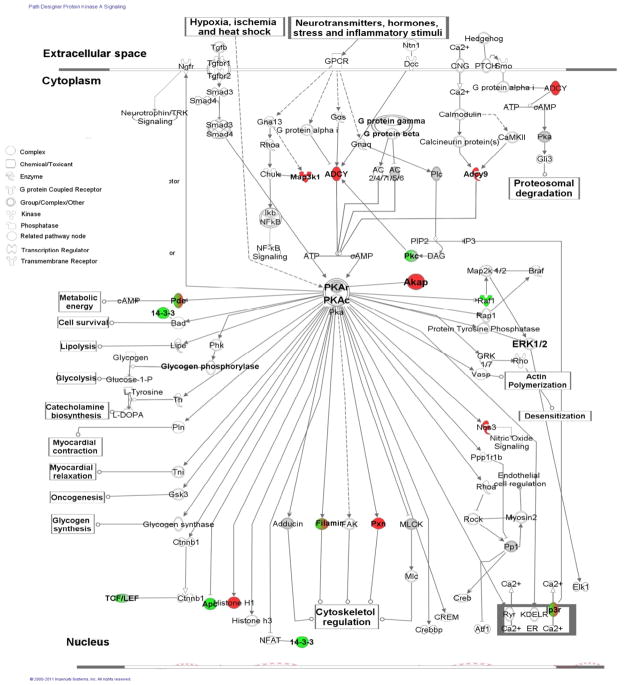
Description:Paraquat (PQ) has been one of the most widely used herbicides in the world. PQ, when ingested, is toxic to humans and may cause acute respiratory distress syndrome. To investigate molecular perturbation in lung tissues caused by PQ, Sprague Dawley male rats were fed with PQ at a dose of 25 mg/kg body weight for 20 times in four weeks. The effects of PQ on cellular processes and biological pathways were investigated by analyzing proteome in the lung tissues in comparison with the control. Among the detected proteins, 321 and 254 proteins were over-represented and under-represented, respectively, in the PQ-exposed rat lung tissues in comparison with the no PQ control. All over- and under-represented proteins were subjected to Ingenuity Pathway Analysis to create 25 biological networks and 38 pathways of interacting protein clusters. Over-represented proteins were involved in the C-jun-amino-terminal kinase pathway, caveolae-mediated endocytosis signaling, cardiovascular-cancer-respiratory pathway, regulation of clathrin-mediated endocytosis, non-small cell lung cancer signaling, pulmonary hypertension, glutamate receptor, immune response and angiogenesis. Under-represented proteins occurred in the p53 signaling pathway, mitogen-activated protein kinase signaling pathway, cartilage development and angiogenesis inhibition in the PQ-treated lungs. The results suggest that PQ may generate reactive oxygen species, impair the MAPK/p53 signaling pathway, activate angiogenesis and depress apoptosis in the lungs.
-
Subjects:
-
Source:J Proteomics Bioinform. 8(5):67-79
-
Pubmed ID:26538867
-
Pubmed Central ID:PMC4629535
-
Document Type:
-
Funding:
-
Volume:8
-
Issue:5
-
Collection(s):
-
Main Document Checksum:urn:sha256:8cbffac43d30c9710d989c735cdc850f2fdfc6043f78091c66ac02ee01da56c8
-
Download URL:
-
File Type:
 [PDF
- 1.43 MB
]
[PDF
- 1.43 MB
]
Supporting Files


File Language:
English
ON THIS PAGE




CDC STACKS serves as an archival repository of CDC-published products including
scientific findings,
journal articles, guidelines, recommendations, or other public health information authored or
co-authored by CDC or funded partners.
As a repository, CDC STACKS retains documents in their original published format to ensure public access to scientific information.
As a repository, CDC STACKS retains documents in their original published format to ensure public access to scientific information.
You May Also Like
COLLECTION
CDC Public Access