



Fragile X Syndrome
Supporting Files

-
Jul 07 2015
-
Available in CDC Stacks on 2016-09-01T00:00:00Z
Details
-
Alternative Title:J Mol Diagn
-
Personal Author:
-
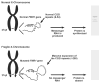
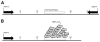
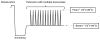
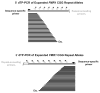
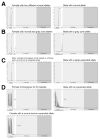
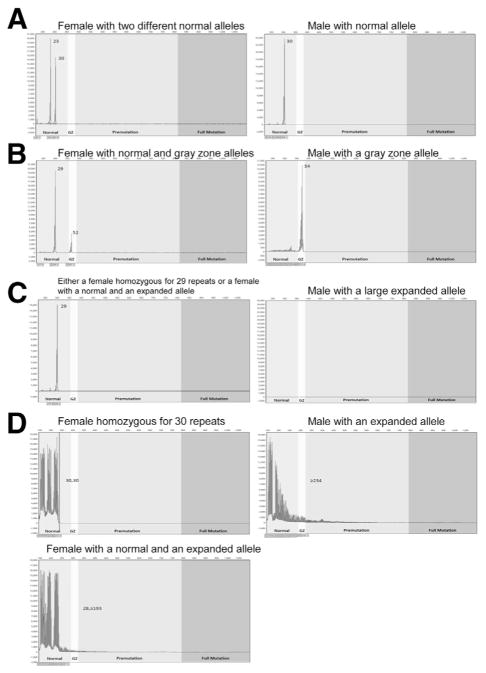
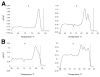
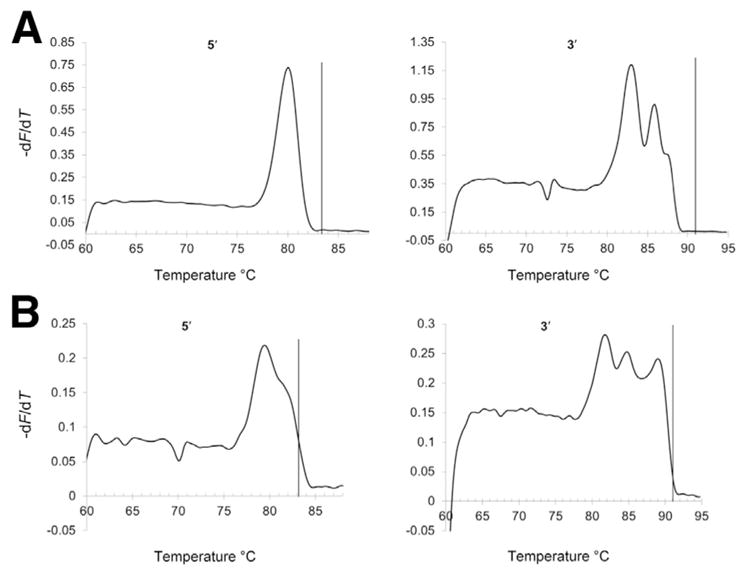
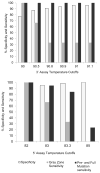
Description:Fragile X is the most common inherited cause of mental retardation with a prevalence of 1 in 4000 for males and 1 in 5000 to 8000 for females. The American College of Medical Genetics and Genomics has recommended diagnostic testing for fragile X in symptomatic persons, women with ovarian dysfunction, and persons with tremor/ataxia syndrome. Although medical and scientific professionals do not currently recommend screening nonsymptomatic populations, improvements in current treatment approaches and ongoing clinical trials have generated growing interest in screening for fragile X. Here, we briefly review the relevant molecular basis of fragile X and fragile X testing and compare three different molecular technologies available for fragile X screening in both males and females. These technologic approaches include destabilizing the CGG-repeat region with betaine and using chimeric CGG-targeted PCR primers, using heat pulses to destabilize C-G bonds in the PCR extension step, and using melting curve analysis to differentiate expanded CGG repeats from normals. The first two-step method performed with high sensitivity and specificity. The second method provided agarose gel images that allow identification of males with expanded CGG repeats and females with expanded CGG-repeat bands which are sometimes faint. The third melting curve analysis method would require controls in each run to correct for shifting optimal cutoff values.
-
Subjects:
-
Source:J Mol Diagn. 17(5):463-471.
-
Pubmed ID:26162330
-
Pubmed Central ID:PMC4620545
-
Document Type:
-
Funding:
-
Volume:17
-
Issue:5
-
Download URL:
-
File Type:
 [PDF - 801.04 KB]
 -
Collection(s):
-
Main Document Checksum:urn:sha256:1c98c7dfe201f4f49c5fd14d61f16065e02b35e995e0fa05ff9ef82d346d12ae
Supporting Files


 Was this page helpful?
 Found an issue?








CDC STACKS serves as an archival repository of CDC-published products including
scientific findings, journal articles, guidelines, recommendations, or other public health information authored or
co-authored by CDC or funded partners.
As a repository, CDC STACKS retains documents in their original published format to ensure public access to scientific information.
As a repository, CDC STACKS retains documents in their original published format to ensure public access to scientific information.
You May Also Like
COLLECTION
CDC Public Access