


Measurement of Impulse Peak Insertion Loss from two Acoustic Test Fixtures and Four Hearing Protector Conditions with an Acoustic Shock Tube
Supporting Files

-
2015 Sep-Oct
-
File Language:
English
Details
-
Alternative Title:Noise Health
-
Personal Author:
-
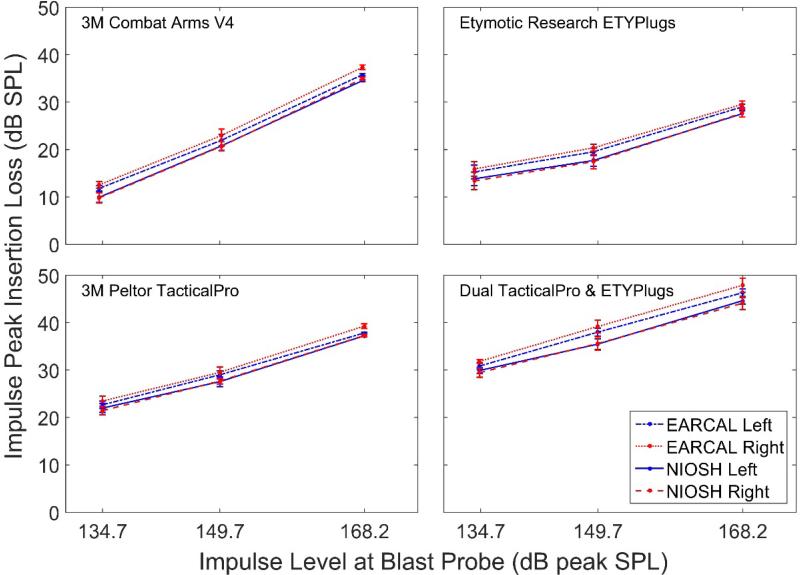
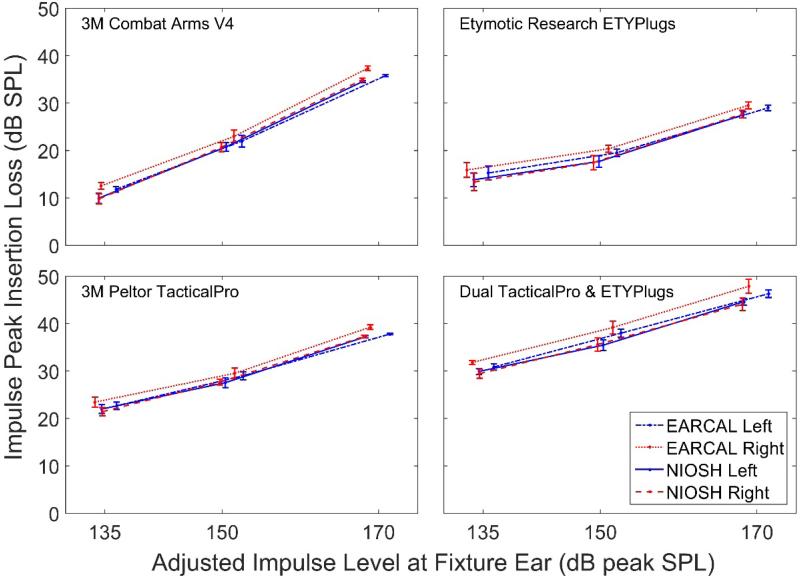
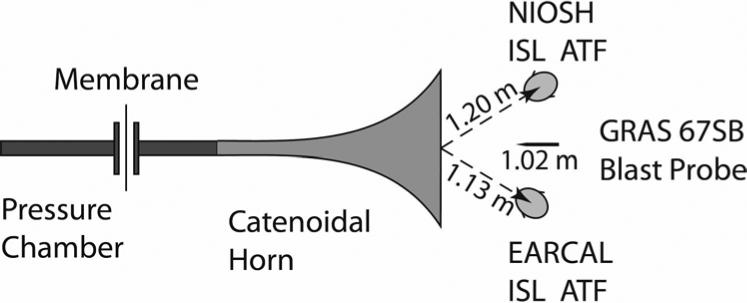
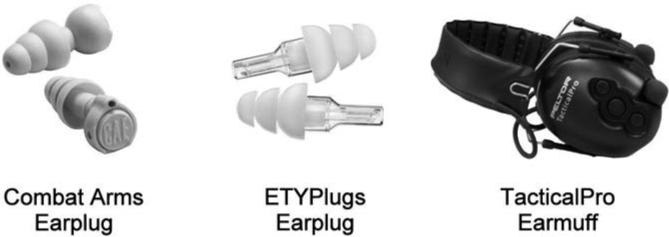
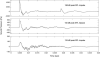
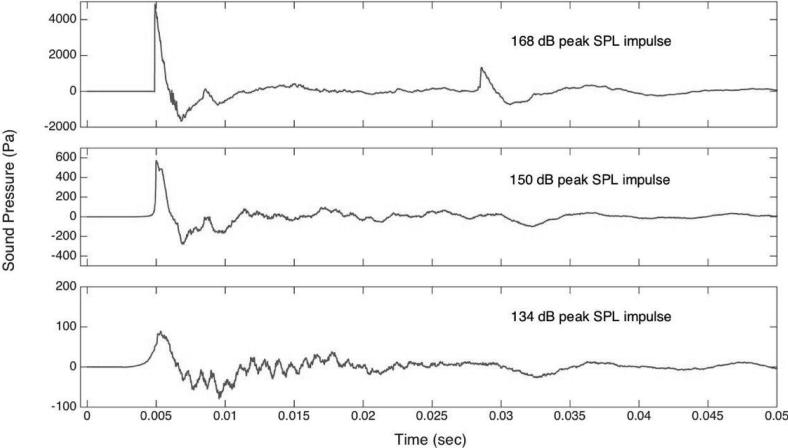
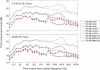
Description:Impulse peak insertion loss (IPIL) was studied with two acoustic test fixtures and four hearing protector conditions at the E-A-RCAL Laboratory. IPIL is the difference between the maximum estimated pressure for the open-ear condition and the maximum pressure measured when a hearing protector is placed on an acoustic test fixture (ATF). Two models of an ATF manufactured by the French-German Research Institute of Saint-Louis (ISL) were evaluated with high-level acoustic impulses created by an acoustic shock tube at levels of 134 decibels (dB), 150 dB, and 168 dB. The fixtures were identical except that the E-A-RCAL ISL fixture had ear canals that were 3 mm longer than the National Institute for Occupational Safety and Health (NIOSH) ISL fixture. Four hearing protection conditions were tested: Combat Arms earplug with the valve open, ETYPlugs ® earplug, TacticalPro headset, and a dual-protector ETYPlugs earplug with TacticalPro earmuff. The IPILs measured for the E-A-RCAL fixture were 1.4 dB greater than the National Institute for Occupational Safety and Health (NIOSH) ISL ATF. For the E-A-RCAL ISL ATF, the left ear IPIL was 2.0 dB greater than the right ear IPIL. For the NIOSH ATF, the right ear IPIL was 0.3 dB greater than the left ear IPIL.
-
Subjects:
-
Source:Noise Health. 17(78):364-373
-
Pubmed ID:26356380
-
Pubmed Central ID:PMC4617327
-
Document Type:
-
Funding:
-
Volume:17
-
Issue:78
-
Collection(s):
-
Main Document Checksum:urn:sha256:20c5bbdc3e2fe9a0950ecb23ea5daec69ad3fa67f13423d5836c4192444a9bac
-
Download URL:
-
File Type:
 [PDF
- 1.46 MB
]
[PDF
- 1.46 MB
]
Supporting Files


File Language:
English
ON THIS PAGE


CDC STACKS serves as an archival repository of CDC-published products including
scientific findings,
journal articles, guidelines, recommendations, or other public health information authored or
co-authored by CDC or funded partners.
As a repository, CDC STACKS retains documents in their original published format to ensure public access to scientific information.
As a repository, CDC STACKS retains documents in their original published format to ensure public access to scientific information.
You May Also Like
COLLECTION
CDC Public Access