



Systems analysis of genetic variation in MPTP neurotoxicity in mice
Supporting Files

-
7 2013 ; 7-2013
-
Available in CDC Stacks on October 21, 2015, 12:00 AM
File Language:
English
Details
-
Alternative Title:Neurotoxicology
-
Personal Author:
-
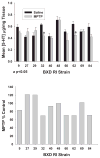
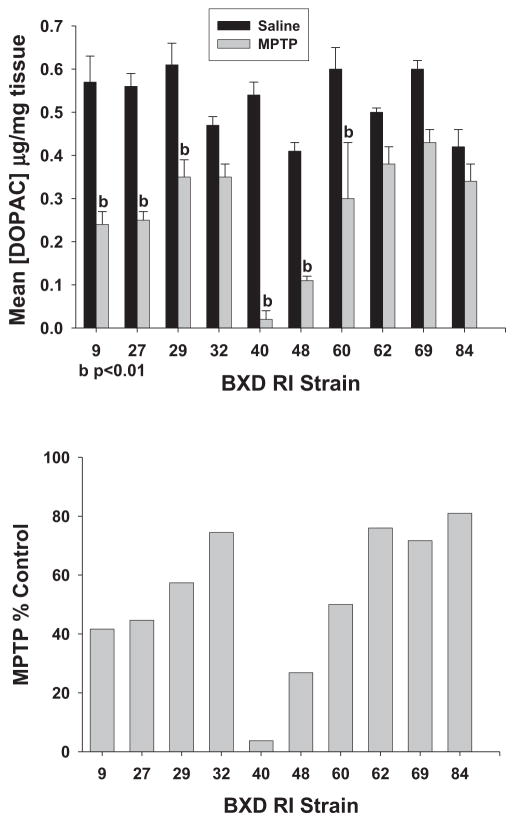
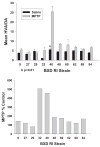
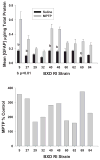
Description:We analyzed genetic variation in severity of neuronal damage using the known dopaminergic neurotoxicant, MPTP, as a prototypical chemical denervation agent. Male mice from ten members of the BXD family of recombinant inbred strains received 12.5 mg/kg MPTP s.c. (vs. saline) and 48 h later brains were taken for multiple related biochemical analyses. Striatal dopamine (DA) and its metabolites, DOPAC and HVA, and serotonin and its metabolite, 5-HIAAA, were analyzed by HPLC. DA turnover was assessed using DOPAC/DA and HVA/DA ratios. Striatal tyrosine hydroxylase (TH), glial fibrilary acidic protein (GFAP), and iron content in ventral midbrain were quantified. All dopamine measures, as well as TH and GFAP, demonstrated wide, genotype-dependent differences in response to MPTP. Serotonin was largely unaffected. Principal components analysis (PC) on difference values, saline minus MPTP, for DA, DOPAC, HVA, and TH, yielded a dominant principal component. The PC trait residuals for each genotype were compared against complementary expression data for striatum of the same strains. Three transcripts representing Mtap2, Lancl 1, and Kansl1l were highly correlated with the PC, as was the difference score, MPTP minus saline for GFAP. This systems approach to the study of environmental neurotoxicants holds promise to define individual genetic differences that contribute to variability in susceptibility to risk factors for diseases such as Parkinson's disease.
-
Subjects:
- 3,4-Dihydroxyphenylacetic Acid
- Animals
- Biomarkers
- Brain
- Disease Models, Animal
- Dopamine
- Gene Expression Regulation
- Genetic Predisposition to Disease
- Genetic Variation
- Genomics
- Glial Fibrillary Acidic Protein
- Homovanillic Acid
- Hydroxyindoleacetic Acid
- Iron
- MPTP Poisoning
- Male
- Mice
- Mice, Inbred C57BL
- Mice, Inbred DBA
- Multivariate Analysis
- Phenotype
- Principal Component Analysis
- Risk Factors
- Serotonin
- Species Specificity
- Systems Biology
- Tyrosine 3-Monooxygenase
-
Keywords:
-
Source:Neurotoxicology. 37:26-34
-
Pubmed ID:23558233
-
Pubmed Central ID:PMC4615717
-
Document Type:
-
Funding:
-
Volume:37
-
Download URL:
-
File Type:
 [PDF - 671.87 KB]
-
Collection(s):
-
Main Document Checksum:urn:sha256:3765726270f2f0bedabb7477d3fd2ca652fa7c8c5f27ddbc2867be70357e4370
Supporting Files


File Language:
English
 Was this page helpful?
 Found an issue?










CDC STACKS serves as an archival repository of CDC-published products including
scientific findings, journal articles, guidelines, recommendations, or other public health information authored or
co-authored by CDC or funded partners.
As a repository, CDC STACKS retains documents in their original published format to ensure public access to scientific information.
As a repository, CDC STACKS retains documents in their original published format to ensure public access to scientific information.
You May Also Like
COLLECTION
CDC Public Access