


Silica Coating Influences the Corona and Biokinetics of Cerium Oxide Nanoparticles
Supporting Files
Public Domain

-
2015/10/12
-
File Language:
English
Details
-
Journal Article:Part Fibre Toxicol
-
Personal Author:
-
Description:Background
The physicochemical properties of nanoparticles (NPs) influence their biological outcomes.
Methods
We assessed the effects of an amorphous silica coating on the pharmacokinetics and pulmonary effects of CeO2 NPs following intratracheal (IT) instillation, gavage and intravenous injection in rats. Uncoated and silica-coated CeO2 NPs were generated by flame spray pyrolysis and later neutron-activated. These radioactive NPs were IT-instilled, gavaged, or intravenously (IV) injected in rats. Animals were analyzed over 28 days post-IT, 7 days post-gavage and 2 days post-injection.
Results
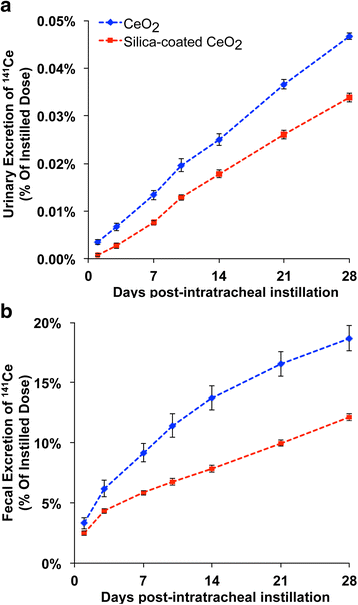
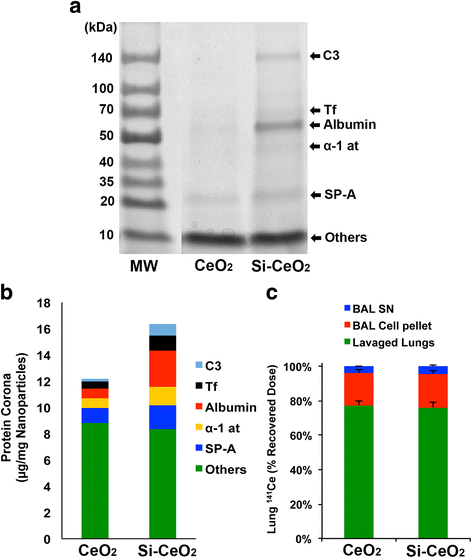
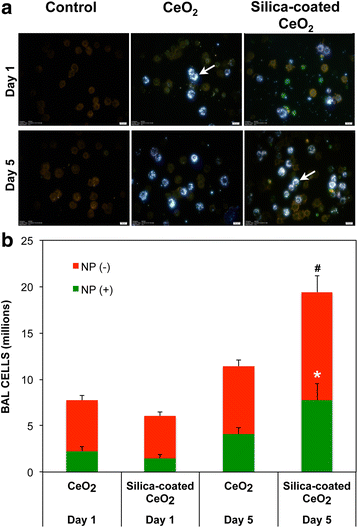
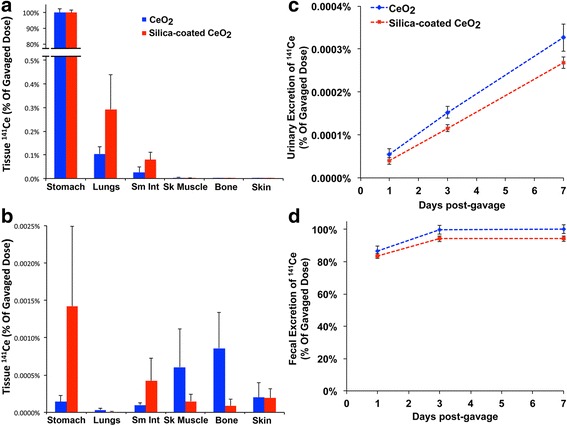
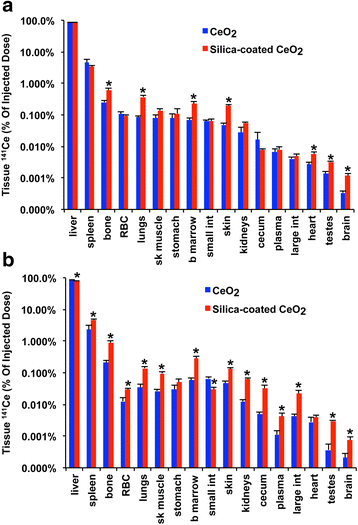
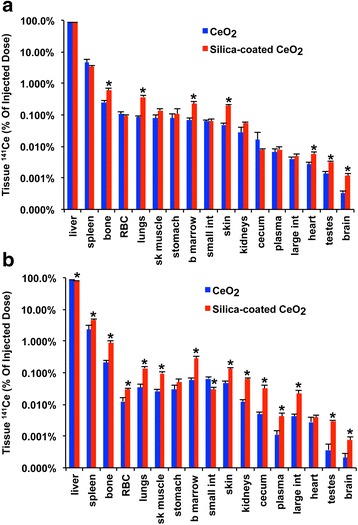
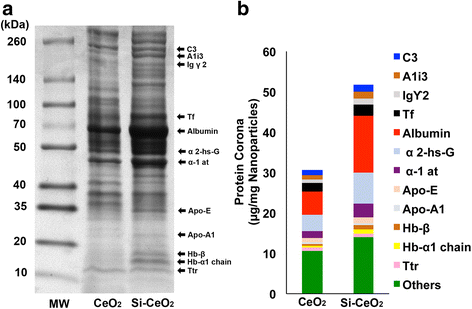
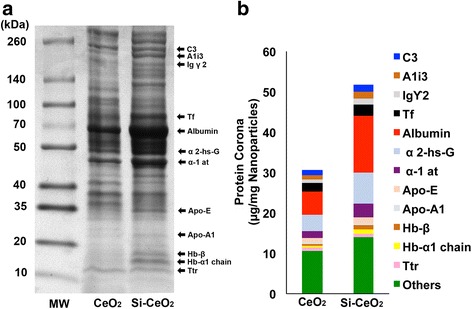
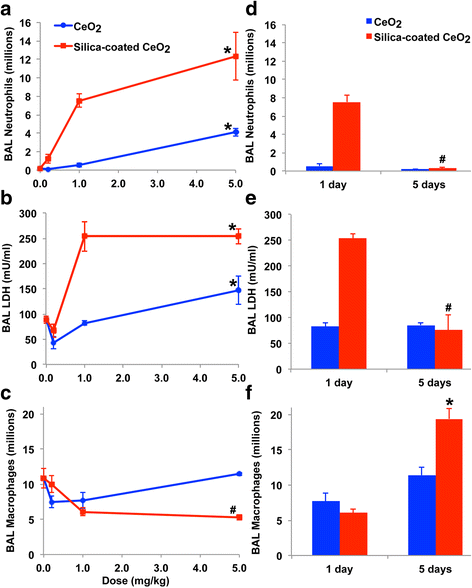
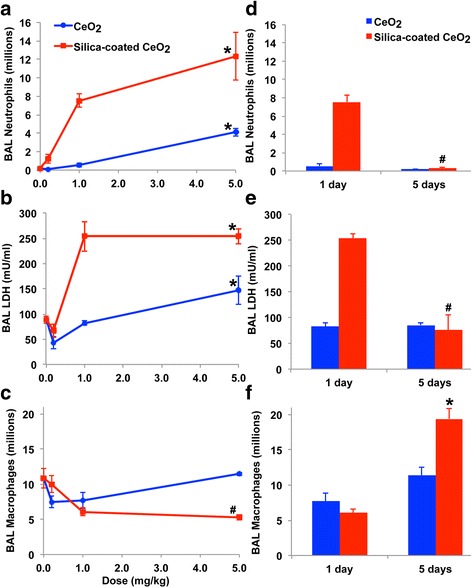
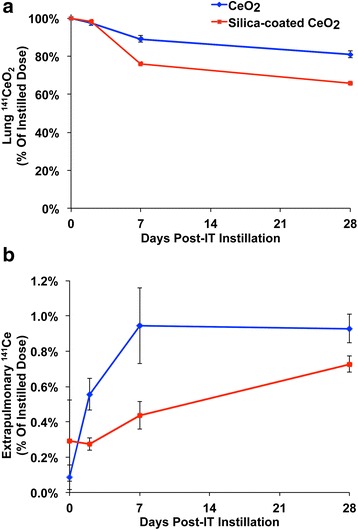
Our data indicate that silica coating caused more but transient lung inflammation compared to uncoated CeO2. The transient inflammation of silica-coated CeO2 was accompanied by its enhanced clearance. Then, from 7 to 28 days, clearance was similar although significantly more 141Ce from silica-coated (35 %) was cleared than from uncoated (19 %) 141CeO2 in 28 days. The protein coronas of the two NPs were significantly different when they were incubated with alveolar lining fluid. Despite more rapid clearance from the lungs, the extrapulmonary 141Ce from silica-coated 141CeO2 was still minimal (<1 %) although lower than from uncoated 141CeO2 NPs. Post-gavage, nearly 100 % of both NPs were excreted in the feces consistent with very low gut absorption. Both IV-injected 141CeO2 NP types were primarily retained in the liver and spleen. The silica coating significantly altered the plasma protein corona composition and enhanced retention of 141Ce in other organs except the liver.
Conclusion
We conclude that silica coating of nanoceria alters the biodistribution of cerium likely due to modifications in protein corona formation after IT and IV administration.
-
Subjects:
-
Keywords:Author Keywords: Nanoceria; Bioavailability; Protein Corona; Silica Nanotechnology; Chemical-properties; Physical-properties; Silicon-compounds; Biological-effects; Pharmacodynamics; Pulmonary-function; Pulmonary-disorders; Kinetics; Cerium-compounds; Oxides; Coatings; Laboratory-animals; Laboratory-testing; Pyrolysis; Neutron-radiation; Analytical-processes; Immune-reaction; Proteins; Alveolar-cells; Biological-distribution; Pulmonary-clearance;
-
Source:Part Fibre Toxicol. 12.
-
Pubmed ID:26458946
-
Pubmed Central ID:PMC4603643
-
Document Type:
-
Genre:
-
Place as Subject:
-
CIO:
-
Division:
-
Topic:
-
Location:
-
Pages in Document:15 pdf pages
-
Volume:12
-
NIOSHTIC Number:nn:20046912
-
CAS Registry Number:
-
Federal Fiscal Year:2016
-
NORA Priority Area:
-
Peer Reviewed:True
-
Collection(s):
-
Main Document Checksum:urn:sha-512:b08754fb1281fe533f3c57ed196e392fbcbbc10c32dcaddb8ed1524bba93d3e23b6d113360c9e3e5e736b2956795d347e7ac67b284c5d65715d7a19f236589dd
-
Download URL:
-
File Type:
 [PDF
- 2.55 MB
]
[PDF
- 2.55 MB
]
Supporting Files

Related Documents

File Language:
English
ON THIS PAGE





CDC STACKS serves as an archival repository of CDC-published products including
scientific findings,
journal articles, guidelines, recommendations, or other public health information authored or
co-authored by CDC or funded partners.
As a repository, CDC STACKS retains documents in their original published format to ensure public access to scientific information.
As a repository, CDC STACKS retains documents in their original published format to ensure public access to scientific information.
You May Also Like