


Evaluation of BBL™ Sensi-Discs™ and FTA® cards as sampling devices for detection of rotavirus in stool samples
Supporting Files

-
May 30 2015
-
Details
-
Alternative Title:J Virol Methods
-
Personal Author:
-
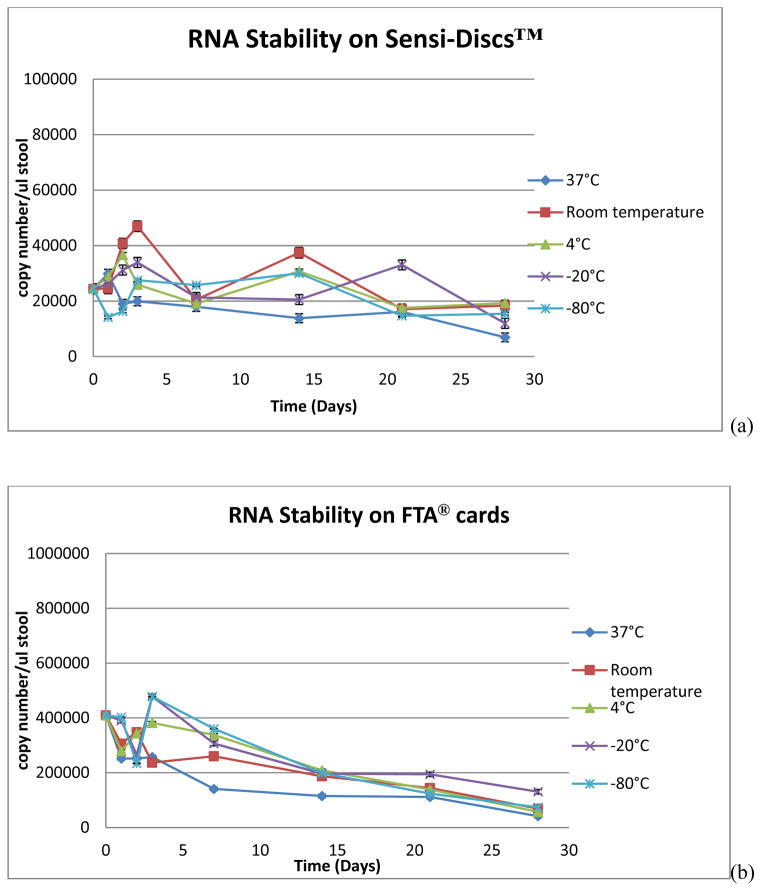
Description:Rotavirus is the most important cause of severe childhood gastroenteritis worldwide. Rotavirus vaccines are available and rotavirus surveillance is carried out to assess vaccination impact. In surveillance studies, stool samples are stored typically at 4°C or frozen to maintain sample quality. Uninterrupted cold storage is a problem in developing countries because of power interruptions. Cold-chain transportation of samples from collection sites to testing laboratories is costly. In this study, we evaluated the use of BBL™ Sensi-Discs™ and FTA(®) cards for storage and transportation of samples for virus isolation, EIA, and RT-PCR testing. Infectious rotavirus was recovered after 30 days of storage on Sensi-Discs™ at room temperature. We were able to genotype 98-99% of samples stored on Sensi-Discs™ and FTA(®) cards at temperatures ranging from -80°C to 37°C up to 180 days. A field sampling test using samples prepared and shipped from Cameroon, showed that both matrices yielded 100% genotyping success compared with whole stool and Sensi-Discs™ demonstrated 95% concordance with whole stool in EIA testing. The utilization of BBL™ Sensi-Discs™ and FTA(®) cards for stool sample storage and shipment has the potential to have great impact on global public health by facilitating surveillance and epidemiological investigations of rotavirus strains worldwide at a reduced cost.
-
Subjects:
-
Source:J Virol Methods. 222:41-46.
-
Pubmed ID:26022083
-
Pubmed Central ID:PMC4605405
-
Document Type:
-
Funding:
-
Volume:222
-
Collection(s):
-
Main Document Checksum:urn:sha256:c0db0c58c3a177c060ea3bb37ed139ee074c8f58ab281ebcbd85bf3cea408a36
-
Download URL:
-
File Type:
 [PDF
- 483.02 KB
]
[PDF
- 483.02 KB
]
Supporting Files


ON THIS PAGE


CDC STACKS serves as an archival repository of CDC-published products including
scientific findings,
journal articles, guidelines, recommendations, or other public health information authored or
co-authored by CDC or funded partners.
As a repository, CDC STACKS retains documents in their original published format to ensure public access to scientific information.
As a repository, CDC STACKS retains documents in their original published format to ensure public access to scientific information.
You May Also Like
COLLECTION
CDC Public Access