


The aryl hydrocarbon receptor interacts with nuclear factor erythroid 2-related factor 2 to mediate induction of NAD(P)H: quinoneoxidoreductase 1 by 2,3,7,8-tetrachlorodibenzo-p-dioxin
Supporting Files

-
Jun 22 2013
-
Details
-
Alternative Title:Arch Biochem Biophys
-
Personal Author:
-
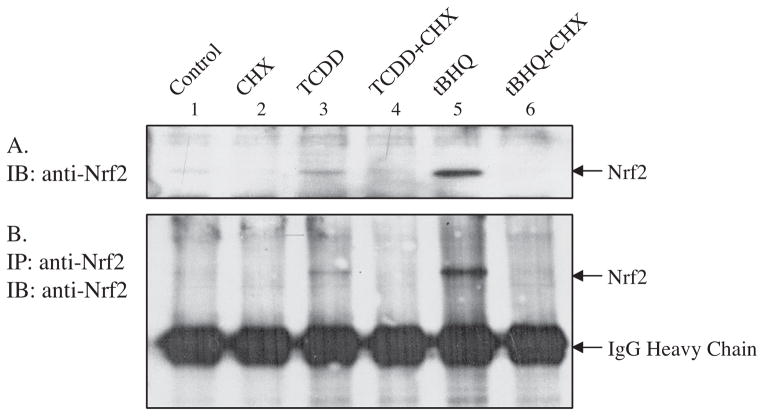
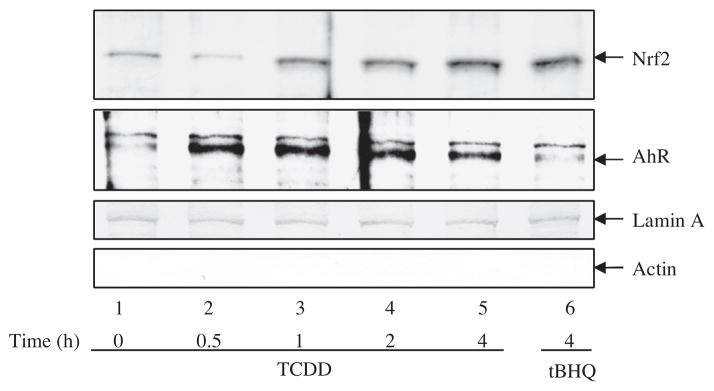
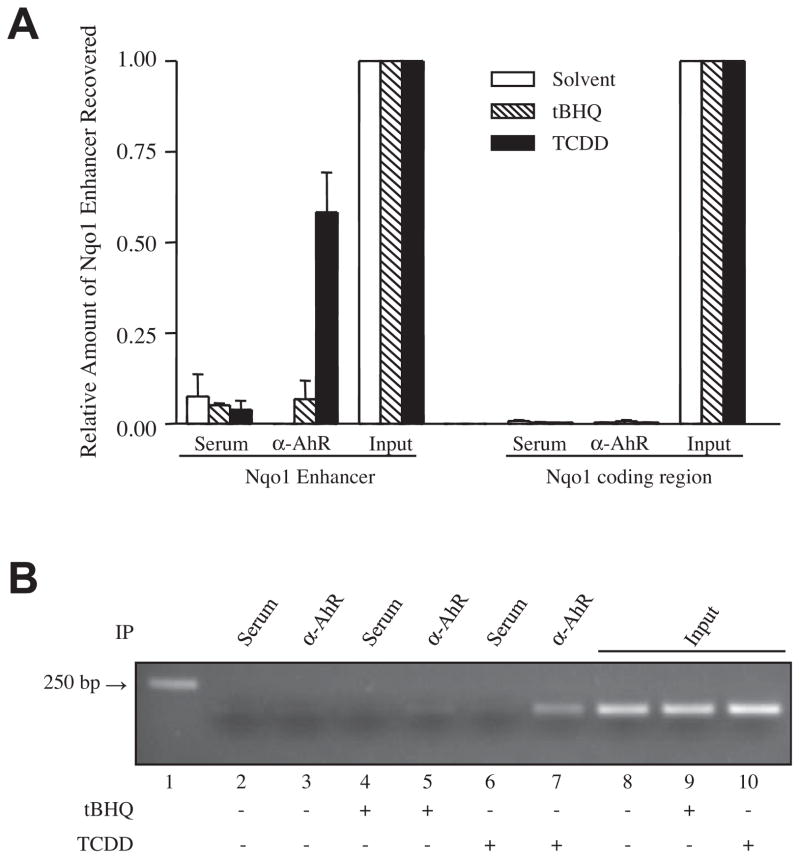
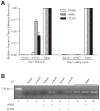
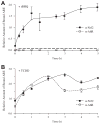
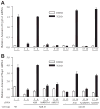
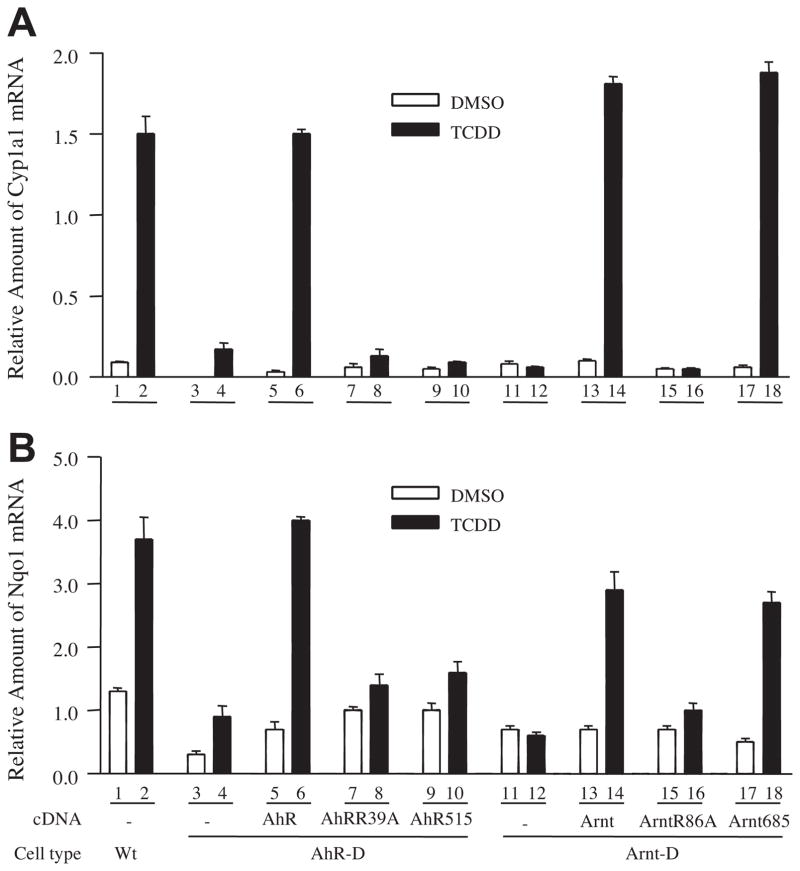
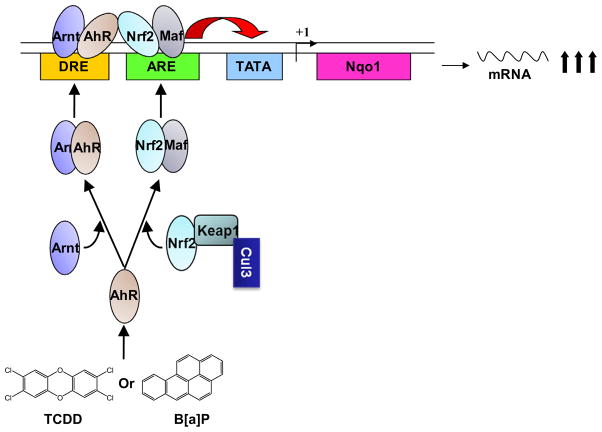
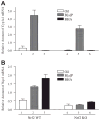
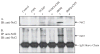
Description:NAD(P)H:quinoneoxidoreductase 1 (NQO1) belongs to a group of the aryl hydrocarbon receptor (AhR) battery of drug-metabolizing enzymes that are characteristically induced by both AhR agonists and nuclear factor erythroid 2-related factor 2 (Nrf2) activators. We have previously reported that induction of Nqo1 by the AhR agonist 2,3,7,8-tetrachlorodibenzo-p-dioxin (TCDD) in hepa1c1c7 cells involves Nrf2 (Ma et al., Biochem J 377, 205-213, 2004). Here we analyzed the molecular mechanism of induction. Induction required AhR and its DNA-binding partner Arnt because induction was not observed in AhR or Arnt-defective cells, but induction was restored upon reconstitution of the variant cells with functional AhR or Arnt. Induction also required Nrf2, as induction by benzo[a]pyrene was lost in the liver of Nrf2 knockout mice similarly to induction by butyl hydroxyanisol, demonstrating a cross-interaction between the AhR and Nrf2 pathways for induction in vivo. TCDD increased the protein level and induced the nuclear accumulation of Nrf2 with a delayed kinetics compared with activation of AhR. Chromatin immunoprecipitation revealed that TCDD recruited both AhR and Nrf2 to the Nqo1 promoter enhancer region containing a DRE and an ARE in time-dependent manners. Co-immunoprecipitation experiments revealed that, in addition to AhR-Arnt binding, TCDD induced an interaction between AhR and Nrf2 as well as Keap1. The findings reveal that TCDD induces multi protein complexes to mediate cross-interaction between the AhR and Nrf2 pathways, uncovering a novel mechanistic aspect of gene regulation by environmental chemicals through AhR and Nrf2.
-
Subjects:
-
Source:Arch Biochem Biophys. 537(1):31-38.
-
Pubmed ID:23800876
-
Pubmed Central ID:PMC4597779
-
Document Type:
-
Funding:
-
Volume:537
-
Issue:1
-
Collection(s):
-
Main Document Checksum:urn:sha256:ab9f44b8c5b34ca2924af1fec02eefe6262b5b233e6b60679e3e86a5797ac13b
-
Download URL:
-
File Type:
 [PDF
- 1.57 MB
]
[PDF
- 1.57 MB
]
Supporting Files


ON THIS PAGE







CDC STACKS serves as an archival repository of CDC-published products including
scientific findings,
journal articles, guidelines, recommendations, or other public health information authored or
co-authored by CDC or funded partners.
As a repository, CDC STACKS retains documents in their original published format to ensure public access to scientific information.
As a repository, CDC STACKS retains documents in their original published format to ensure public access to scientific information.
You May Also Like
COLLECTION
CDC Public Access