



Pacific Broad Tapeworm Adenocephalus pacificus as a Causative Agent of Globally Reemerging Diphyllobothriosis
Supporting Files
Public Domain

-
Oct 2015
File Language:
English
Details
-
Alternative Title:Emerg Infect Dis
-
Personal Author:
-
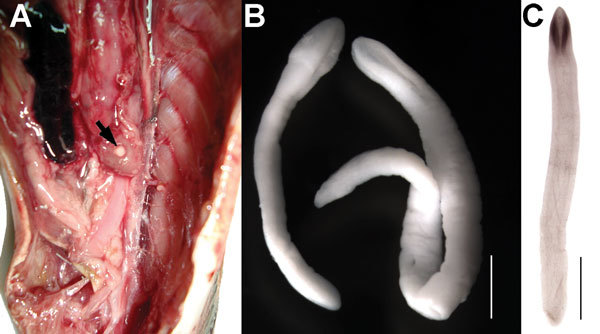
Description:The Pacific broad tapeworm Adenocephalus pacificus (syn. Diphyllobothrium pacificum) is the causative agent of the third most common fish-borne cestodosis among humans. Although most of the nearly 1,000 cases among humans have been reported in South America (Peru, Chile, and Ecuador), cases recently imported to Europe demonstrate the potential for spread of this tapeworm throughout the world as a result of global trade of fresh or chilled marine fish and travel or migration of humans. We provide a comprehensive survey of human cases of infection with this zoonotic parasite, summarize the history of this re-emerging disease, and identify marine fish species that may serve as a source of human infection when eaten raw or undercooked.
-
Subjects:
-
Source:Emerg Infect Dis. 21(10):1697-1703
-
Pubmed ID:26402440
-
Pubmed Central ID:PMC4593442
-
Document Type:
-
Genre:
-
Place as Subject:
-
Volume:21
-
Issue:10
-
Download URL:
-
File Type:
 [PDF - 558.29 KB]
 -
Collection(s):
-
Main Document Checksum:urn:sha256:5a68b9d8a71040fc74e040eb55853a397da05152f8a71a99e56cf8f325ecb379
Supporting Files


File Language:
English
 Was this page helpful?
 Found an issue?





CDC STACKS serves as an archival repository of CDC-published products including
scientific findings, journal articles, guidelines, recommendations, or other public health information authored or
co-authored by CDC or funded partners.
As a repository, CDC STACKS retains documents in their original published format to ensure public access to scientific information.
As a repository, CDC STACKS retains documents in their original published format to ensure public access to scientific information.
You May Also Like
COLLECTION
Emerging Infectious Diseases