


Payload Drug vs. Nanocarrier Biodegradation by Myeloperoxidase- and Peroxynitrite-Mediated Oxidations: Pharmacokinetic Implications
Supporting Files

-
May 21 2015
-
Details
-
Alternative Title:Nanoscale
-
Personal Author:
-
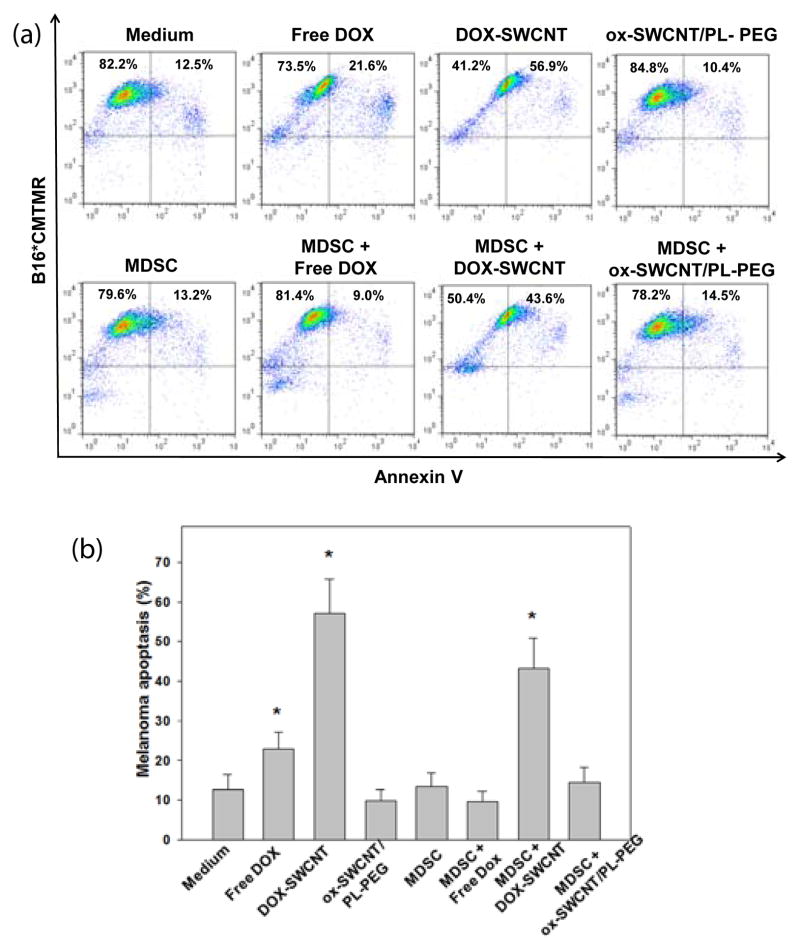
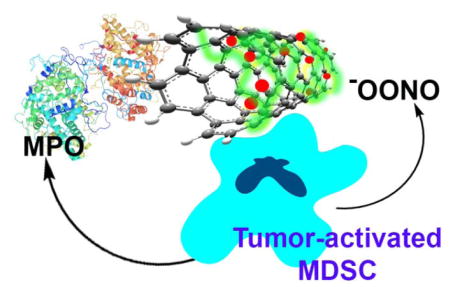
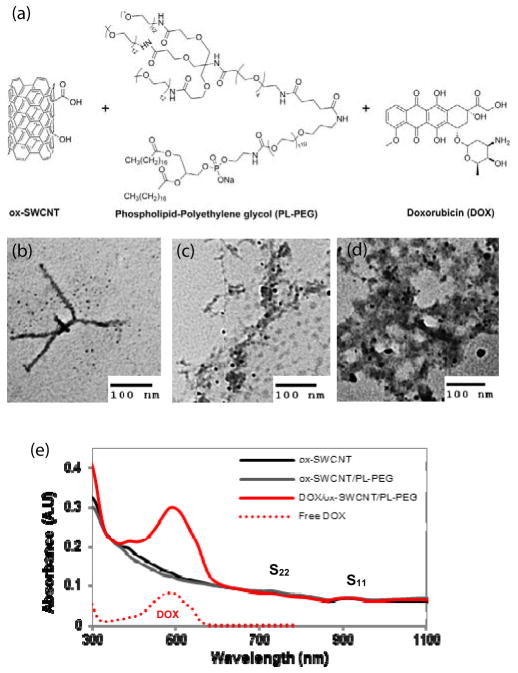
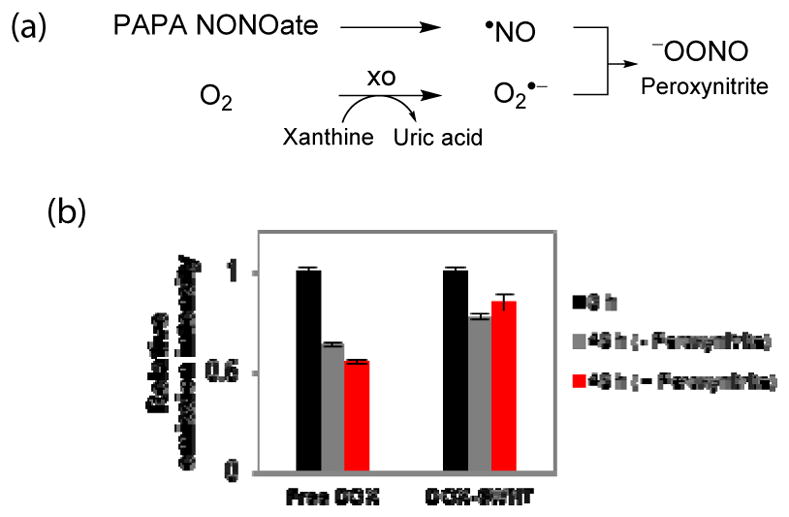
Description:With the advancement of nanocarriers for drug delivery into biomedical practice, assessments of drug susceptibility to oxidative degradation by enzymatic mechanisms of inflammatory cells become important. Here, we investigate oxidative degradation of a carbon nanotube-based drug carrier loaded with Doxorubicin. We employed myeloperoxidase-catalysed and peroxynitrite-mediated oxidative conditions to mimic the respiratory burst of neutrophils and macrophages, respectively. In addition, we revealed that the cytostatic and cytotoxic effects of free Doxorubicin, but not nanotube-carried drug, on melanoma and lung carcinoma cell lines were abolished in the presence of tumor-activated myeloid regulatory cells that create unique myeloperoxidase- and peroxynitrite-induced oxidative conditions. Both ex vivo and in vitro studies demonstrate that the nanocarrier protects the drug against oxidative biodegradation.
-
Subjects:
-
Source:Nanoscale. 7(19):8689-8694.
-
Pubmed ID:25902750
-
Pubmed Central ID:PMC4582775
-
Document Type:
-
Funding:
-
Volume:7
-
Issue:19
-
Collection(s):
-
Main Document Checksum:urn:sha256:71c8ee8342e9555653d09a53831a59d4f66d7de23e8249bff723085a38e93659
-
Download URL:
-
File Type:
 [PDF
- 914.18 KB
]
[PDF
- 914.18 KB
]
Supporting Files


ON THIS PAGE





CDC STACKS serves as an archival repository of CDC-published products including
scientific findings,
journal articles, guidelines, recommendations, or other public health information authored or
co-authored by CDC or funded partners.
As a repository, CDC STACKS retains documents in their original published format to ensure public access to scientific information.
As a repository, CDC STACKS retains documents in their original published format to ensure public access to scientific information.
You May Also Like
COLLECTION
CDC Public Access