


Incidence of Obesity Among Young US Children Living in Low-Income Families, 2008–2011
Supporting Files

-
Nov 25 2013
-
File Language:
English
Details
-
Alternative Title:Pediatrics
-
Personal Author:
-
Description:OBJECTIVE
To examine the incidence and reverse of obesity among young low-income children and variations across population subgroups.
METHODS
We included 1.2 million participants in federally funded child health and nutrition programs who were 0 to 23 months old in 2008 and were followed up 24 to 35 months later in 2010–2011. Weight and height were measured. Obesity at baseline was defined as gender-specific weight-for-length ≥95th percentile on the 2000 Centers for Disease Control and Prevention growth charts. Obesity at follow-up was defined as gender-specific BMI-for-age ≥95th percentile. We used a multivariable log-binomial model to estimate relative risk of obesity adjusting for gender, baseline age, race/ethnicity, duration of follow-up, and baseline weight-for-length percentile.
RESULTS
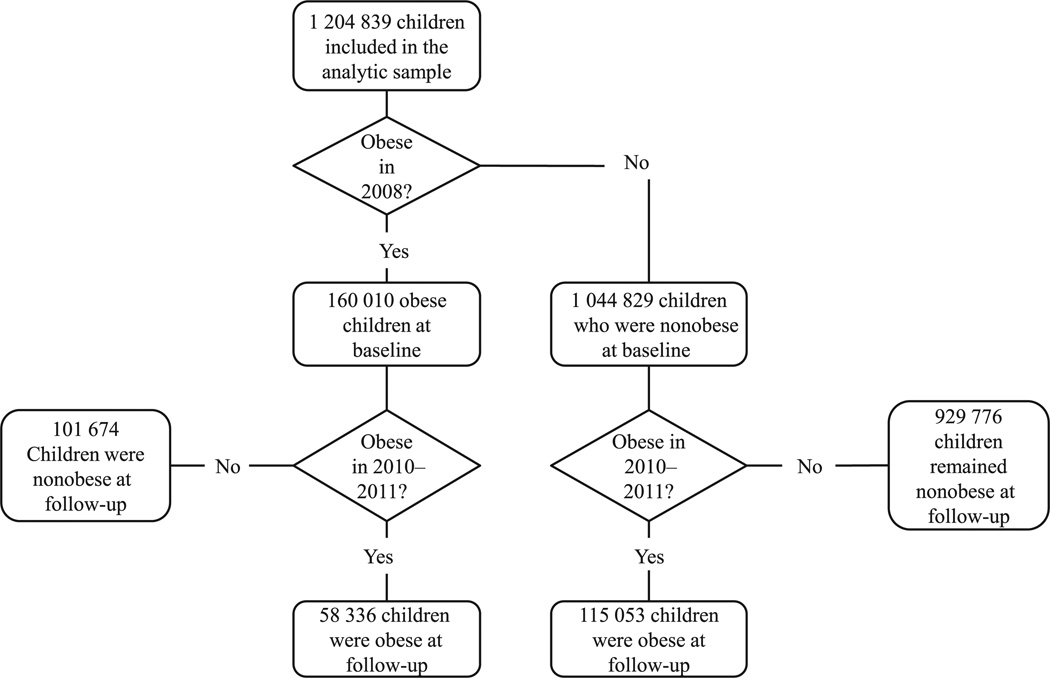
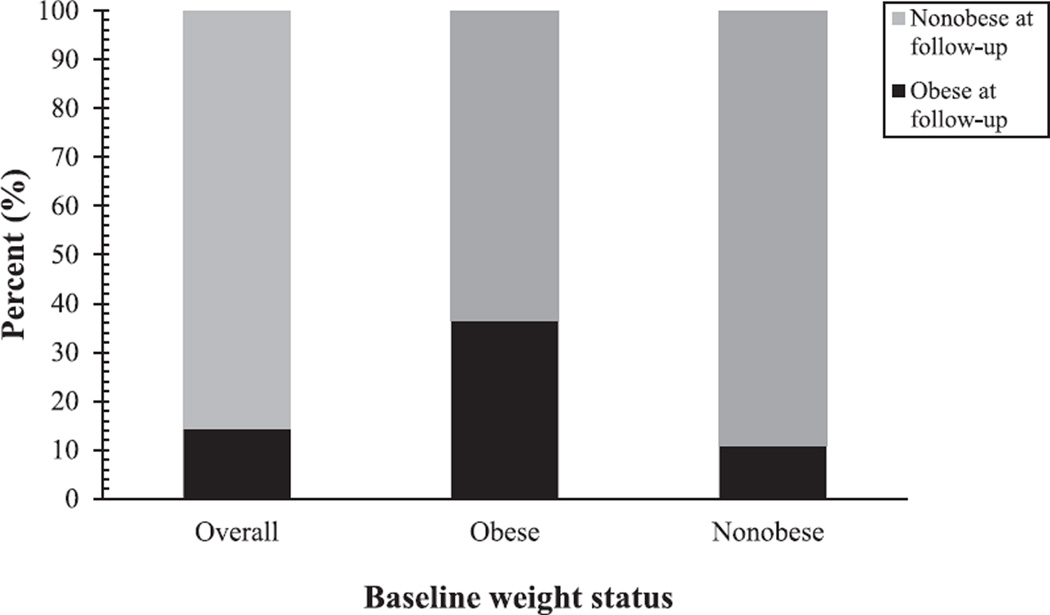
The incidence of obesity was 11.0% after the follow-up period. The incidence was significantly higher among boys versus girls and higher among children aged 0 to 11 months at baseline versus those older. Compared with non-Hispanic whites, the risk of obesity was 35% higher among Hispanics and 49% higher among American Indians (AIs)/Alaska Natives (ANs), but 8% lower among non-Hispanic African Americans. Among children who were obese at baseline, 36.5% remained obese and 63.5% were nonobese at follow-up. The proportion of reversing of obesity was significantly lower among Hispanics and AIs/ANs than that among other racial/ethnic groups.
CONCLUSIONS
The high incidence underscores the importance of early-life obesity prevention in multiple settings for low-income children and their families. The variations within population subgroups suggest that culturally appropriate intervention efforts should be focused on Hispanics and AIs/ANs.
-
Subjects:
-
Source:Pediatrics. 132(6):1006-1013.
-
Pubmed ID:24276843
-
Pubmed Central ID:PMC4582754
-
Document Type:
-
Funding:
-
Place as Subject:
-
Volume:132
-
Issue:6
-
Collection(s):
-
Main Document Checksum:urn:sha256:f1c385e892c244db55f9de91fa39f192fe02f760a5fb67258c462e4576c3993c
-
Download URL:
-
File Type:
 [PDF
- 742.86 KB
]
[PDF
- 742.86 KB
]
Supporting Files


File Language:
English
ON THIS PAGE

CDC STACKS serves as an archival repository of CDC-published products including
scientific findings,
journal articles, guidelines, recommendations, or other public health information authored or
co-authored by CDC or funded partners.
As a repository, CDC STACKS retains documents in their original published format to ensure public access to scientific information.
As a repository, CDC STACKS retains documents in their original published format to ensure public access to scientific information.
You May Also Like
COLLECTION
CDC Public Access