



Muscular strengthening activity patterns and metabolic health risk among US adults*
Supporting Files

-
Mar 2012
-
File Language:
English
Details
-
Alternative Title:J Diabetes
-
Personal Author:
-
Description:Background
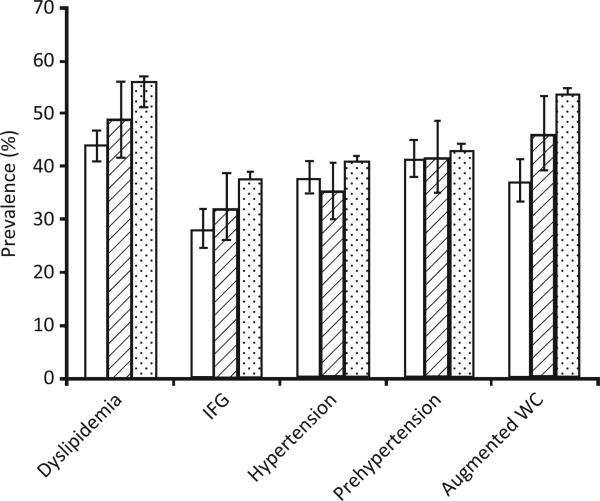
Many studies have examined the relationship between physical activity and metabolic disorders. However, few have focused on specific associations between these disorders and muscular strengthening activity (MSA) patterns. The aim of the present study was to examine the association(s) for each metabolic syndrome criterion and MSA patterns.
Methods
The study sample (n = 5618) consisted of adults ≥20 years of age who participated in the 1999–2004 National Health and Nutrition Examination Survey. Cut-off points for metabolic syndrome criteria were derived from the American Heart Association ⁄ National Heart, Lung, and Blood Institute definition. The aggregate of data on weight lifting, push-ups, and sit-ups was used to establish patterns of MSA. Participants reporting ≥2 days/week MSA were coded as meeting current US MSA guidelines.
Results
Following adjustments, participants reporting ≥2 days/week MSA were found to be 28% (OR 0.72; 95% CI 0.62, 0.83) less likely to have dyslipidemia, 29% (OR 0.71; 95% CI 0.54, 0.93) less likely to have impaired fasting glucose, 19% (OR 0.81; 95% CI 0.65, 0.99) less likely to have prehypertension, and 43% (OR 0.57; 95% CI 0.46, 0.72) less likely to have augmented waist circumference compared with those reporting engaging in no MSA. No association was found for hypertension and MSA.
Conclusion
Engaging in ≥2 days/week MSA as part of an overall physical activity regimen may be prudent in preserving metabolic health. These findings strengthen the relationship between MSA and metabolic health; thus, clinicians should include MSA when discussing lifestyle approaches to better health.
-
Subjects:
-
Source:J Diabetes. 4(1):77-84.
-
Pubmed ID:22099352
-
Pubmed Central ID:PMC4582396
-
Document Type:
-
Funding:
-
Place as Subject:
-
Volume:4
-
Issue:1
-
Collection(s):
-
Main Document Checksum:urn:sha256:f7547ef846434652e9dd756ce3aaf96cded47dd44c83af7f44b447cc7090d75f
-
Download URL:
-
File Type:
 [PDF
- 369.67 KB
]
[PDF
- 369.67 KB
]
Supporting Files


File Language:
English
 Was this page helpful?
 Found an issue?



CDC STACKS serves as an archival repository of CDC-published products including
scientific findings,
journal articles, guidelines, recommendations, or other public health information authored or
co-authored by CDC or funded partners.
As a repository, CDC STACKS retains documents in their original published format to ensure public access to scientific information.
As a repository, CDC STACKS retains documents in their original published format to ensure public access to scientific information.
You May Also Like
COLLECTION
CDC Public Access