


Major, Non-Chromosomal, Birth Defects and Maternal Physical Activity: A Systematic Review
Supporting Files

-
May 25 2012
-
File Language:
English
Details
-
Alternative Title:Birth Defects Res A Clin Mol Teratol
-
Personal Author:
-
Description:BACKGROUND
We reviewed the published literature to assess the association between maternal periconceptional physical activity and the risk for major, non-chromosomal, birth defects and whether this varies by pre-pregnancy obesity.
METHODS
We conducted a systematic literature search of MEDLINE, EMBASE, and CINAHL databases. Data were abstracted from all articles that met our inclusion criteria and included information on physical activity intensity (mild, moderate, and vigorous) and modality (i.e., standing, lifting, other). We assessed occupational and recreational physical activity separately. The quality of included articles was assessed using the Newcastle–Ottawa Scale.
RESULTS
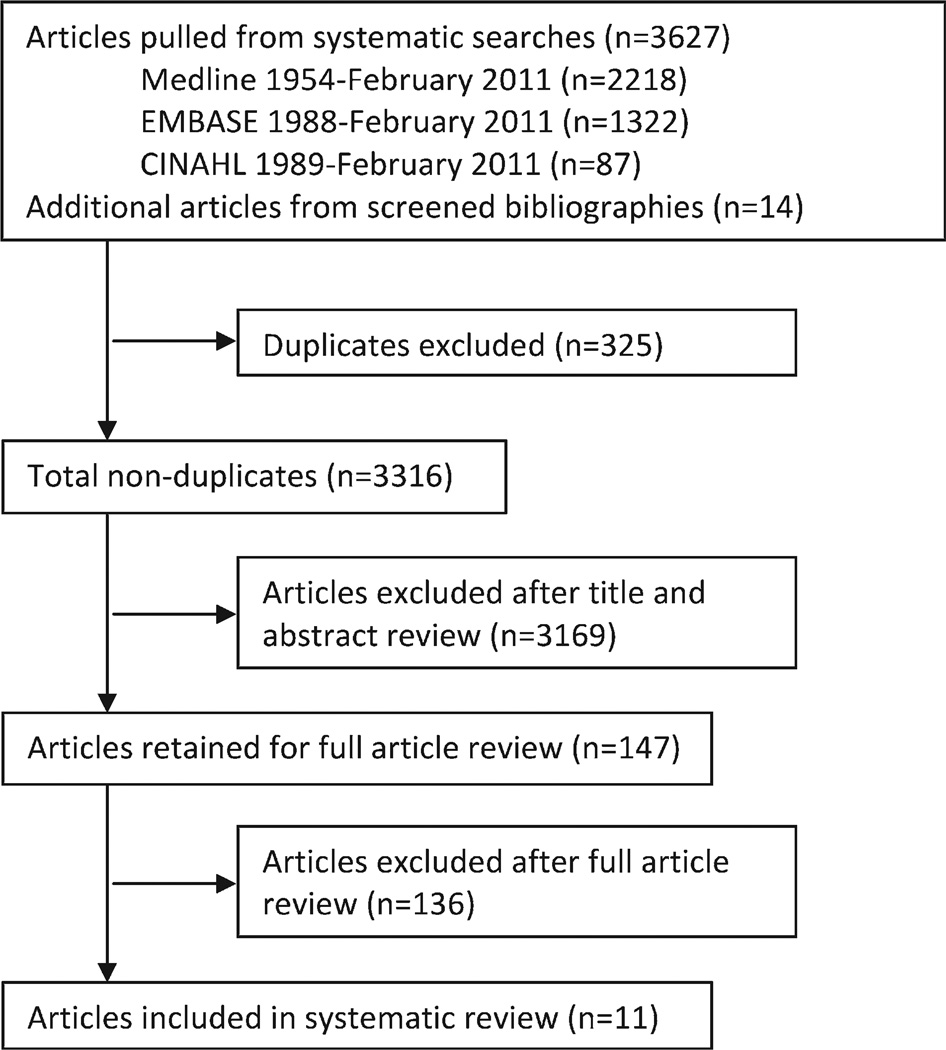
Of 3316 screened articles, 11 were included in this review. Of the four studies that assessed prolonged standing, two reported a positive association with risk for some birth defects; null associations were observed in the other two studies. Associations between heavy lifting or other occupational physical activity exposures and risk for birth defects were inconsistent. A protective association between leisure-time physical activity (i.e., active sports, swimming) and some birth defects (e.g., neural tube defects), was suggested by the results of two studies. Only one study reported assessment of possible effect modification by maternal body mass index (BMI).
DISCUSSION
Our review suggests that there may be some associations between occupational and leisure-time physical activities and some, major non-chromosomal, birth defects, but relatively limited published research exists on these associations. Further research in this area should include differentiation of birth defects phenotypes, valid assessments of all domains of physical activity, including household and transportation activity, and account for the potential influence of pre-pregnancy BMI.
-
Subjects:
-
Source:Birth Defects Res A Clin Mol Teratol. 94(7):521-531.
-
Pubmed ID:22628185
-
Pubmed Central ID:PMC4587389
-
Document Type:
-
Funding:
-
Volume:94
-
Issue:7
-
Collection(s):
-
Main Document Checksum:urn:sha256:0d026ebe559ff620c11267f705f12d1d43abc9a8e2f9872a6f46e7bfebefd2b7
-
Download URL:
-
File Type:
 [PDF
- 933.29 KB
]
[PDF
- 933.29 KB
]
Supporting Files


File Language:
English
ON THIS PAGE


CDC STACKS serves as an archival repository of CDC-published products including
scientific findings,
journal articles, guidelines, recommendations, or other public health information authored or
co-authored by CDC or funded partners.
As a repository, CDC STACKS retains documents in their original published format to ensure public access to scientific information.
As a repository, CDC STACKS retains documents in their original published format to ensure public access to scientific information.
You May Also Like
COLLECTION
CDC Public Access