


Numerical Investigation of Sheath and Aerosol Flows in the Flow Combination Section of a Baron Fiber Classifier
Supporting Files

-
2014
File Language:
English
Details
-
Alternative Title:Aerosol Sci Technol
-
Personal Author:
-
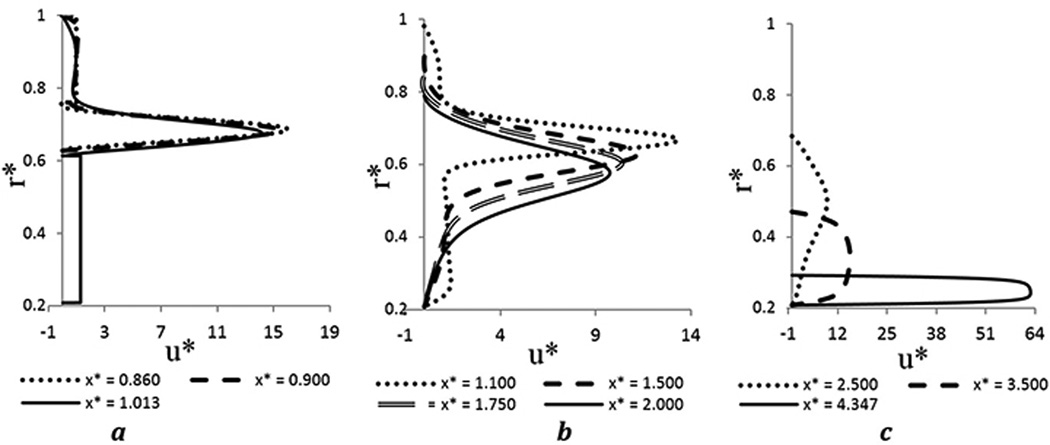
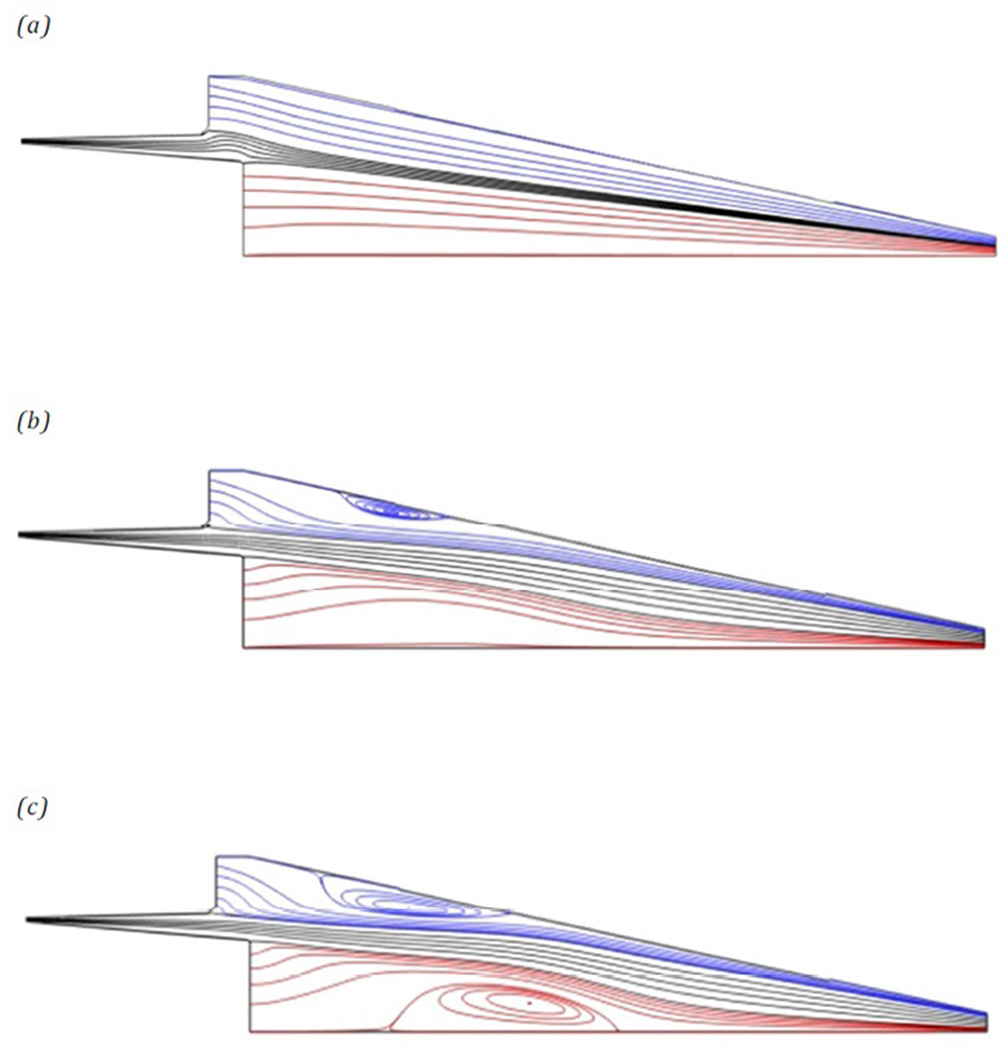
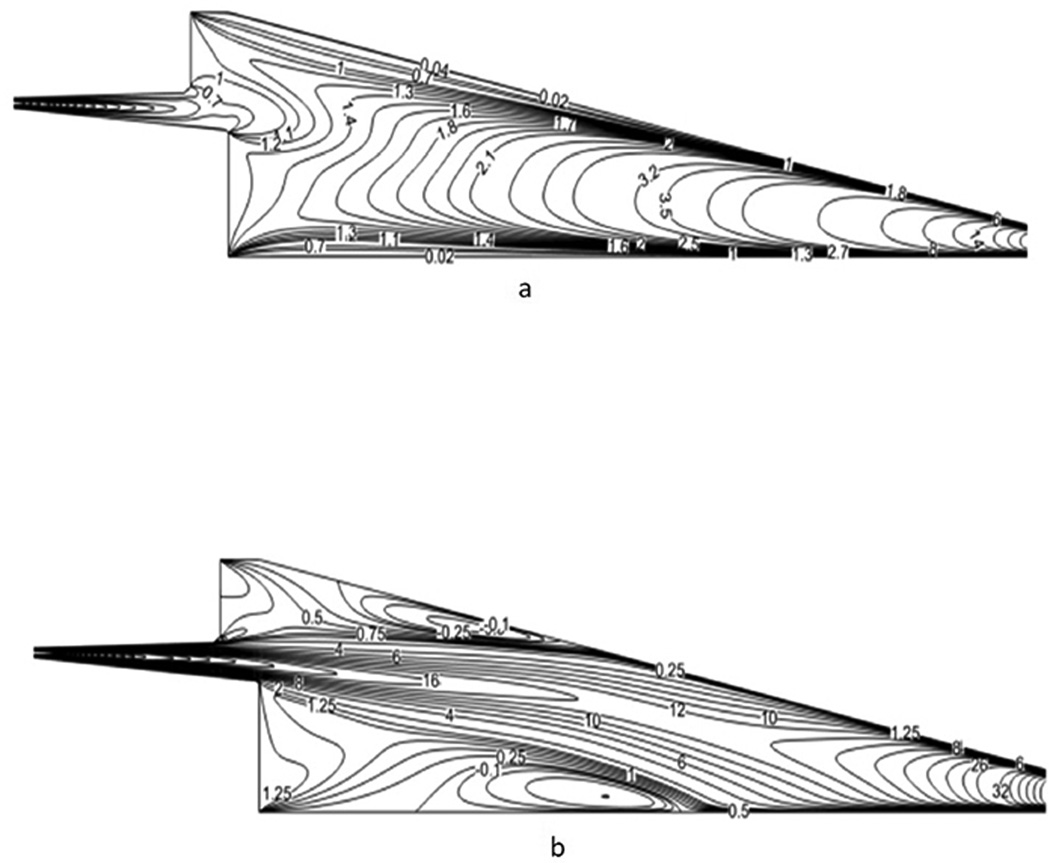
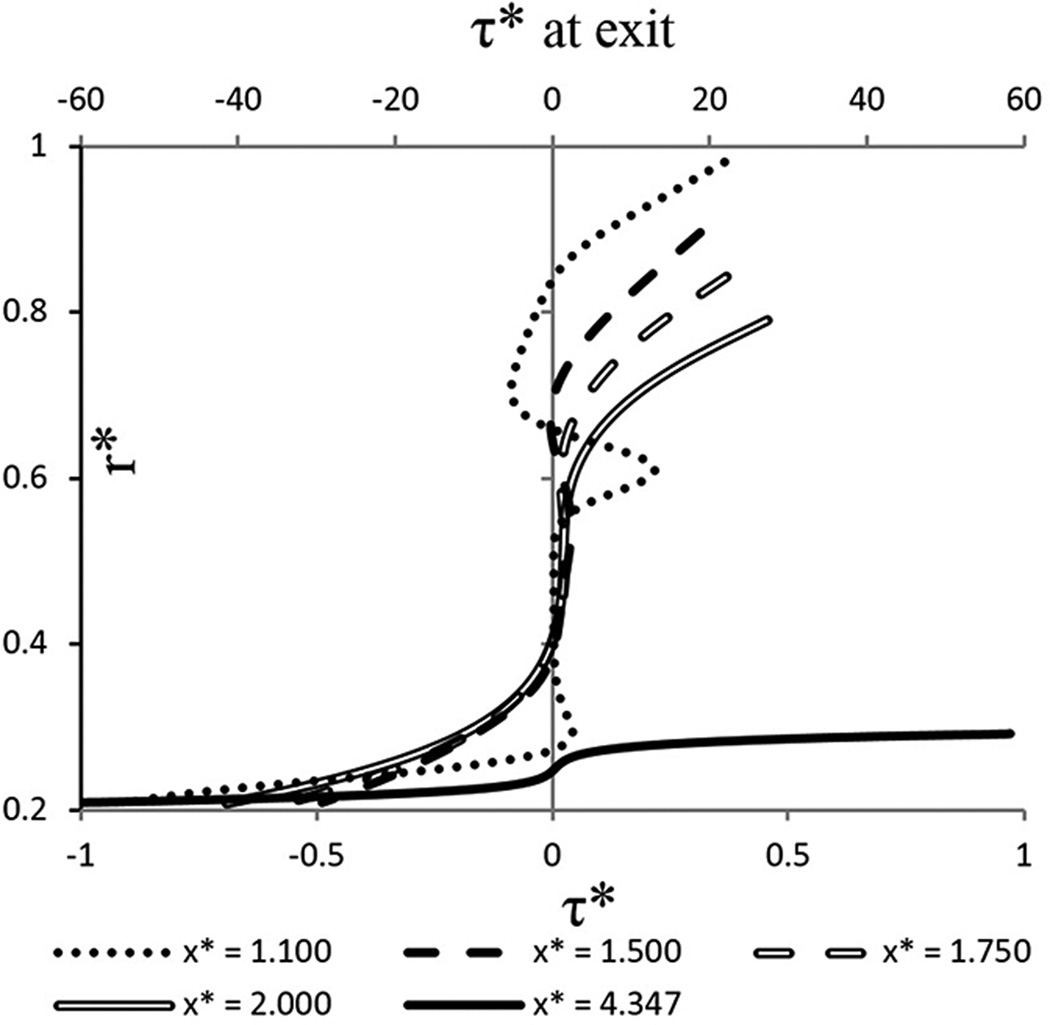
Description:The Baron fiber classifier is an instrument used to separate fibers by length. The flow combination section (FCS) of this instrument is an upstream annular region, where an aerosol of uncharged fibers is introduced along with two sheath flows; length separation occurs by dielectrophoresis downstream in the flow classification section. In its current implementation at NIOSH, the instrument is capable of processing only very small quantities of fibers. In order to prepare large quantities of length-separated fibers for toxicological studies, the throughput of the instrument needs to be increased, and hence, higher aerosol flow rates need to be considered. However, higher aerosol flow rates may give rise to flow separation or vortex formation in the FCS, arising from the sudden expansion of the aerosol at the inlet nozzle. The goal of the present investigation is to understand the interaction of the sheath and aerosol flows inside the FCS, using computational fluid dynamics (CFD), and to identify possible limits to increasing aerosol flow rates. Numerical solutions are obtained using an axisymmetric model of the FCS, and solving the Navier-Stokes equations governing these flows; in this study, the aerosol flow is treated purely aerodynamically. Results of computations are presented for four different flow rates. The geometry of the converging outer cylinder, along with the two sheath flows, is effective in preventing vortex formation in the FCS for aerosol-to-sheath flow inlet velocity ratios below ~ 50. For higher aerosol flow rates, recirculation is observed in both inner and outer sheaths. Results for velocity, streamlines, and shear stress are presented.
-
Keywords:
-
Source:Aerosol Sci Technol. 48(8):896-905
-
Pubmed ID:26388662
-
Pubmed Central ID:PMC4573894
-
Document Type:
-
Funding:
-
Volume:48
-
Issue:8
-
Collection(s):
-
Main Document Checksum:urn:sha-512:11edc7e7d49b40c29d356519969c28d5cf777bc9564251d71cf869e80c2ccb797d3a4617c2609cd7283673a4b0b5fa6ecc428b82dc662b04092a86a604278bc3
-
Download URL:
-
File Type:
 [PDF
- 2.63 MB
]
[PDF
- 2.63 MB
]
Supporting Files


File Language:
English
ON THIS PAGE









CDC STACKS serves as an archival repository of CDC-published products including
scientific findings,
journal articles, guidelines, recommendations, or other public health information authored or
co-authored by CDC or funded partners.
As a repository, CDC STACKS retains documents in their original published format to ensure public access to scientific information.
As a repository, CDC STACKS retains documents in their original published format to ensure public access to scientific information.
You May Also Like
COLLECTION
CDC Public Access