


Modeling the prevalence of immunodeficiency-associated long-term vaccine-derived poliovirus excretors and the potential benefits of antiviral drugs
Supporting Files
Public Domain

-
Sep 17 2015
File Language:
English
Details
-
Alternative Title:BMC Infect Dis
-
Personal Author:
-
Description:Background
A small number of individuals with B-cell-related primary immunodeficiency diseases (PIDs) may exhibit long-term (prolonged or chronic) excretion of immunodeficiency-associated vaccine-derived polioviruses (iVDPVs) following infection with oral poliovirus vaccine (OPV). These individuals pose a risk of live poliovirus reintroduction into the population after global wild poliovirus eradication and subsequent OPV cessation. Treatment with polio antiviral drugs may potentially stop excretion in some of these individuals and thus may reduce the future population risk.
Methods
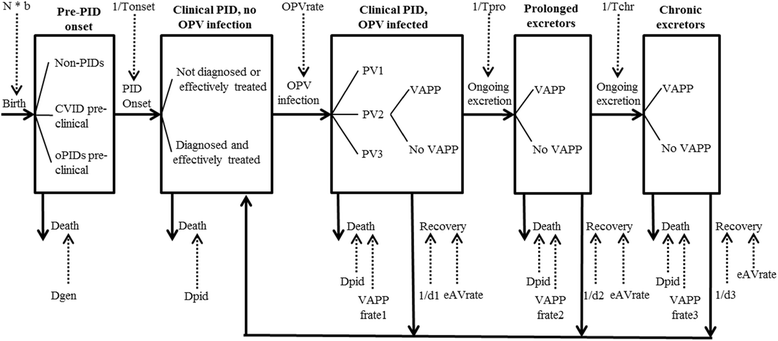
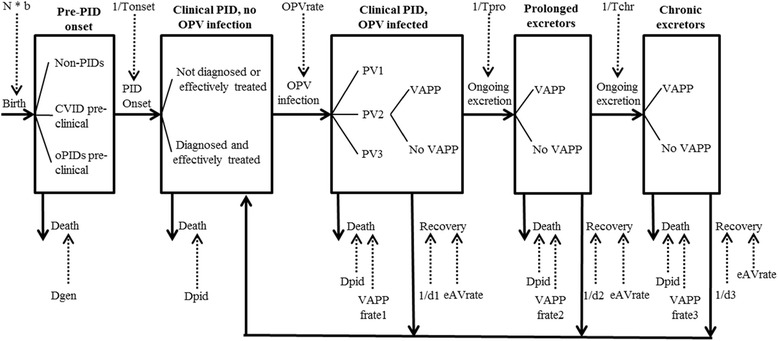
We developed a discrete event simulation model to characterize the global prevalence of long-term iVDPV excretors based on the best available evidence. We explored the impact of different assumptions about the effectiveness of polio antiviral drugs and the fraction of long-term excretors identified and treated.
Results
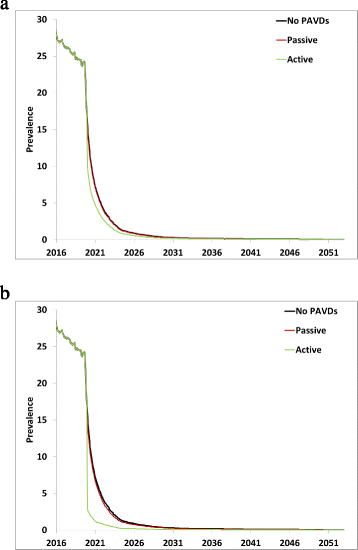
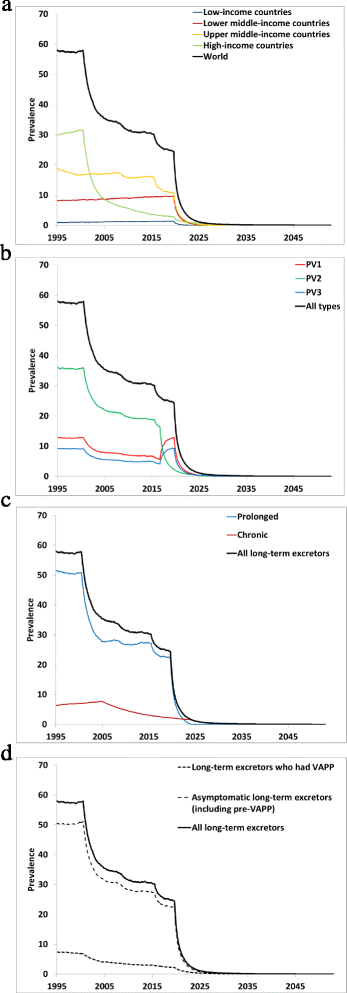
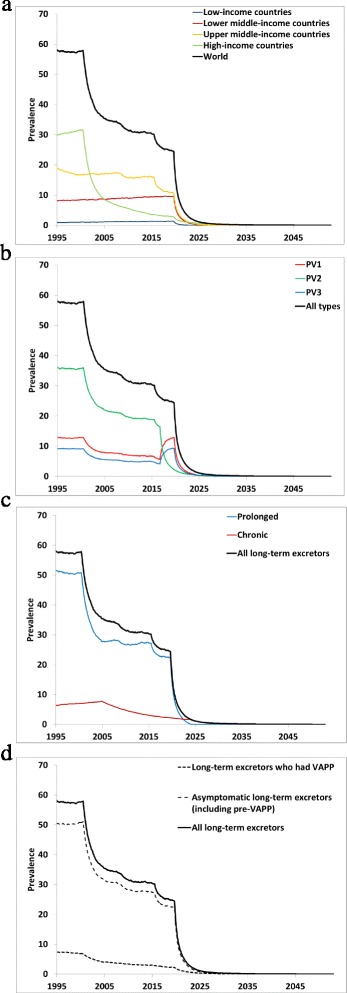
Due to the rarity of long-term iVDPV excretion and limited data on the survival of PID patients in developing countries, uncertainty remains about the current and future prevalence of long-term iVDPV excretors. While the model suggests only approximately 30 current excretors globally and a rapid decrease after OPV cessation, most of these excrete asymptomatically and remain undetected. The possibility that one or more PID patients may continue to excrete iVDPVs for several years after OPV cessation represents a risk for reintroduction of live polioviruses after OPV cessation, particularly for middle-income countries. With the effectiveness of a single polio antiviral drug possibly as low as 40 % and no system in place to identify and treat asymptomatic excretors, the impact of passive use of a single polio antiviral drug to treat identified excretors appears limited. Higher drug effectiveness and active efforts to identify long-term excretors will dramatically increase the benefits of polio antiviral drugs.
Conclusions
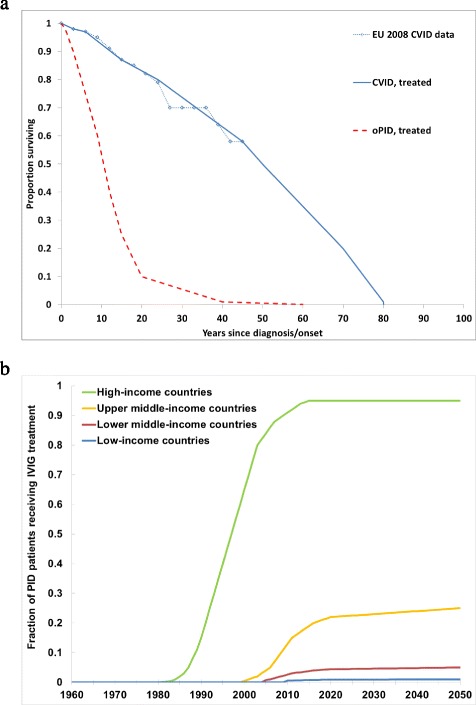
Efforts to develop a second polio antiviral compound to increase polio antiviral effectiveness and/or to maximize the identification and treatment of affected individuals represent important risk management opportunities for the polio endgame. Better data on the survival of PID patients in developing countries and more longitudinal data on their exposure to and recovery from OPV infections would improve our understanding of the risks associated with iVDPV excretors and the benefits of further investments in polio antiviral drugs.
-
Subjects:
-
Source:BMC Infect Dis. 15.
-
Pubmed ID:26382043
-
Pubmed Central ID:PMC4574619
-
Document Type:
-
Volume:15
-
Collection(s):
-
Main Document Checksum:urn:sha256:f4c7105bf73d4d10144af2af4d0a5a19753150202f2021339c832325493c8573
-
Download URL:
-
File Type:
 [PDF
- 1.30 MB
]
[PDF
- 1.30 MB
]
Supporting Files


File Language:
English
ON THIS PAGE



CDC STACKS serves as an archival repository of CDC-published products including
scientific findings,
journal articles, guidelines, recommendations, or other public health information authored or
co-authored by CDC or funded partners.
As a repository, CDC STACKS retains documents in their original published format to ensure public access to scientific information.
As a repository, CDC STACKS retains documents in their original published format to ensure public access to scientific information.
You May Also Like
COLLECTION
CDC Public Access