



Carbon monoxide poisoning deaths in the United States, 1999 to 2012☆,☆☆
Supporting Files

-
May 13 2015
-
Available in CDC Stacks on 2016-09-01T00:00:00Z
File Language:
English
Details
-
Alternative Title:Am J Emerg Med
-
Personal Author:
-
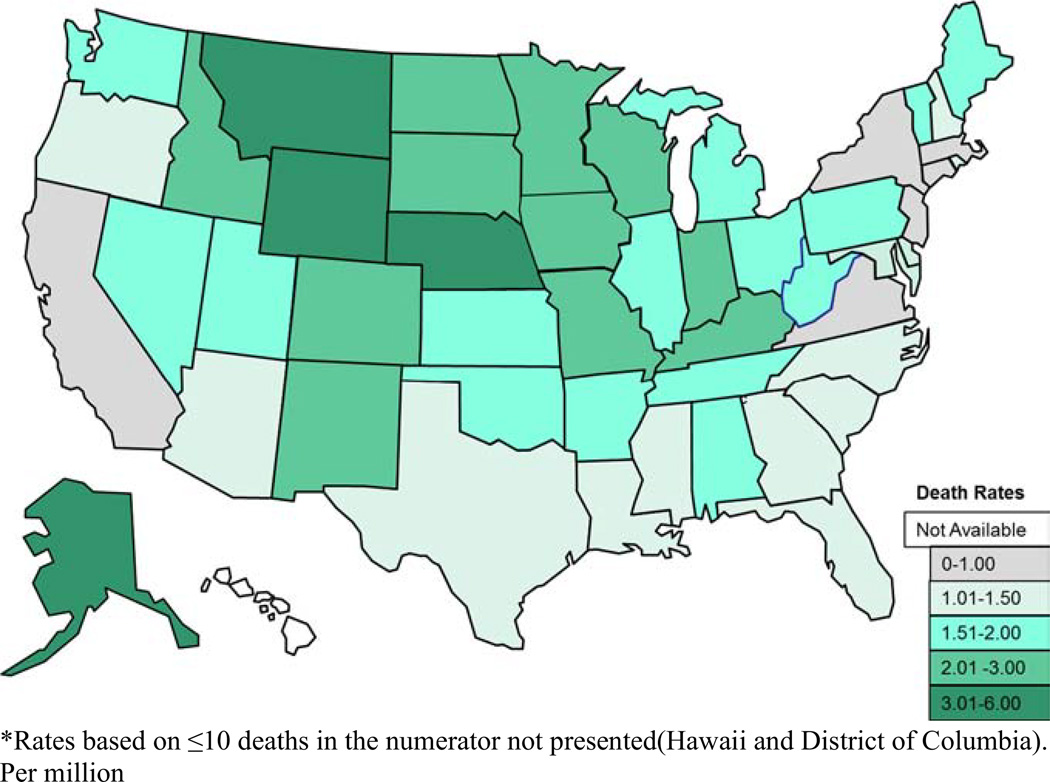
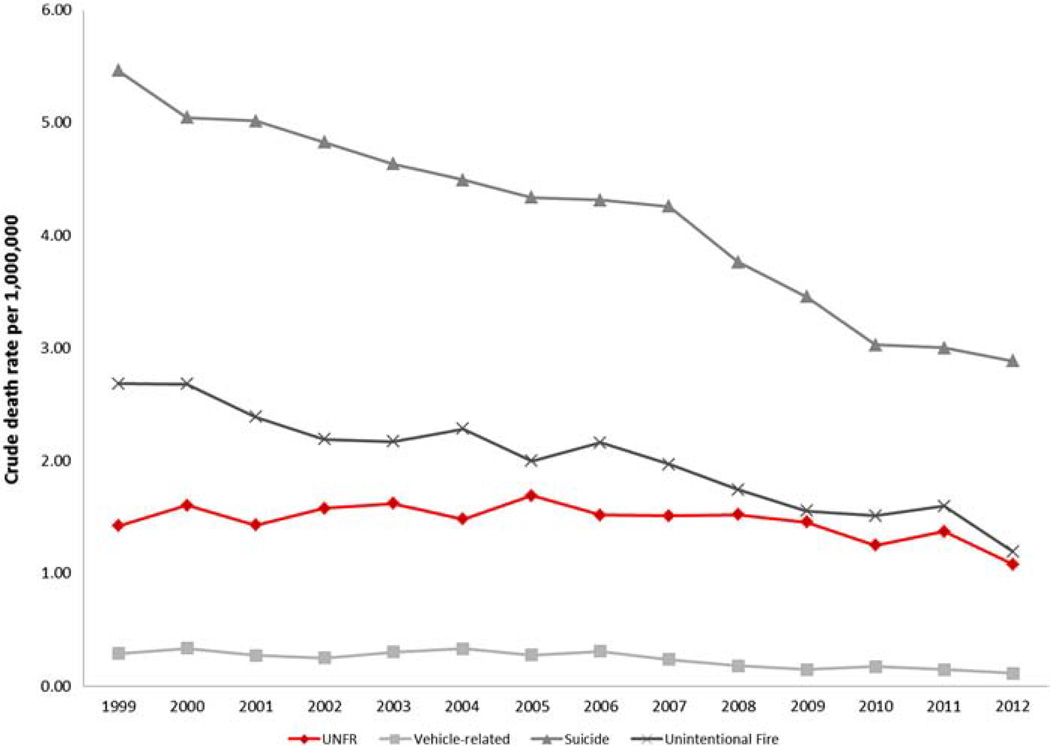
Description:Background ; Unintentional, non-fire related (UNFR) carbon monoxide (CO) poisoning deaths are preventable. Surveillance of the populations most at-risk for unintentional, non-fire related (UNFR) carbon monoxide (CO) poisoning is crucial for targeting prevention efforts. ; Objective ; This study provides estimates on UNFR CO poisoning mortality in the United States and characterizes the at-risk populations. ; Methods ; We used 1999 to 2012 data to calculate death rates. We used underlying and multiple conditions variables from death records to identify UNFR CO poisoning cases. ; Results ; For this study, we identified 6136 CO poisoning fatalities during 1999 to 2012 resulting in an average of 438 deaths annually. The annual average age-adjusted death rate was 1.48 deaths per million. Fifty four percent of the deaths occurred in a home. Age-adjusted death rates were highest for males (2.21 deaths per million) and non-Hispanic blacks (1.74 deaths per million). The age-specific death rate was highest for those aged ≥85 years (6.00 deaths per million). The annual rate of UNFR CO poisoning deaths did not change substantially during the study period, but we observed a decrease in the rate of suicide and unintentional fire related cases. ; Conclusion ; CO poisoning was the second most common non-medicinal poisonings death. Developing and enhancing current public health interventions could reduce ongoing exposures to CO from common sources, such as those in the residential setting.
-
Subjects:
-
Source:Am J Emerg Med. 33(9):1140-1145.
-
Pubmed ID:26032660
-
Pubmed Central ID:PMC4573527
-
Document Type:
-
Funding:
-
Place as Subject:
-
Volume:33
-
Issue:9
-
Download URL:
-
File Type:
 [PDF - 956.21 KB]
 -
Collection(s):
-
Main Document Checksum:urn:sha256:c686b217799614931485d887997be9f7e487fed07ea912c5ed5b8ac1c5c6fc7b
Supporting Files


File Language:
English
 Was this page helpful?
 Found an issue?


CDC STACKS serves as an archival repository of CDC-published products including
scientific findings, journal articles, guidelines, recommendations, or other public health information authored or
co-authored by CDC or funded partners.
As a repository, CDC STACKS retains documents in their original published format to ensure public access to scientific information.
As a repository, CDC STACKS retains documents in their original published format to ensure public access to scientific information.
You May Also Like
COLLECTION
CDC Public Access