


Geographic Variation of Amyotrophic Lateral Sclerosis Incidence in New Jersey, 2009–2011
Supporting Files

-
Jun 03 2015
-
Details
-
Alternative Title:Am J Epidemiol
-
Personal Author:
-
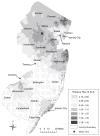
Description:Few analyses in the United States have examined geographic variation and socioeconomic disparities in amyotrophic lateral sclerosis (ALS) incidence, because of lack of population-based incidence data. In this analysis, we used population-based ALS data to identify whether ALS incidence clusters geographically and to determine whether ALS risk varies by area-based socioeconomic status (SES). This study included 493 incident ALS cases diagnosed (via El Escorial criteria) in New Jersey between 2009 and 2011. Geographic variation and clustering of ALS incidence was assessed using a spatial scan statistic and Bayesian geoadditive models. Poisson regression was used to estimate the associations between ALS risk and SES based on census-tract median income while controlling for age, sex, and race. ALS incidence varied across and within counties, but there were no statistically significant geographic clusters. SES was associated with ALS incidence. After adjustment for age, sex, and race, the relative risk of ALS was significantly higher (relative risk (RR) = 1.37, 95% confidence interval (CI): 1.02, 1.82) in the highest income quartile than in the lowest. The relative risk of ALS was significantly lower among blacks (RR = 0.57, 95% CI: 0.39, 0.83) and Asians (RR = 0.63, 95% CI: 0.41, 0.97) than among whites. Our findings suggest that ALS incidence in New Jersey appears to be associated with SES and race.
-
Subjects:
-
Source:Am J Epidemiol. 182(6):512-519.
-
Pubmed ID:26041711
-
Pubmed Central ID:PMC4564938
-
Document Type:
-
Funding:
-
Volume:182
-
Issue:6
-
Collection(s):
-
Main Document Checksum:urn:sha256:005f228727896e7d3756bce2fa26771e1d645877c80fce3e5fd1310024d3e562
-
Download URL:
-
File Type:
 [PDF
- 437.91 KB
]
[PDF
- 437.91 KB
]
Supporting Files


ON THIS PAGE


CDC STACKS serves as an archival repository of CDC-published products including
scientific findings,
journal articles, guidelines, recommendations, or other public health information authored or
co-authored by CDC or funded partners.
As a repository, CDC STACKS retains documents in their original published format to ensure public access to scientific information.
As a repository, CDC STACKS retains documents in their original published format to ensure public access to scientific information.
You May Also Like
COLLECTION
CDC Public Access