


Characterization of Animal Exposure Calls Captured by the National Poison Data System, 2000–2010
Supporting Files

-
Jan 22 2012
-
Details
-
Alternative Title:J Clin Toxicol
-
Personal Author:
-
Description:Objective
Our objective was to characterize the data captured in all animal exposure calls reported to the National Poison Data System (NPDS), a national poison center reporting database, from 1 January 2000 through 31 December 2010 and identify Poison Center usage and needs in animal exposure calls.
Design
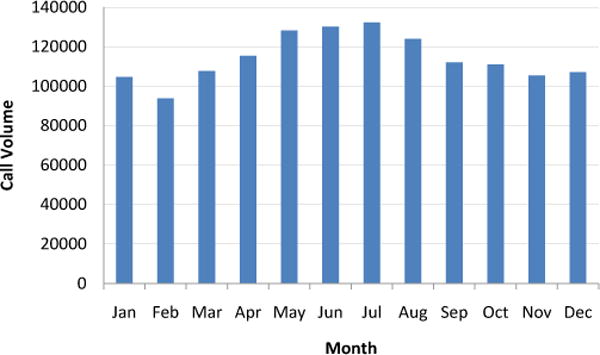
We calculated descriptive statistics characterizing animal type, exposure substance, medical outcome, year and month of call, caller location, and specific state for all animal exposure call data in NPDS from 1 January 2000 to 31 December 2010. SAS version 9.2 was used for the analysis.
Results
There were 1,371,095 animal exposure calls out of 28,925,496 (4.7%) total human and animal exposure calls in NPDS during the study period. The majority involved companion animal exposures with 88.0% canine exposures and 10.4% feline exposures. Pesticides were the most common exposure substance (n=360,375; 26.3%), followed by prescription drugs (n=261,543; 18.6%). The most common outcome reported was ‘Not followed, judged as nontoxic exposure or minimal clinical effects possible’ (n=803,491; 58.6%), followed by ‘Not followed, judged potentially toxic exposure’ (n=263,153; 19.2%). There were 5,388 deaths reported. Pesticide exposures were responsible for the greatest number of deaths (n=1,643; 30.4%).
Conclusions and clinical relevance
Approximately 1 in 20 calls to PCs are regarding potentially toxic exposures to animals, suggesting a need for veterinary expertise and resources at PCs. Pesticides are one of the greatest toxic exposure threats to animals, both in numbers of exposures and severity of clinical outcomes, and is an important area for education, prevention, and treatment.
-
Subjects:
-
Source:J Clin Toxicol. 2(1):117-.
-
Pubmed ID:26346434
-
Pubmed Central ID:PMC4560685
-
Document Type:
-
Funding:
-
Volume:2
-
Issue:1
-
Collection(s):
-
Main Document Checksum:urn:sha256:adfc180e544f036ab966377156ba6fc26f2a1dcd36001af925fc680daca15cdb
-
Download URL:
-
File Type:
 [PDF
- 316.76 KB
]
[PDF
- 316.76 KB
]
Supporting Files


ON THIS PAGE


CDC STACKS serves as an archival repository of CDC-published products including
scientific findings,
journal articles, guidelines, recommendations, or other public health information authored or
co-authored by CDC or funded partners.
As a repository, CDC STACKS retains documents in their original published format to ensure public access to scientific information.
As a repository, CDC STACKS retains documents in their original published format to ensure public access to scientific information.
You May Also Like
COLLECTION
CDC Public Access