


Albuminuria Prevalence in First Morning Void Compared with Previous Random Urine from Adults in the National Health and Nutrition Examination Survey, 2009–2010
Supporting Files

-
January 11 2013
-
File Language:
English
Details
-
Alternative Title:Clin Chem
-
Personal Author:
-
Description:BACKGROUND
Albuminuria, defined as urine albumin/creatinine ratio (ACR) ≥30 mg/g, is a diagnostic component of chronic kidney disease (CKD). National estimates of ACR and CKD prevalence have been based on single random urine samples. Although 2 urine samples or a first morning void are known to produce different estimates of ACR, the impact of differing urine sampling schemes on nationally estimated rates of CKD is unknown.
METHODS
In 2009–2010, the National Health and Nutrition Examination Survey (NHANES) participants provided 2 untimed urine samples for sequential ACR measurement: an initial random urine collected in the NHANES mobile examination center and a subsequent first morning void collected at home. Rates of albuminuria were calculated in the overall population and broken down by demographics, diagnosed diabetes and hypertension status, and estimated glomerular filtration rate (eGFR).
RESULTS
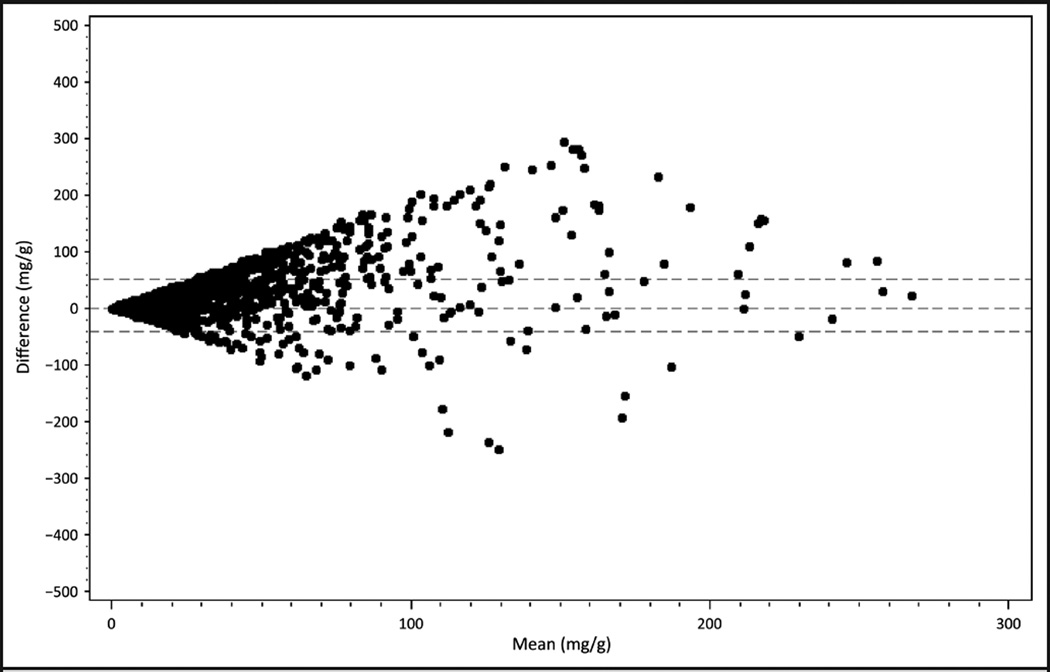
Overall, 43.5% of adults with increased ACR (≥30 mg/g) in a random urine also had increased ACR in a first morning urine. This percentage was higher among individuals ≥50 years old (48.9%), males (53.3%), participants with diagnosed diabetes (56.3%) and hypertension (51.5%), and eGFR <60 mL/min/1.72m2 (56.9%). The use of confirmed increased ACR (defined as the presence of ACR ≥30 mg/g in both samples taken within 10 days) to define CKD resulted in a lower overall prevalence (11.6%) than first morning urine (12.7%) or random spot urine only (15.2%).
CONCLUSIONS
ACR measured on random urine samples appears to overestimate the prevalence of albuminuria compared to first morning urine collections.
-
Subjects:
-
Source:Clin Chem. 59(4):675-683
-
Pubmed ID:23315482
-
Pubmed Central ID:PMC4562457
-
Document Type:
-
Funding:
-
Volume:59
-
Issue:4
-
Collection(s):
-
Main Document Checksum:urn:sha256:d7087c8d64018656beea423cac113d11e3feb7be8124982edcf0ab3df6bb161a
-
Download URL:
-
File Type:
 [PDF
- 547.25 KB
]
[PDF
- 547.25 KB
]
Supporting Files


File Language:
English
ON THIS PAGE


CDC STACKS serves as an archival repository of CDC-published products including
scientific findings,
journal articles, guidelines, recommendations, or other public health information authored or
co-authored by CDC or funded partners.
As a repository, CDC STACKS retains documents in their original published format to ensure public access to scientific information.
As a repository, CDC STACKS retains documents in their original published format to ensure public access to scientific information.
You May Also Like
COLLECTION
CDC Public Access