


Muscular activity of lower limb muscles associated with working on inclined surfaces
Supporting Files

-
Oct 21 2014
-
Details
-
Alternative Title:Ergonomics
-
Personal Author:
-
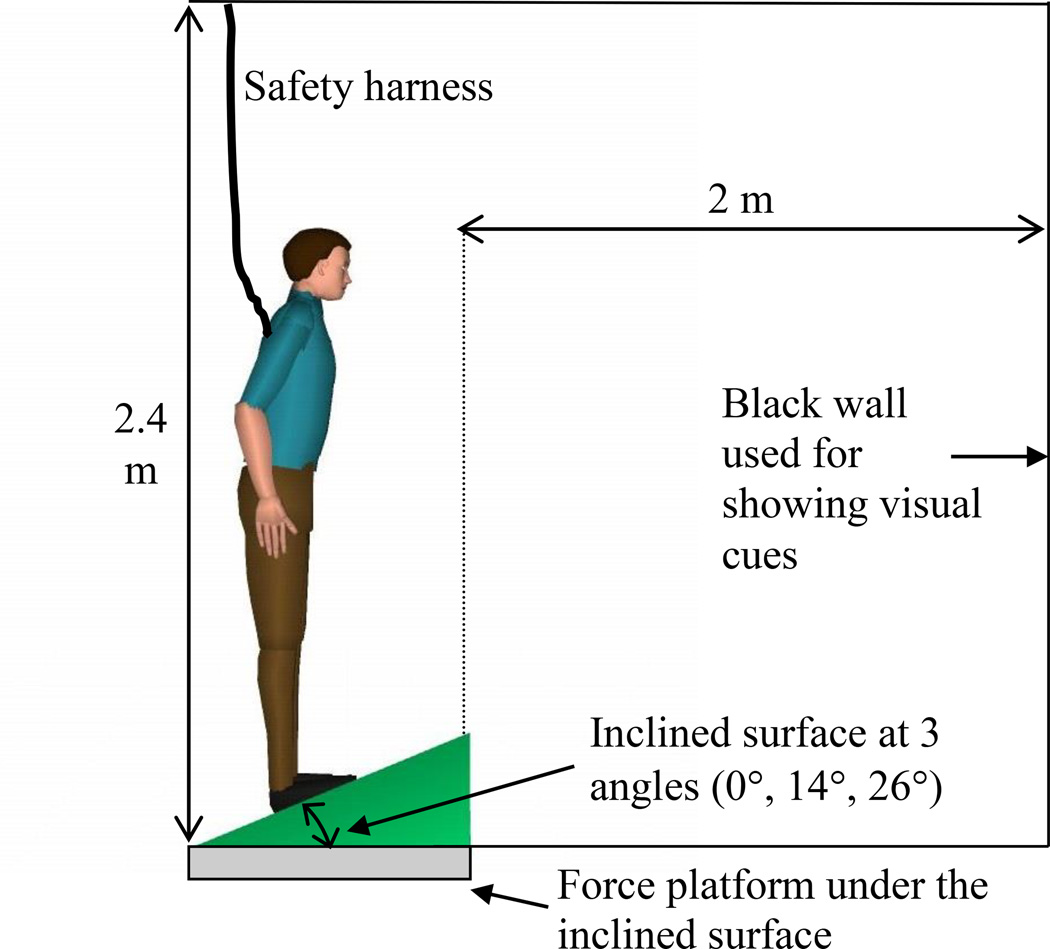
Description:This study investigated the effects of visual cues, muscular fatigue, task performance and experience of working on inclined surfaces on activity of postural muscles in the lower limbs associated with maintaining balance on three inclined surfaces - 0°, 14° and 26°. Normalised electromyographic (NEMG) data were collected in 44 professional roofers bilaterally from the rectus femoris, biceps femoris, tibialii anterior and gastrocnemii medial muscle groups. The 50th and 95th percentile NEMG amplitudes were used as EMG variables. Results showed that inclination angle and task performance caused a significant increase in the NEMG amplitudes of all postural muscles. Visual cues were significantly associated with a decrease in the 95th percentile EMG amplitude for the right gastrocnemius medial and tibialis anterior. Fatigue was related to a significant decrease in the NEMG amplitude for the rectus femoris. Experience of working on inclined surfaces did not have a significant effect on the NEMG amplitude.
-
Subjects:
-
Source:Ergonomics. 58(2):278-290.
-
Pubmed ID:25331562
-
Pubmed Central ID:PMC4557765
-
Document Type:
-
Funding:
-
Volume:58
-
Issue:2
-
Collection(s):
-
Main Document Checksum:urn:sha256:a6d4a10719d3fa27376a1cd16ca6b2f7b34b1fc699a5b1afba057332ce07fd44
-
Download URL:
-
File Type:
 [PDF
- 640.21 KB
]
[PDF
- 640.21 KB
]
Supporting Files


ON THIS PAGE



CDC STACKS serves as an archival repository of CDC-published products including
scientific findings,
journal articles, guidelines, recommendations, or other public health information authored or
co-authored by CDC or funded partners.
As a repository, CDC STACKS retains documents in their original published format to ensure public access to scientific information.
As a repository, CDC STACKS retains documents in their original published format to ensure public access to scientific information.
You May Also Like
COLLECTION
CDC Public Access