



Intermittent iron supplementation for improving nutrition and development in children under 12 years of age
Supporting Files

-
12 7 2011
-
Available in CDC Stacks on August 24, 2015, 12:00 AM
File Language:
English
 [PDF - 32.69 MB]
Details
-
Alternative Title:Cochrane Database Syst Rev
-
Personal Author:
-
Description:Background
Approximately 600 million children of preschool and school age are anaemic worldwide. It is estimated that half of the cases are due to iron deficiency. Consequences of iron deficiency anaemia during childhood include growth retardation, reduced school achievement, impaired motor and cognitive development, and increased morbidity and mortality. The provision of daily iron supplements is a widely used strategy for improving iron status in children but its effectiveness has been limited due to its side effects, which can include nausea, constipation or staining of the teeth. As a consequence, intermittent iron supplementation (one, two or three times a week on nonconsecutive days) has been proposed as an effective and safer alternative to daily supplementation.
Objectives
To assess the effects of intermittent iron supplementation, alone or in combination with other vitamins and minerals, on nutritional and developmental outcomes in children from birth to 12 years of age compared with a placebo, no intervention or daily supplementation.
Search methods
We searched the following databases on 24 May 2011: CENTRAL (2011, Issue 2), MEDLINE (1948 to May week 2, 2011), EMBASE (1980 to 2011 Week 20), CINAHL (1937 to current), POPLINE (all available years) and WHO International Clinical Trials Registry Platform (ICTRP). On 29 June 2011 we searched all available years in the following databases: SCIELO, LILACS, IBECS and IMBIOMED. We also contacted relevant organisations (on 3 July 2011) to identify ongoing and unpublished studies.
Selection criteria
Randomised and quasi-randomised trials with either individual or cluster randomisation. Participants were children under the age of 12 years at the time of intervention with no specific health problems. The intervention assessed was intermittent iron supplementation compared with a placebo, no intervention or daily supplementation.
Data collection and analysis
Two authors independently assessed the eligibility of studies against the inclusion criteria, extracted data from included studies and assessed the risk of bias of the included studies.
Main results
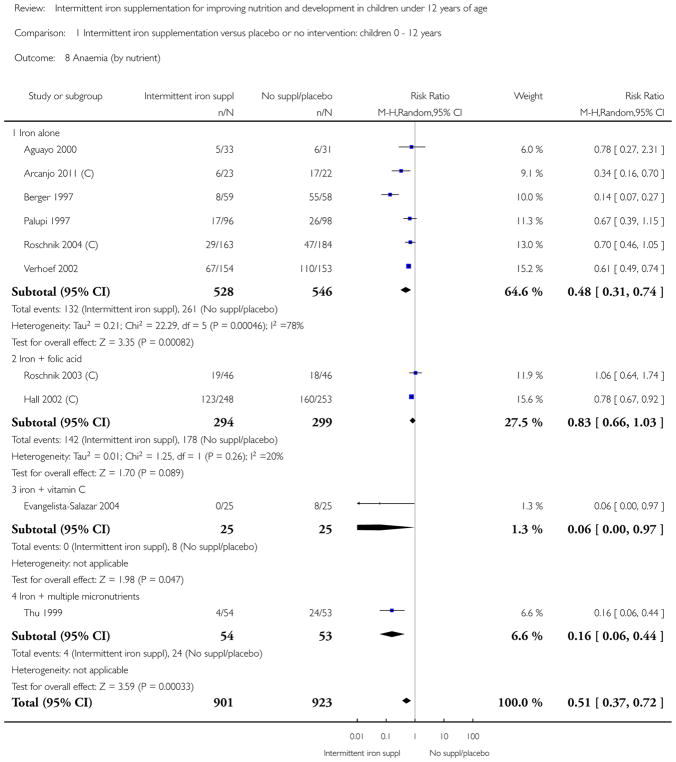
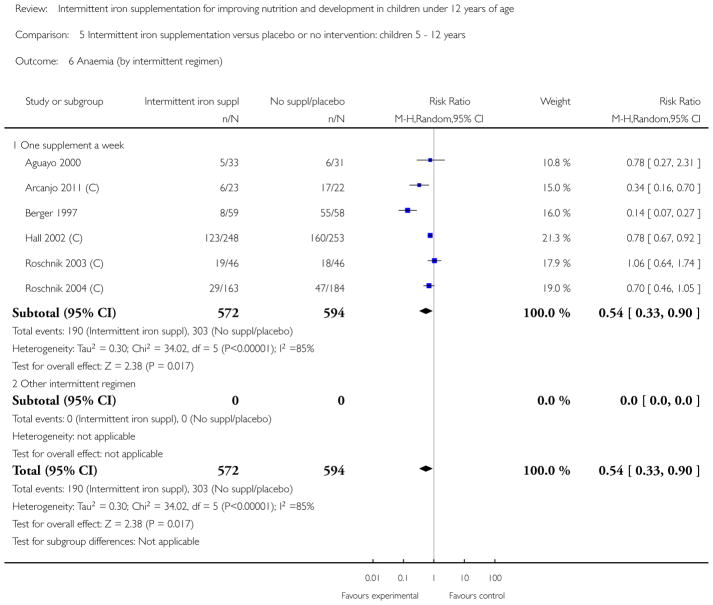
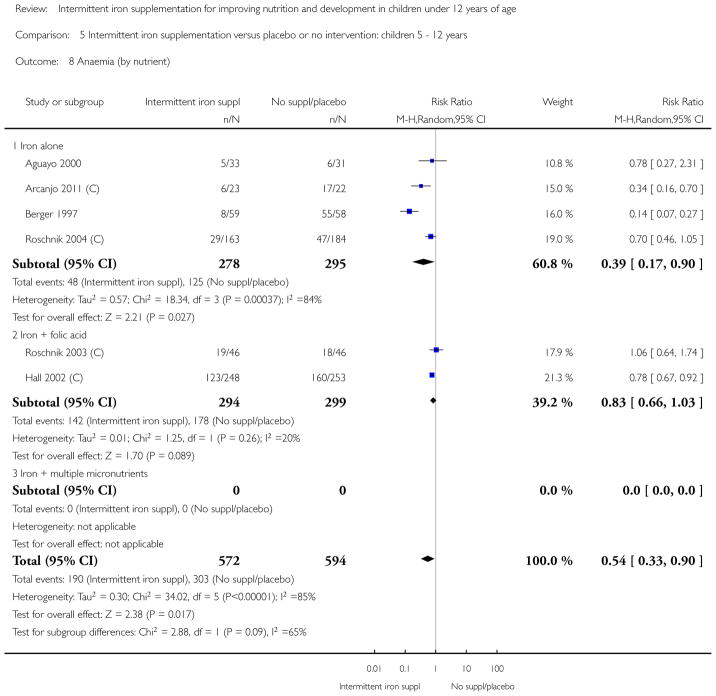
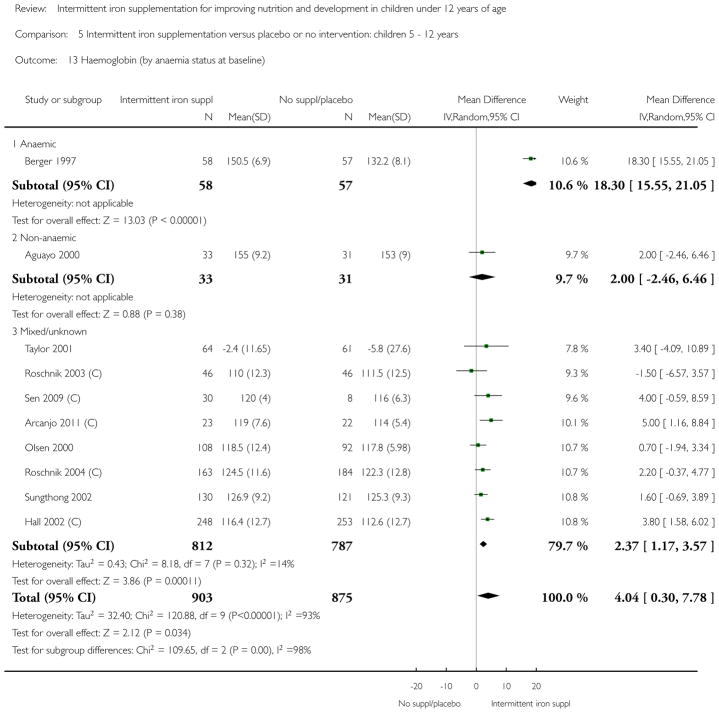
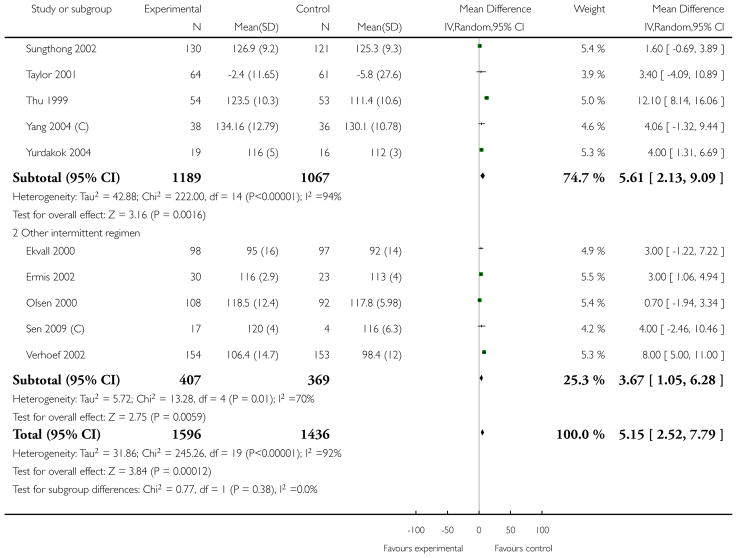
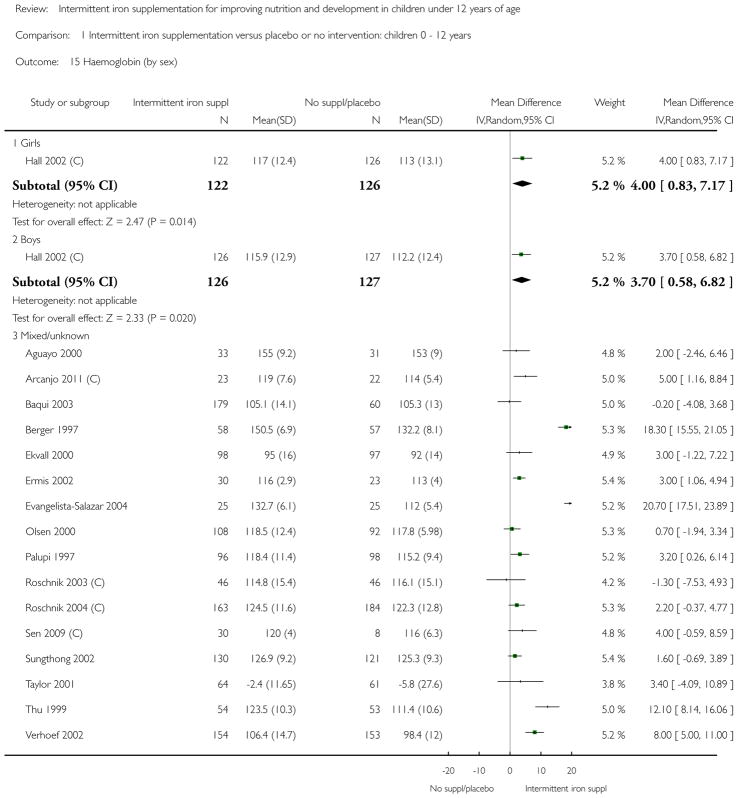
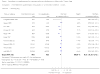
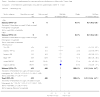
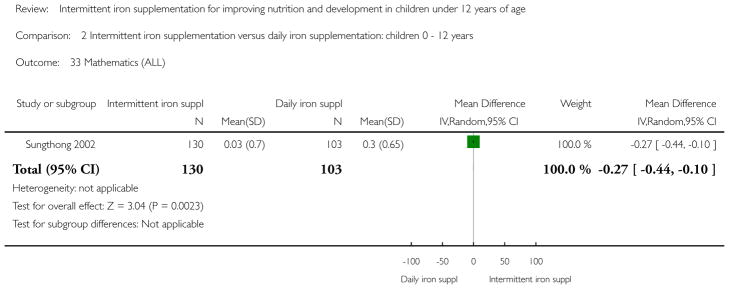
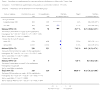
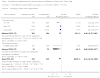
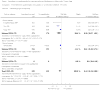
We included 33 trials, involving 13,114 children (~49% females) from 20 countries in Latin America, Africa and Asia. The methodological quality of the trials was mixed.
Authors’ conclusions
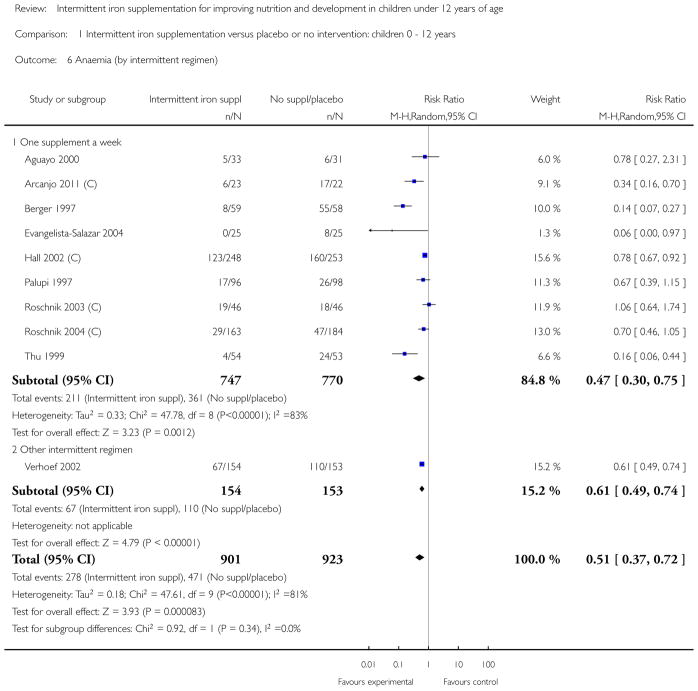
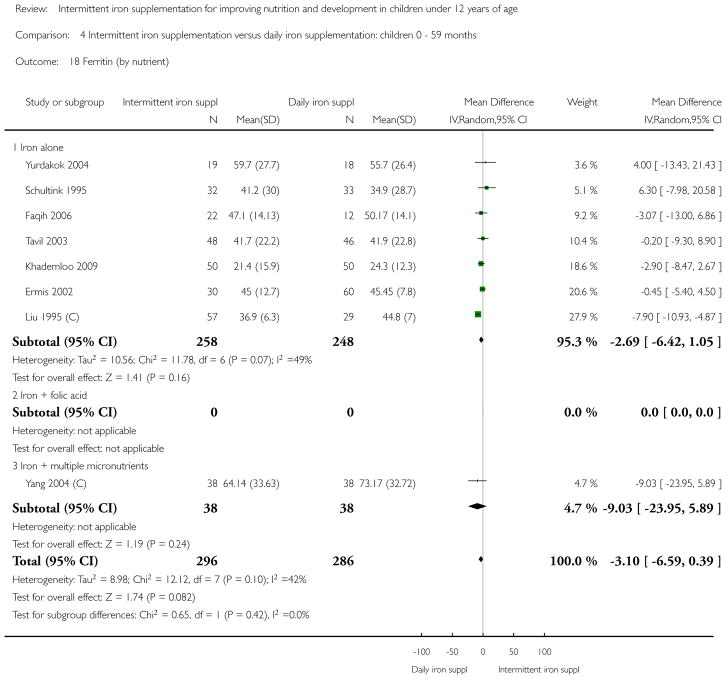
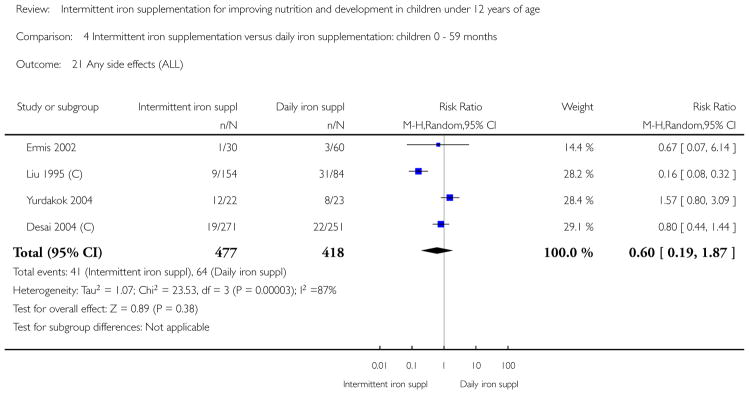
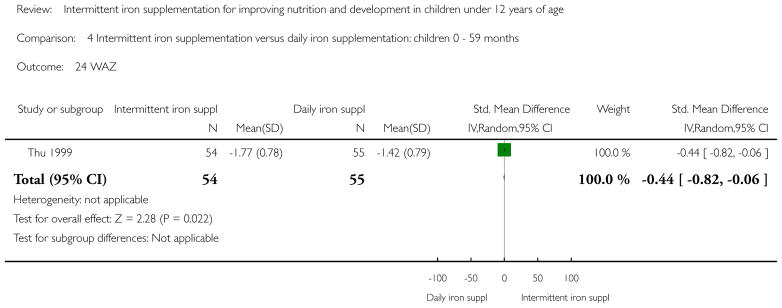
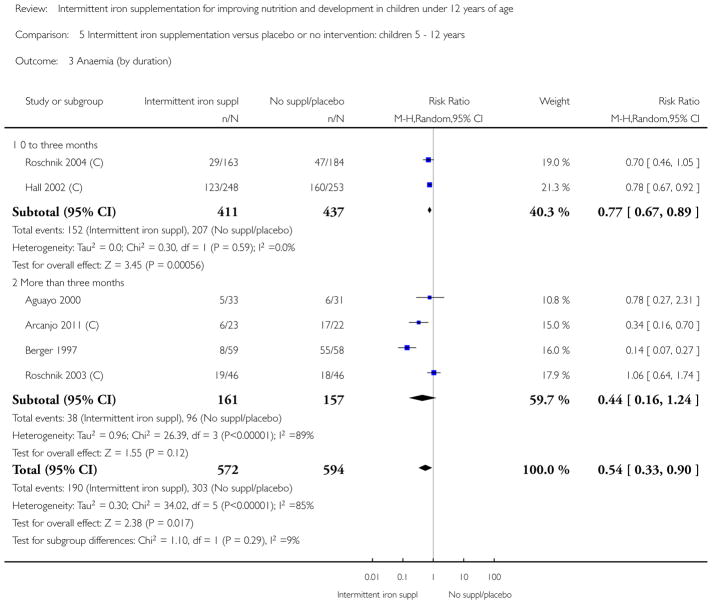
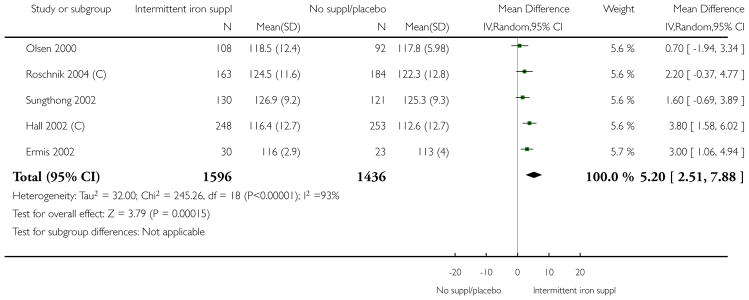
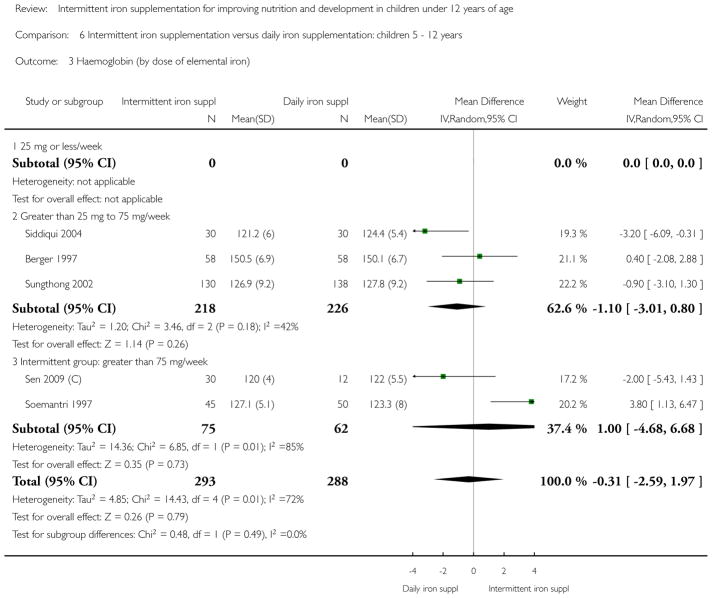
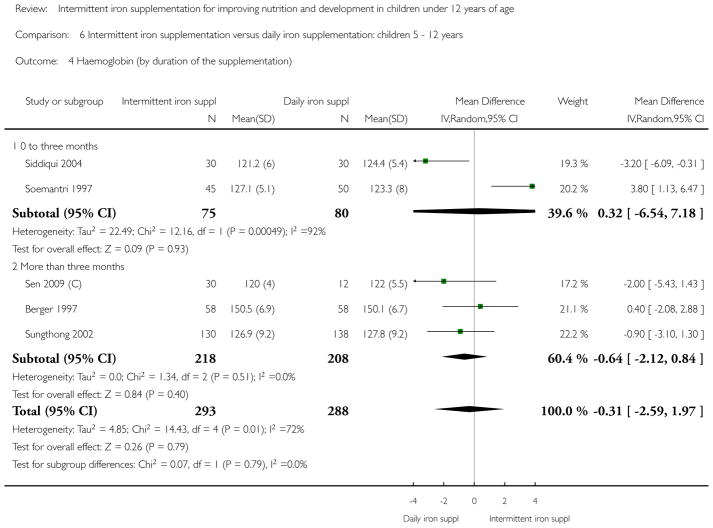
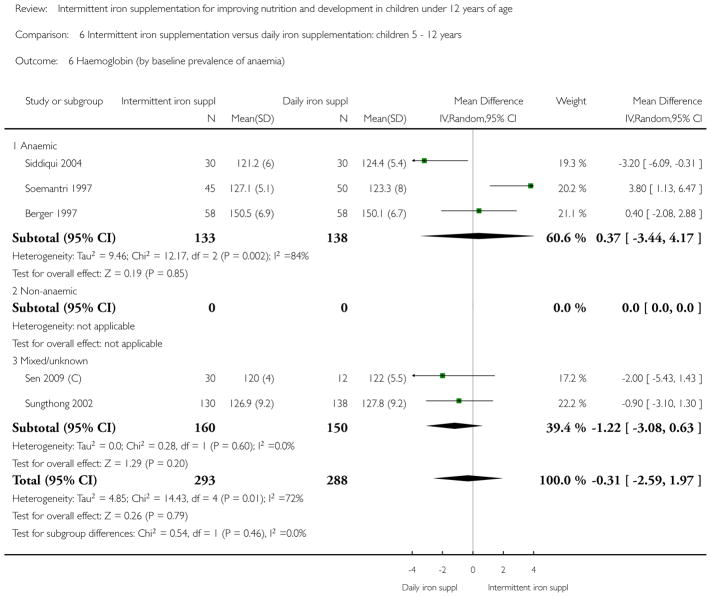
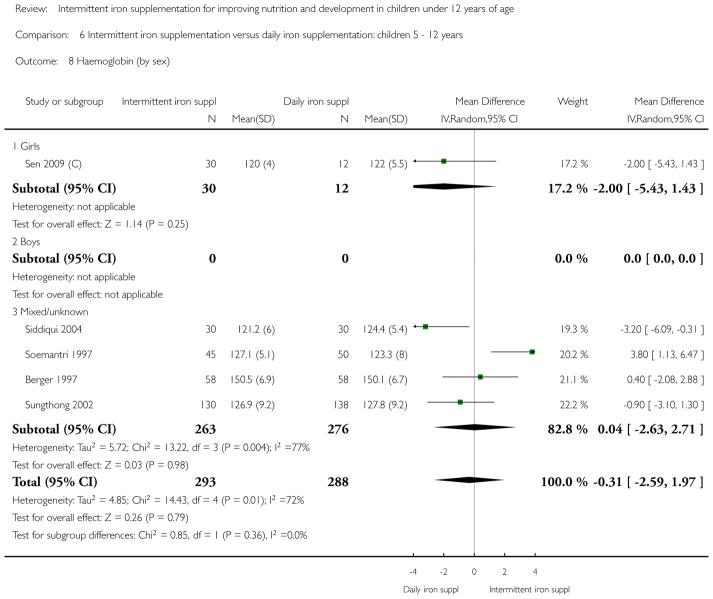
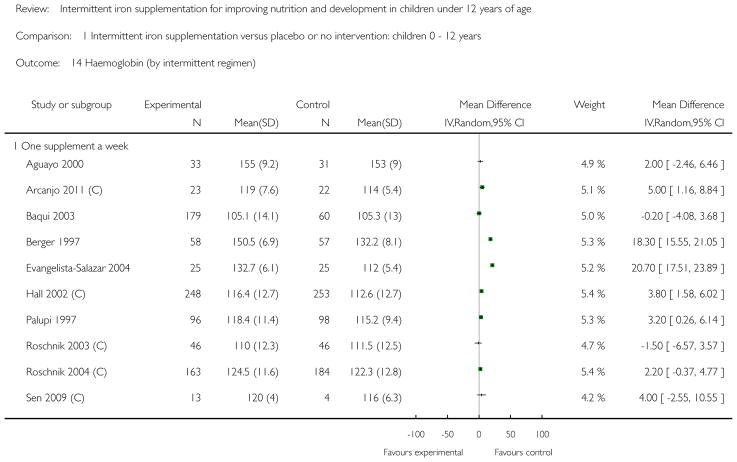
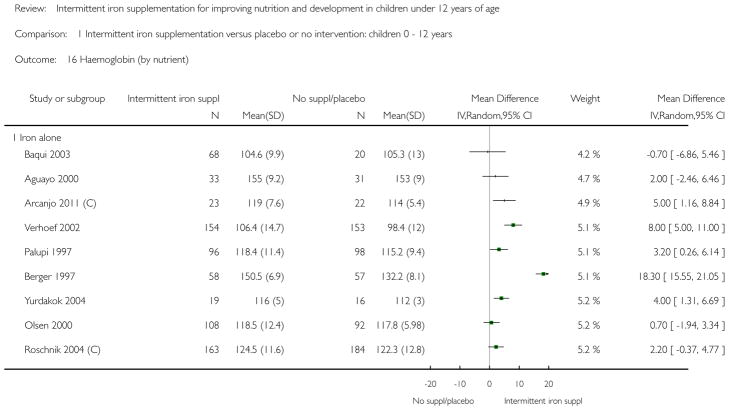
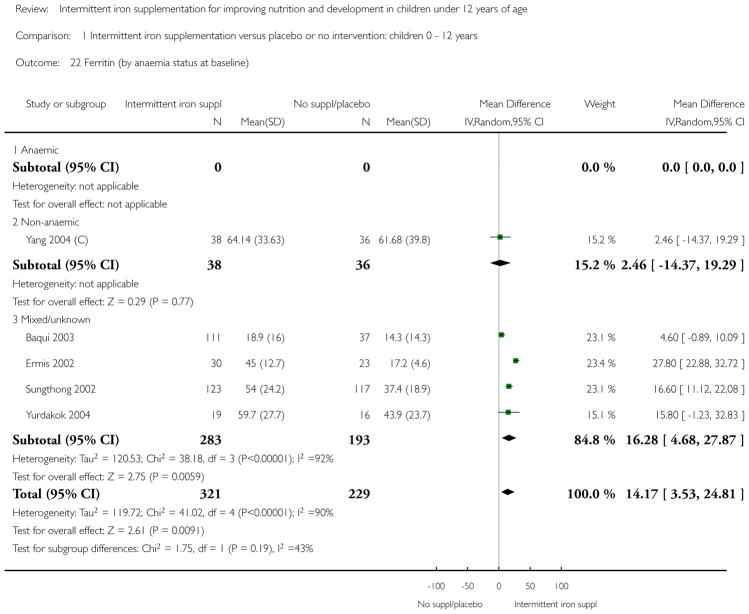
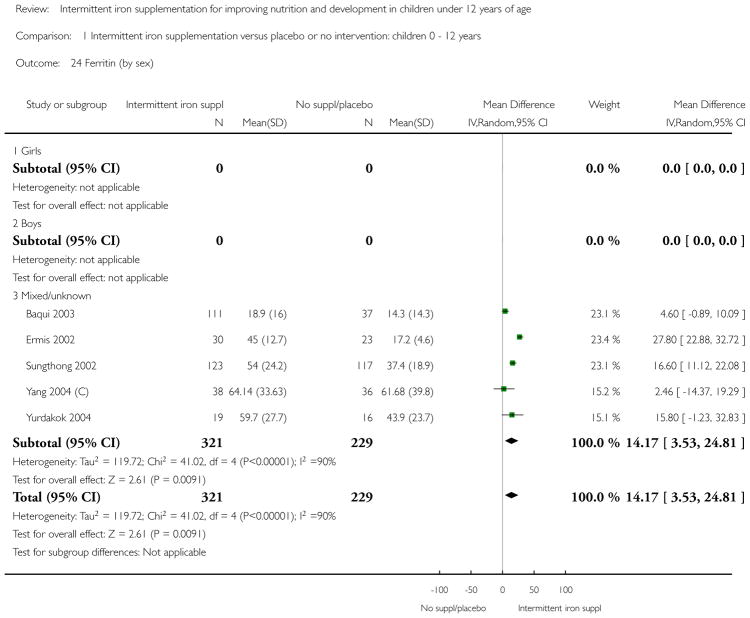
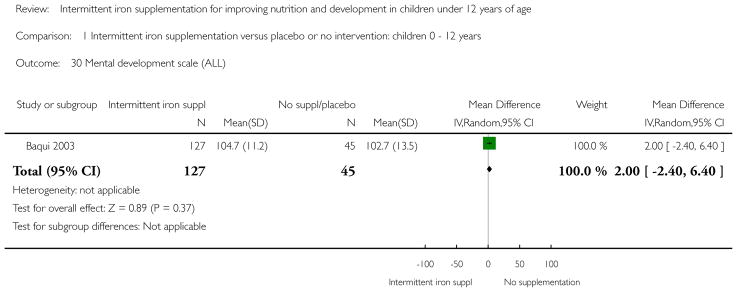
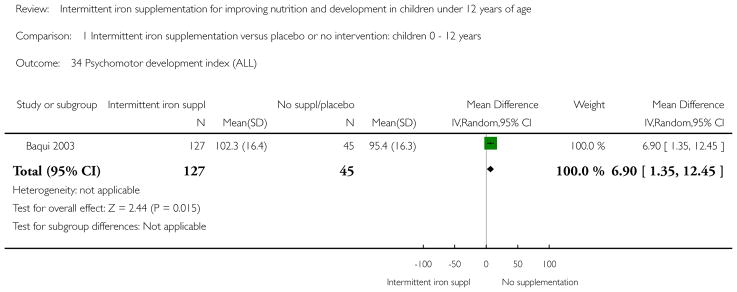
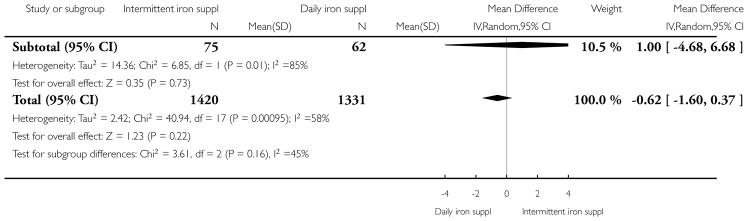
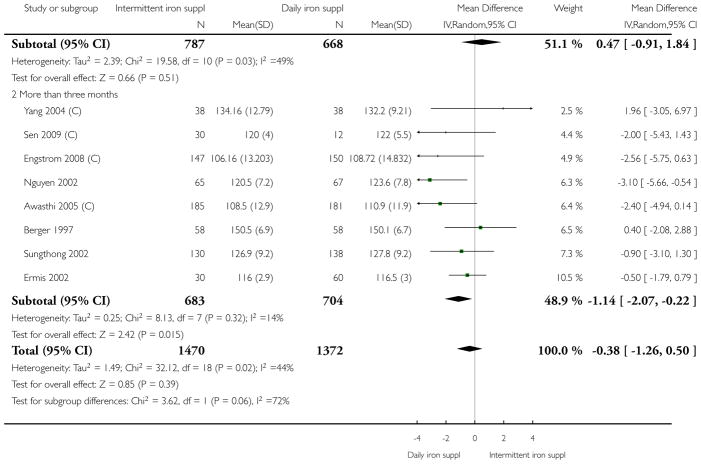
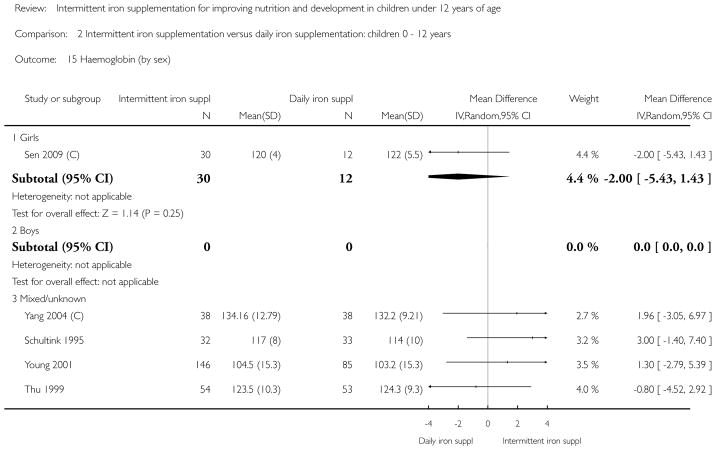
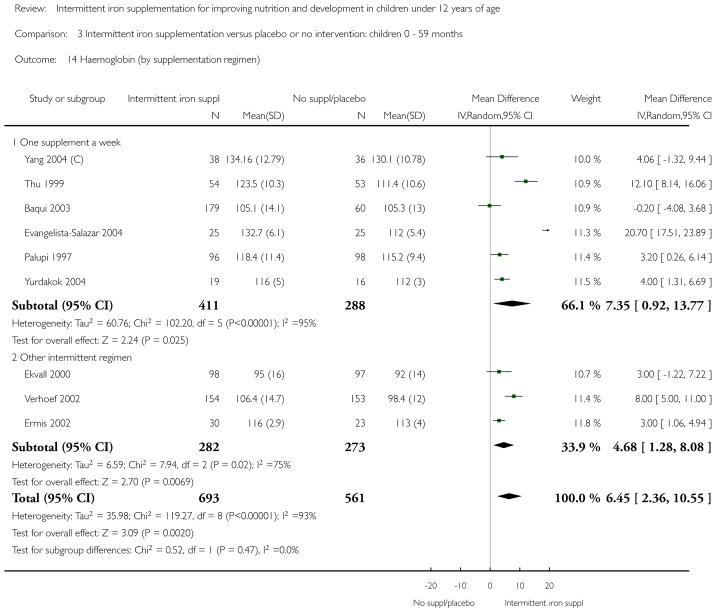
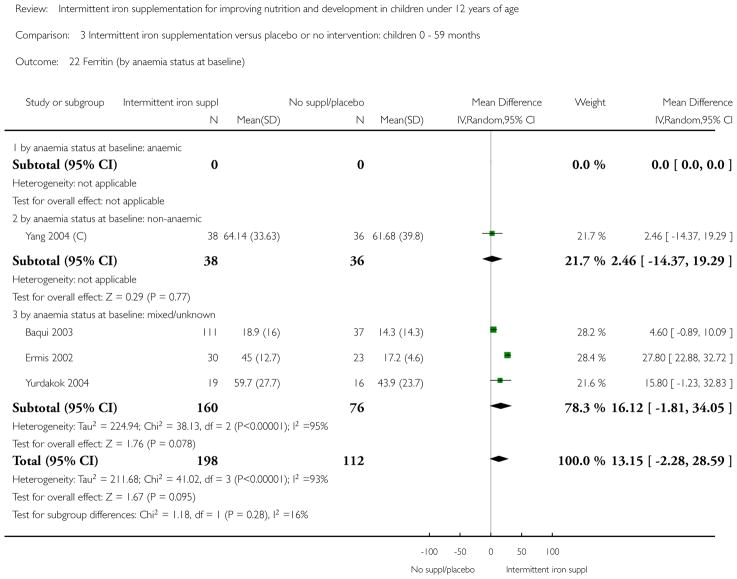
Intermittent iron supplementation is efficacious to improve haemoglobin concentrations and reduce the risk of having anaemia or iron deficiency in children younger than 12 years of age when compared with a placebo or no intervention, but it is less effective than daily supplementation to prevent or control anaemia. Intermittent supplementation may be a viable public health intervention in settings where daily supplementation has failed or has not been implemented. Information on mortality, morbidity, developmental outcomes and side effects, however, is still lacking. -
Keywords:
-
Source:Cochrane Database Syst Rev. (12):CD009085
-
Pubmed ID:22161444
-
Pubmed Central ID:PMC4547491
-
Document Type:
-
Funding:
-
Download URL:
-
File Type:[PDF - 32.69 MB]
-
Collection(s):
-
Main Document Checksum:urn:sha256:c5a8341faac8b1028f78c55596883f2cd71e8be9c8a02096b9860259bff3c66e
Supporting Files


File Language:
English
 Was this page helpful?
 Found an issue?












































































































CDC STACKS serves as an archival repository of CDC-published products including
scientific findings, journal articles, guidelines, recommendations, or other public health information authored or
co-authored by CDC or funded partners.
As a repository, CDC STACKS retains documents in their original published format to ensure public access to scientific information.
As a repository, CDC STACKS retains documents in their original published format to ensure public access to scientific information.
You May Also Like
COLLECTION
CDC Public Access