


The Study to Explore Early Development (SEED): A Multisite Epidemiologic Study of Autism by the Centers for Autism and Developmental Disabilities Research and Epidemiology (CADDRE) Network
Supporting Files

-
10 2012
-
File Language:
English
Details
-
Alternative Title:J Autism Dev Disord
-
Personal Author:Schendel, Diana ; DiGuiseppi, Carolyn ; Croen, Lisa ; Fallin, M Danielle ; Reed, Philip L. ; Schieve, Laura ; Wiggins, Lisa ; Daniels, Julie ; Grether, Judith ; Levy, Susan ; Miller, Lisa ; Newschaffer, Craig ; Pinto-Martin, Jennifer ; Robinson, Cordelia ; Windham, Gayle ; Alexander, Aimee ; Aylsworth, Arthur ; Bernal, Pilar ; Bonner, Joseph D. ; Blaskey, Lisa ; Bradley, Chyrise ; Collins, Jack ; Ferretti, Casara ; Farzadegan, Homayoon ; Giarelli, Ellen ; Harvey, Marques ; Hepburn, Susan ; Herr, Matthew ; Kaparich, Kristina ; Landa, Rebecca ; Lee, Li-Ching ; Levenseller, Brooke ; Meyerer, Stacey ; Rahbar, Mohammad H. ; Ratchford, Andria ; Reynolds, Ann ; Rosenberg, Steve ; Rusyniak, Julie ; Shapira, Stuart K. ; Smith, Karen ; Souders, Margaret ; AaronThompson, Patrick ; Young, Lisa ; Yeargin-Allsopp, Marshalyn ; Schendel, Diana ; DiGuiseppi, Carolyn ; Croen, Lisa ; Fallin, M Danielle ; Reed, Philip L. ; Schieve, Laura ; Wiggins, Lisa ; Daniels, Julie ; Grether, Judith ; Levy, Susan ; Miller, Lisa ; Newschaffer, Craig ; Pinto-Martin, Jennifer ; Robinson, Cordelia ; Windham, Gayle ; Alexander, Aimee ; Aylsworth, Arthur ; Bernal, Pilar ; Bonner, Joseph D. ; Blaskey, Lisa ; Bradley, Chyrise ; Collins, Jack ; Ferretti, Casara ; Farzadegan, Homayoon ; Giarelli, Ellen ; Harvey, Marques ; Hepburn, Susan ; Herr, Matthew ; Kaparich, Kristina ; Landa, Rebecca ; Lee, Li-Ching ; Levenseller, Brooke ; Meyerer, Stacey ; Rahbar, Mohammad H. ; Ratchford, Andria ; Reynolds, Ann ; Rosenberg, Steve ; Rusyniak, Julie ; Shapira, Stuart K. ; Smith, Karen ; Souders, Margaret ; AaronThompson, Patrick ; Young, Lisa ; Yeargin-Allsopp, Marshalyn
-
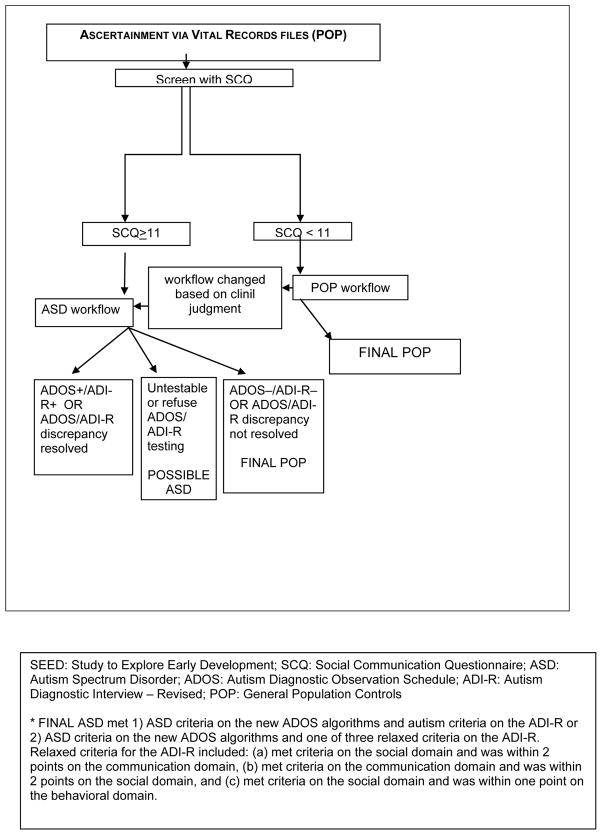
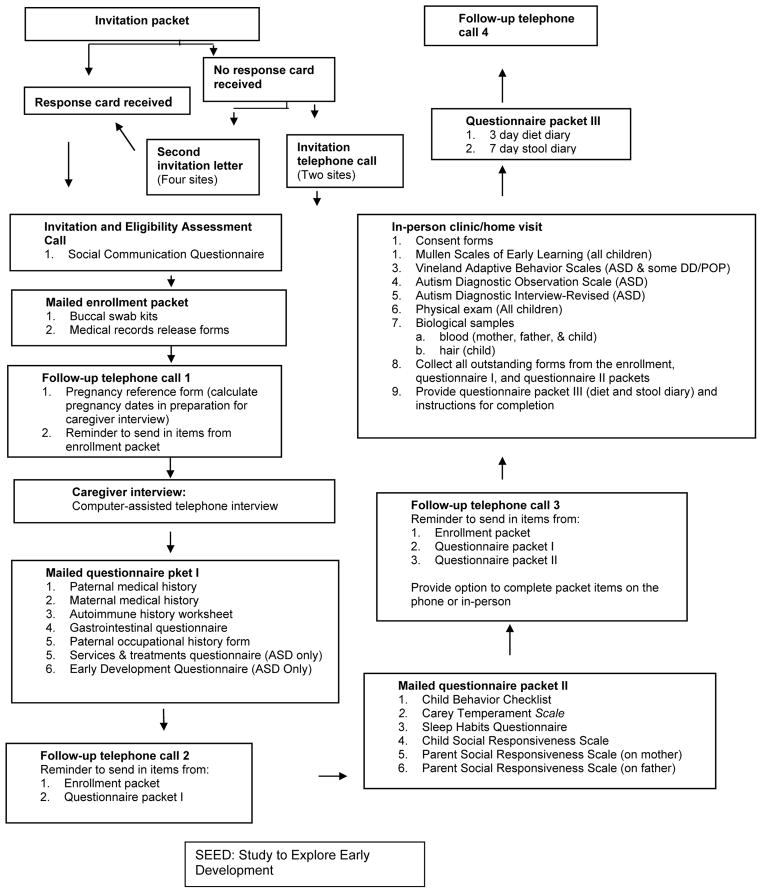
Description:The Study to Explore Early Development (SEED), a multisite investigation addressing knowledge gaps in autism phenotype and etiology, aims to: (1) characterize the autism behavioral phenotype and associated developmental, medical, and behavioral conditions and (2) investigate genetic and environmental risks with emphasis on immunologic, hormonal, gastrointestinal, and sociodemographic characteristics. SEED uses a case-control design with population-based ascertainment of children aged 2-5 years with an autism spectrum disorder (ASD) and children in two control groups-one from the general population and one with non-ASD developmental problems. Data from parent-completed questionnaires, interviews, clinical evaluations, biospecimen sampling, and medical record abstraction focus on the prenatal and early postnatal periods. SEED is a valuable resource for testing hypotheses regarding ASD characteristics and causes.
-
Subjects:
-
Source:J Autism Dev Disord. 42(10):2121-2140 ; J Autism Dev Disord. 42(10):2121-2140
-
Pubmed ID:22350336
-
Pubmed Central ID:PMC4455890
-
Document Type:
-
Funding:U10DD000184/DD/NCBDD CDC HHSUnited States/ ; U10DD000181/DD/NCBDD CDC HHSUnited States/ ; U01 DD001210/DD/NCBDD CDC HHSUnited States/ ; CC999999/Intramural CDC HHSUnited States/ ; U10DD000182/DD/NCBDD CDC HHSUnited States/ ; U10DD000498/DD/NCBDD CDC HHSUnited States/ ; U10DD000183/DD/NCBDD CDC HHSUnited States/ ; U10DD000180/DD/NCBDD CDC HHSUnited States/
-
Volume:42
-
Issue:10
-
Collection(s):
-
Main Document Checksum:urn:sha256:8b44eef533b2ccd407b7a95dc24d41cc44ef3c3f7b2f9244a04c3ec0d6c6e6cb
-
Download URL:
-
File Type:
 [PDF
- 1.15 MB
]
[PDF
- 1.15 MB
]
Supporting Files


File Language:
English
ON THIS PAGE


CDC STACKS serves as an archival repository of CDC-published products including
scientific findings,
journal articles, guidelines, recommendations, or other public health information authored or
co-authored by CDC or funded partners.
As a repository, CDC STACKS retains documents in their original published format to ensure public access to scientific information.
As a repository, CDC STACKS retains documents in their original published format to ensure public access to scientific information.
You May Also Like
COLLECTION
CDC Public Access