


Maximum Principal Strain and Strain Rate Associated with Concussion Diagnosis Correlates with Changes in Corpus Callosum White Matter Indices
Supporting Files

-
1 2012
-
File Language:
English
Details
-
Alternative Title:Ann Biomed Eng
-
Personal Author:
-
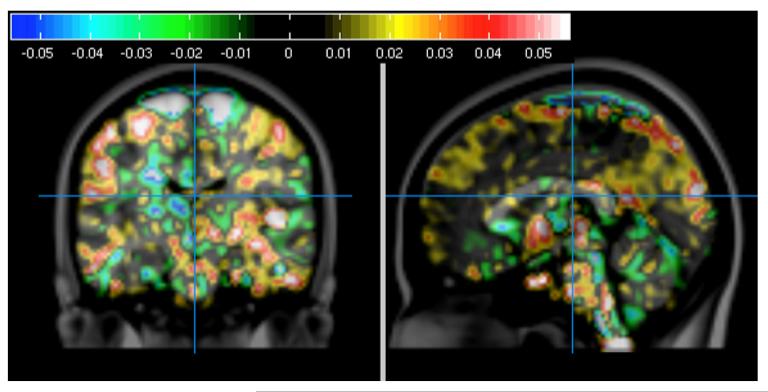
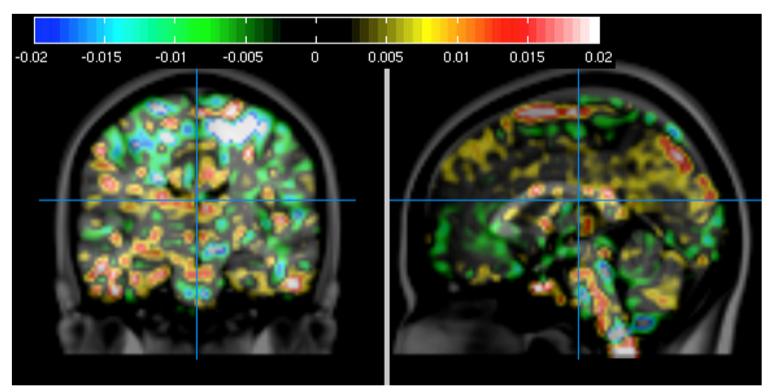
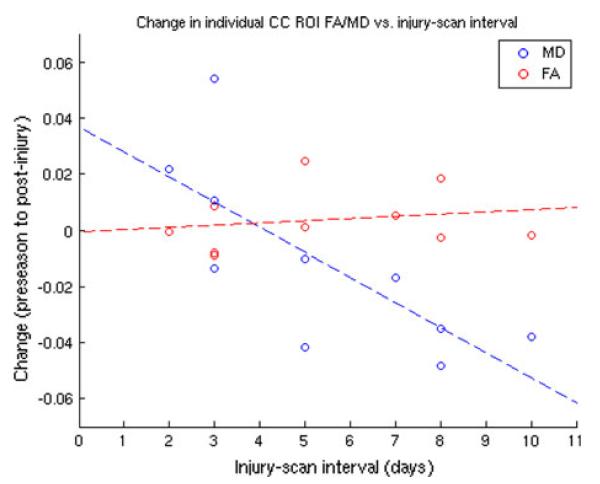
Description:On-field monitoring of head impacts, combined with finite element (FE) biomechanical simulation, allow for predictions of regional strain associated with a diagnosed concussion. However, attempts to correlate these predictions with in vivo measures of brain injury have not been published. This article reports an approach to and preliminary results from the correlation of subject-specific FE model-predicted regions of high strain associated with diagnosed concussion and diffusion tensor imaging to assess changes in white matter integrity in the corpus callosum (CC). Ten football and ice hockey players who wore instrumented helmets to record head impacts sustained during play completed high field magnetic resonance imaging preseason and within 10 days of a diagnosed concussion. The Dartmouth Subject-Specific FE Head model was used to generate regional predictions of strain and strain rate following each impact associated with concussion. Maps of change in fractional anisotropy (FA) and median diffusivity (MD) were generated for the CC of each athlete to correlate strain with change in FA and MD. Mean and maximum strain rate correlated with change in FA (Spearman ρ = 0.77, p = 0.01; 0.70, p = 0.031), and there was a similar trend for mean and maximum strain (0.56, p = 0.10; 0.6, p = 0.07), as well as for maximum strain with change in MD (-0.63, p = 0.07). Change in MD correlated with injury-to-imaging interval (ρ = -0.80, p = 0.006) but change in FA did not (ρ = 0.18, p = 0.62). These results provide preliminary confirmation that model-predicted strain and strain rate in the CC correlate with changes in indices of white matter integrity.
-
Subjects:
-
Source:Ann Biomed Eng. 2011; 40(1):127-140
-
Pubmed ID:21994062
-
Pubmed Central ID:PMC4388259
-
Document Type:
-
Funding:R01 NS055020-04/NS/NINDS NIH HHSUnited States/ ; R01/CE001254/CE/NCIPC CDC HHSUnited States/ ; R01HD048638/HD/NICHD NIH HHSUnited States/ ; R01 CE001254/CE/NCIPC CDC HHSUnited States/ ; R01 NS055020/NS/NINDS NIH HHSUnited States/ ; R01 HD048638/HD/NICHD NIH HHSUnited States/ ; R01NS055020/NS/NINDS NIH HHSUnited States/
-
Volume:40
-
Issue:1
-
Collection(s):
-
Main Document Checksum:urn:sha256:38c192f58bb92c32c2ce2100989169ca7e60f18aabaa8aa9c40f746ded239c30
-
Download URL:
-
File Type:
 [PDF
- 1.58 MB
]
[PDF
- 1.58 MB
]
Supporting Files


File Language:
English
ON THIS PAGE



CDC STACKS serves as an archival repository of CDC-published products including
scientific findings,
journal articles, guidelines, recommendations, or other public health information authored or
co-authored by CDC or funded partners.
As a repository, CDC STACKS retains documents in their original published format to ensure public access to scientific information.
As a repository, CDC STACKS retains documents in their original published format to ensure public access to scientific information.
You May Also Like
COLLECTION
CDC Public Access