


Perceiving and Acting on Complex Affordances: How Children and Adults Bicycle Across Two Lanes of Opposing Traffic
Supporting Files

-
Aug 27 2012
-
File Language:
English
Details
-
Alternative Title:J Exp Psychol Hum Percept Perform
-
Personal Author:
-
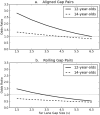
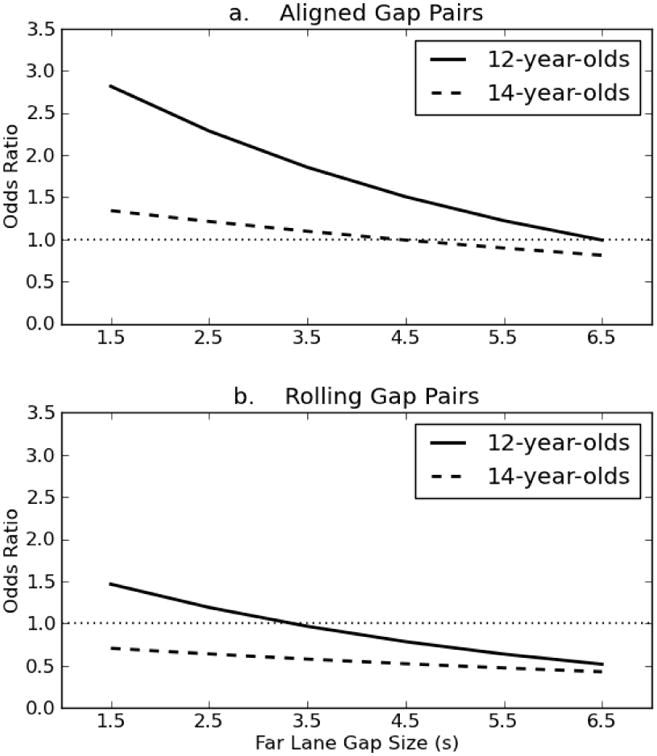
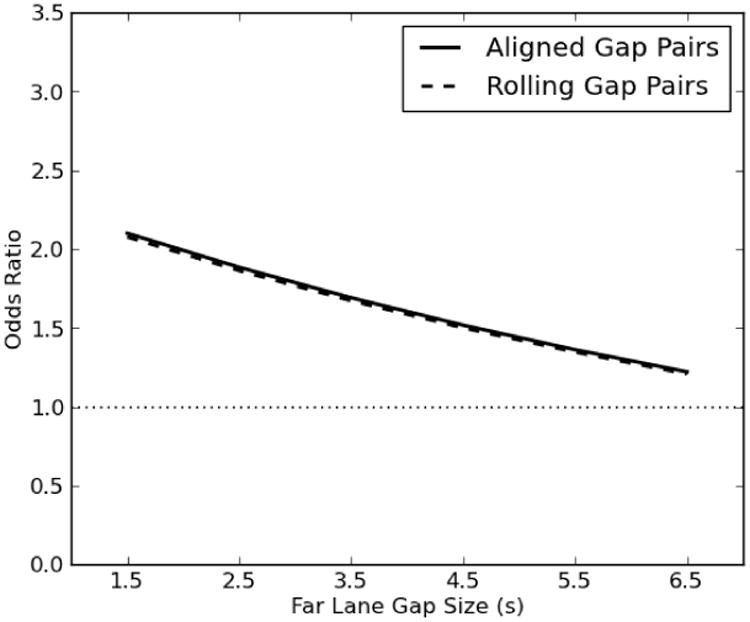
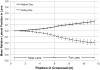
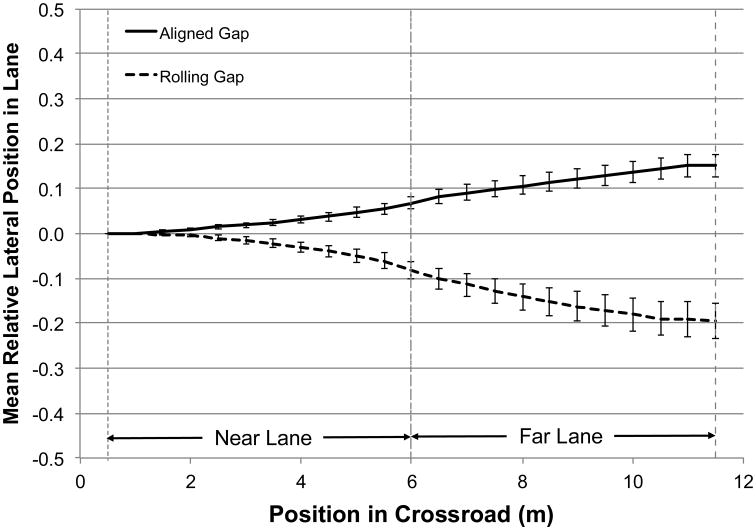
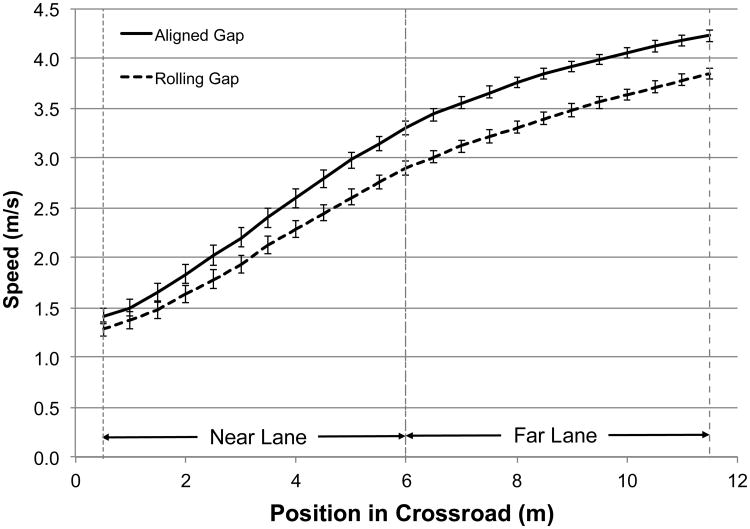
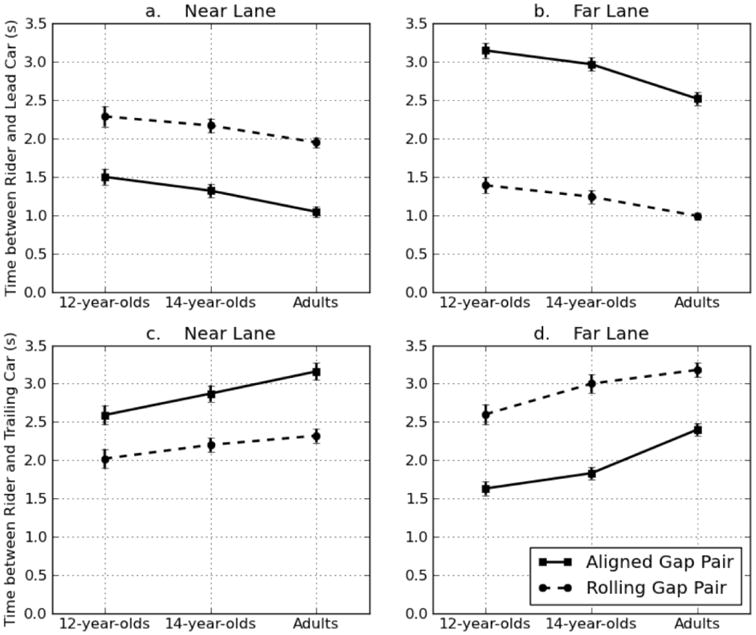
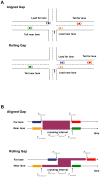
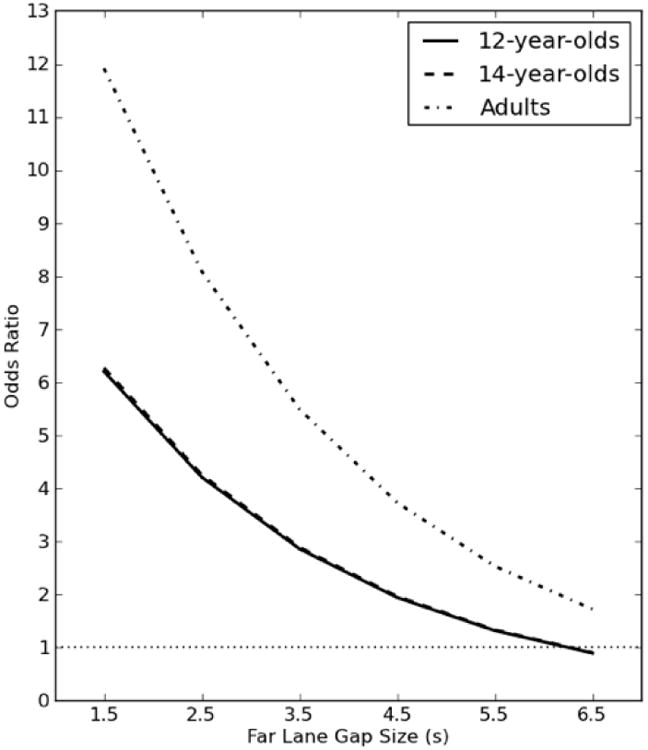
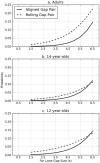
Description:This investigation examined how children and adults negotiate a challenging perceptual-motor problem with significant real-world implications--bicycling across two lanes of opposing traffic. Twelve- and 14-year-olds and adults rode a bicycling simulator through an immersive virtual environment. Participants crossed intersections with continuous cross traffic coming from opposing directions. Opportunities for crossing were divided into aligned (far gap opens with or before near gap) and rolling (far gap opens after near gap) gap pairs. Children and adults preferred rolling to aligned gap pairs, though this preference was stronger for adults than for children. Crossing aligned versus rolling gap pairs produced substantial differences in direction of travel, speed of crossing, and timing of entry into the near and far lanes. For both aligned and rolling gap pairs, children demonstrated less skill than adults in coordinating self and object movement. These findings have implications for understanding perception-action-cognition links and for understanding risk factors underlying car-bicycle collisions.
-
Subjects:
-
Source:J Exp Psychol Hum Percept Perform. 39(1):23-36.
-
Pubmed ID:22924952
-
Pubmed Central ID:PMC4037906
-
Document Type:
-
Funding:
-
Volume:39
-
Issue:1
-
Collection(s):
-
Main Document Checksum:urn:sha256:33c43f7fa015da46c28639579d5d0a81cbf6f2da157d809eb35a5d2c06133e6d
-
Download URL:
-
File Type:
 [PDF
- 1001.03 KB
]
[PDF
- 1001.03 KB
]
Supporting Files


File Language:
English
ON THIS PAGE






CDC STACKS serves as an archival repository of CDC-published products including
scientific findings,
journal articles, guidelines, recommendations, or other public health information authored or
co-authored by CDC or funded partners.
As a repository, CDC STACKS retains documents in their original published format to ensure public access to scientific information.
As a repository, CDC STACKS retains documents in their original published format to ensure public access to scientific information.
You May Also Like
COLLECTION
CDC Public Access