



Identification of two Mycobacterium tuberculosis H37Rv ORFs involved in resistance to killing by human macrophages
Supporting Files
Public Domain

-
October 17 2001
File Language:
English
Details
-
Alternative Title:BMC Microbiol
-
Personal Author:
-
Description:Background
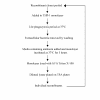
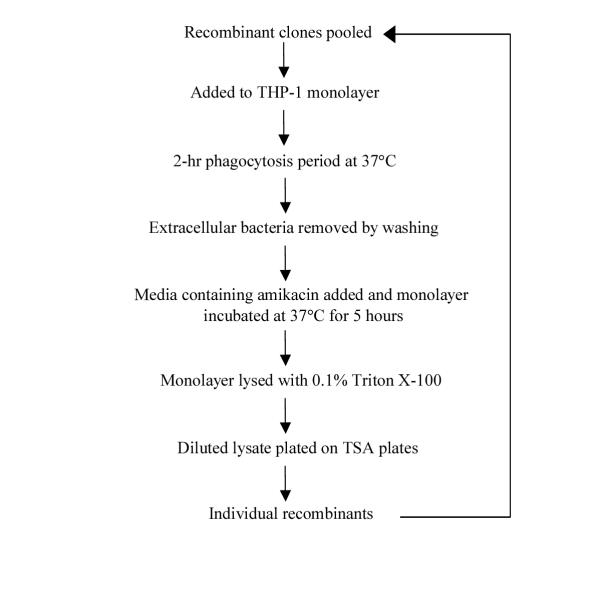
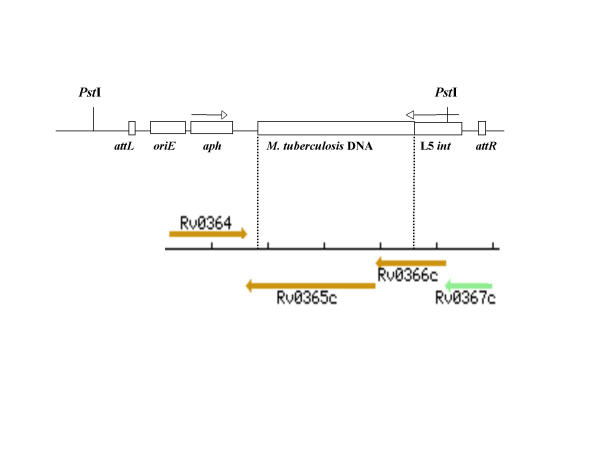
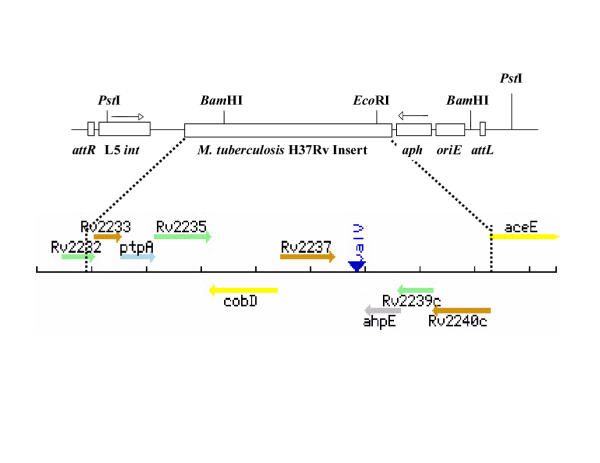
The ability of Mycobacterium tuberculosis to survive and replicate in macrophages is crucial for the mycobacterium's ability to infect the host and cause tuberculosis. To identify Mycobacterium tuberculosis genes involved in survival in macrophages, a library of non-pathogenic Mycobacterium smegmatis bacteria, each carrying an individual integrated cosmid containing M. tuberculosis H37Rv genomic DNA, was passed through THP-1 human macrophages three times.
Results
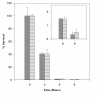
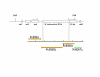
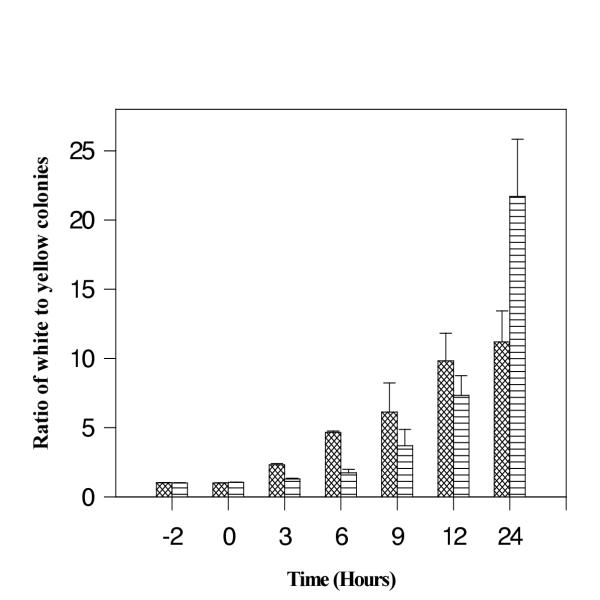
Two of the clones recovered from this enrichment process, sur2 and sur3, exhibited significantly increased survival relative to wild-type bacteria. In coinfection experiments, the ratio of sur2 colonies to wild-type colonies was 1:1 at 0 hours but increased to 20:1 at 24 hours post phagocytosis. The ratio of sur3 colonies to wild-type colonies was 1:1 at 0 hours and 5:1 at 24 hours. The M. tuberculosis ORFs responsible for increased survival were shown to be Rv0365c for the sur2 clone and Rv2235 for the sur3 clone. These ORFs encode proteins with as-of-yet unknown functions.
Conclusions
We identified two M. tuberculosis ORFs which may be involved in the ability of tubercle bacilli to survive in macrophages.
-
Subjects:
-
Source:BMC Microbiol. 1:26
-
Pubmed ID:11716786
-
Pubmed Central ID:PMC59890
-
Document Type:
-
Volume:1
-
Collection(s):
-
Main Document Checksum:urn:sha-512:a7413a85e3c668174d5dc6a5e02cac7f281ca8f0739ef3f76220e3a61887f1f9d912922ea52c1c7c2cbfcaaa29019b5b38cb8b8018f17296fa6f65512eeecf8e
-
Download URL:
-
File Type:
 [PDF
- 518.23 KB
]
[PDF
- 518.23 KB
]
Supporting Files


File Language:
English
 Was this page helpful?
 Found an issue?





CDC STACKS serves as an archival repository of CDC-published products including
scientific findings,
journal articles, guidelines, recommendations, or other public health information authored or
co-authored by CDC or funded partners.
As a repository, CDC STACKS retains documents in their original published format to ensure public access to scientific information.
As a repository, CDC STACKS retains documents in their original published format to ensure public access to scientific information.
You May Also Like
COLLECTION
CDC Public Access