


Mind the gap: Racial differences in breast cancer incidence and biologic phenotype, but not stage, among low-income women participating in a government-funded screening program
Supporting Files

-
Dec 13 2012
-
File Language:
English
Details
-
Alternative Title:Breast Cancer Res Treat
-
Personal Author:
-
Description:Background
Breast cancer mortality rates in South Carolina (SC) are 40% higher among African-American (AA) than European-American (EA) women. Proposed reasons include race-associated variations in care and/or tumor characteristics, which may be subject to income effects. We evaluated race-associated differences in tumor biologic phenotype and stage among low-income participants in a government-funded screening program.
Methods
Best Chance Network (BCN) data were linked with the SC Central Cancer Registry. Characteristics of breast cancers diagnosed in BCN participants aged 47–64 years during 1996–2006 were abstracted. Race-specific case proportions and incidence rates based on estrogen receptor (ER) status and histologic grade were estimated.
Results
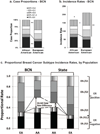
Among 33,880 low-income women accessing BCN services, repeat breast cancer screening utilization was poor, especially among EAs. Proportionally, stage at diagnosis did not differ by race (607 cancers, 53% among AAs), with about 40% advanced stage. Compared to EAs, invasive tumors in AAs were 67% more likely (proportions) to be of poor-prognosis phenotype (both ER-negative and high-grade); this was more a result of the 46% lesser AA incidence (rates) of better-prognosis (ER+ lower-grade) cancer than the 32% greater incidence of poor-prognosis disease (p-values <0.01). When compared to the general SC population, racial disparities in poor prognostic features within the BCN population were attenuated; this was due to more frequent adverse tumor features in EAs rather than improvements for AAs.
Conclusion
Among low-income women in SC, closing the breast cancer racial and income mortality gaps will require improved early diagnosis, addressing causes of racial differences in tumor biology, and improved care for cancers of poor-prognosis biology.
-
Subjects:
-
Source:Breast Cancer Res Treat. 137(2):589-598.
-
Pubmed ID:23239148
-
Pubmed Central ID:PMC3660400
-
Document Type:
-
Funding:
-
Place as Subject:
-
Volume:137
-
Issue:2
-
Collection(s):
-
Main Document Checksum:urn:sha256:3fb7a3c250efc7c9dc6cf54426991b838de8ab2e541c6e1b903fc7d540ba5d7f
-
Download URL:
-
File Type:
 [PDF
- 778.41 KB
]
[PDF
- 778.41 KB
]
Supporting Files


File Language:
English
ON THIS PAGE


CDC STACKS serves as an archival repository of CDC-published products including
scientific findings,
journal articles, guidelines, recommendations, or other public health information authored or
co-authored by CDC or funded partners.
As a repository, CDC STACKS retains documents in their original published format to ensure public access to scientific information.
As a repository, CDC STACKS retains documents in their original published format to ensure public access to scientific information.
You May Also Like
COLLECTION
CDC Public Access