


Inverse propensity weighting to adjust for bias in fatal crash samples
Supporting Files

-
Oct 22 2012
File Language:
English
Details
-
Alternative Title:Accid Anal Prev
-
Personal Author:
-
Description:Background
The Fatality Analysis Reporting System (FARS) has data from all areas of the United States, but is limited to fatal crashes. The National Automotive Sampling System – General Estimates System (NASS-GES) includes all types of serious traffic crashes, but is limited to a few sampling areas. Combining the strengths of these two samples might offset their limitations.
Methods
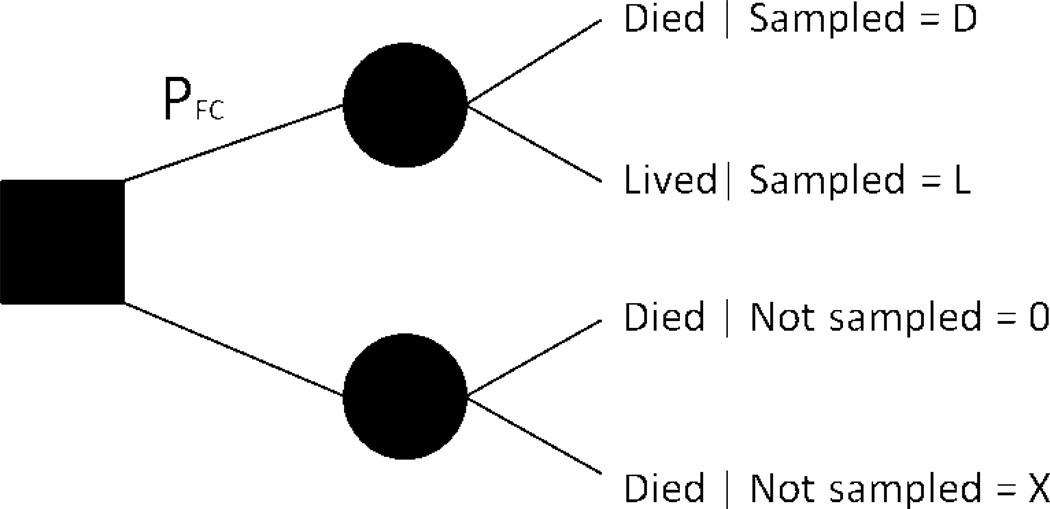
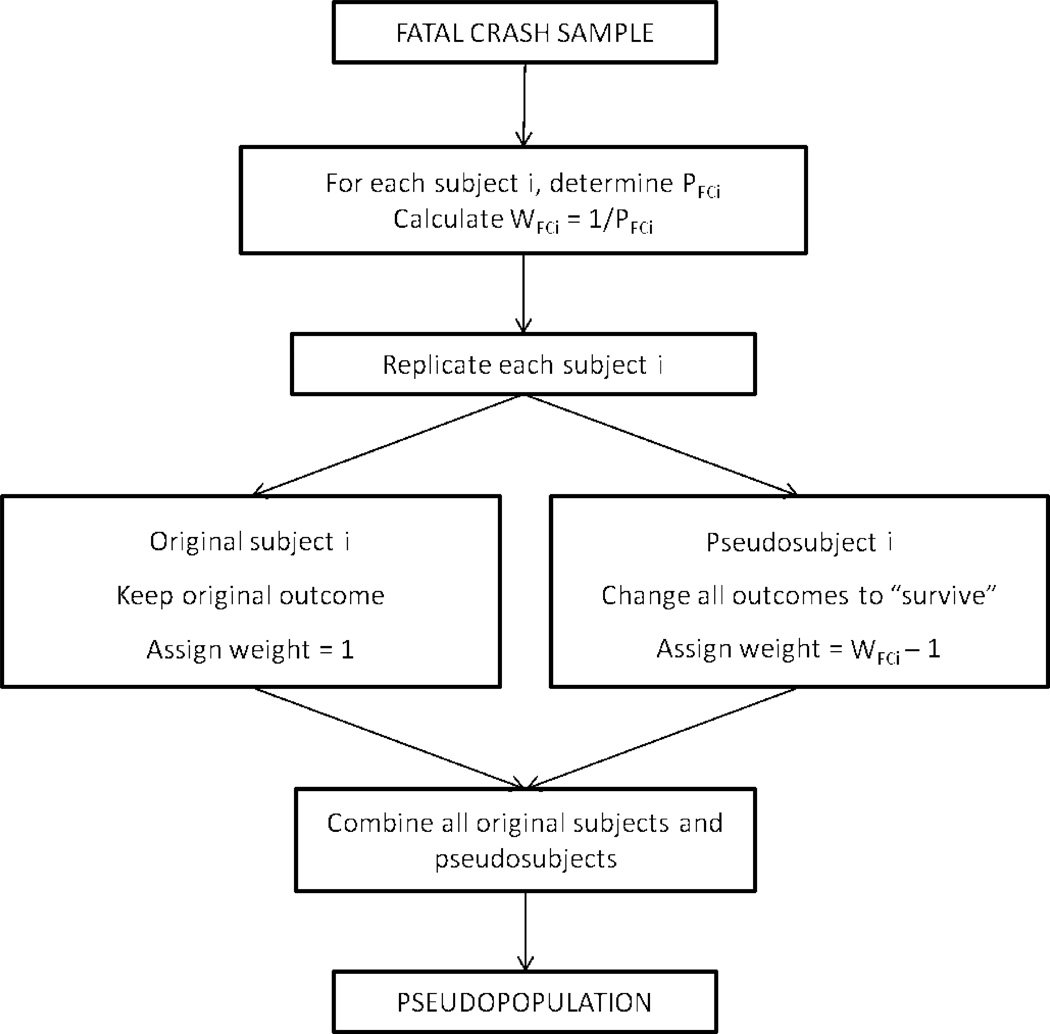
Logistic regression (allowing for sample design, and conditional upon selected person-, event-, and geographic-level factors) was used to determine the propensity (PFC) for each injured person in 2002–2008 NASS-GES data to be in a fatal crash sample. NASS-GES subjects injured in fatal crashes were then reweighted by a factor of WFC = (1/PFC) to create a “pseudopopulation”. The weights (WFC) derived from NASS-GES were also applied to injured subjects in 2007 FARS data to create another pseudopopulation. Characteristics and mortality predictions from these artificial pseudopopulations were compared to those obtained using the original NASS-GES sample. The sum of WFC for FARS cases was also used to estimate the number of crash injuries for rural and urban locations, and compared to independently reported data.
Results
Compared to regression results using the original NASS-GES sample, unadjusted models based on fatal crash samples gave inaccurate estimates of covariate effects on mortality for injured subjects. After reweighting using WFC, estimates based upon the pseudopopulations were similar to results obtained using the original NASS-GES sample. The sum of WFC for FARS cases gave reasonable estimates for the number of crash injuries in rural and urban locations, and provided an estimate of the rural effect on mortality after controlling for other factors.
Conclusions
Weights derived from analysis of NASS-GES data (the inverse propensity for selection into a fatal crash sample) allow appropriate adjustment for selection bias in fatal crash samples, including FARS.
-
Subjects:
-
Source:Accid Anal Prev. 2012; 50:1244-1251.
-
Pubmed ID:23084095
-
Pubmed Central ID:PMC3513521
-
Document Type:
-
Funding:
-
Place as Subject:
-
Volume:50
-
Collection(s):
-
Main Document Checksum:urn:sha256:2eaa9d7c3ba51725c2d0165cd43638b121d72fbca33194407973d8ce7ea48881
-
Download URL:
-
File Type:
 [PDF
- 589.71 KB
]
[PDF
- 589.71 KB
]
Supporting Files


File Language:
English
ON THIS PAGE

CDC STACKS serves as an archival repository of CDC-published products including
scientific findings,
journal articles, guidelines, recommendations, or other public health information authored or
co-authored by CDC or funded partners.
As a repository, CDC STACKS retains documents in their original published format to ensure public access to scientific information.
As a repository, CDC STACKS retains documents in their original published format to ensure public access to scientific information.
You May Also Like
COLLECTION
CDC Public Access