



Resuscitation of traumatic hemorrhagic shock patients with hypertonic saline - without dextran - inhibits neutrophil and endothelial cell activation
Supporting Files

-
Oct 2012
-
Available in CDC Stacks on 2013-10-01T00:00:00Z
File Language:
English
Details
-
Alternative Title:Shock
-
Personal Author:
-
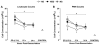
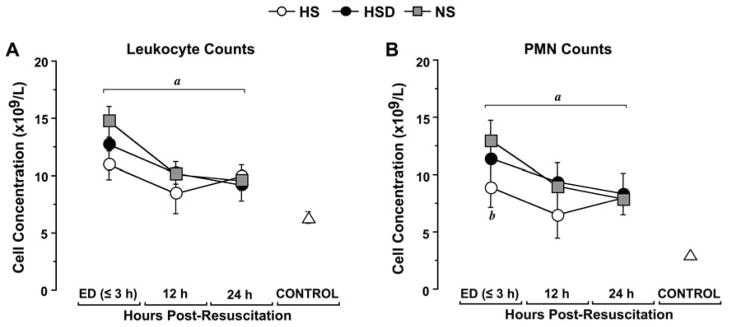
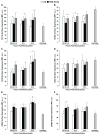
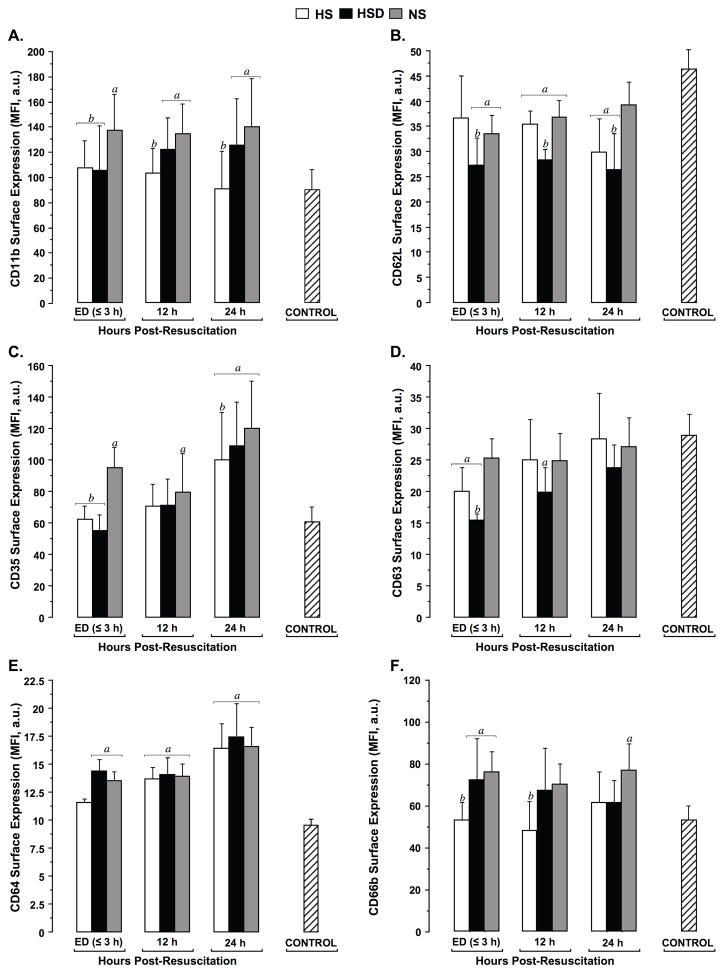
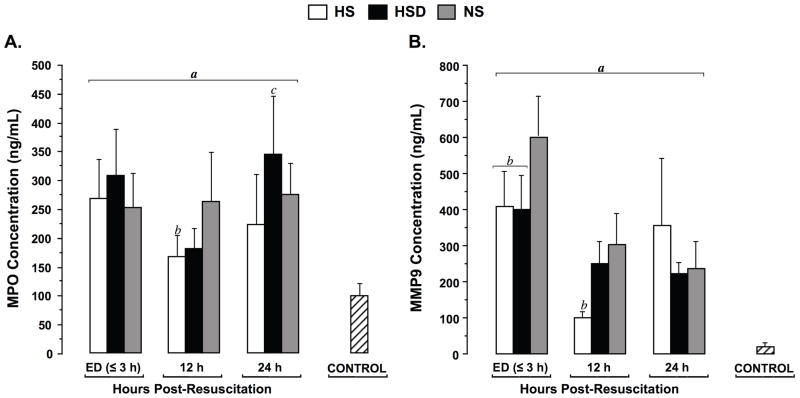
Description:Background ; Post-traumatic inflammation and excessive neutrophil activation cause multiple organ dysfunction syndrome (MODS), a major cause of death among hemorrhagic shock patients. Traditional resuscitation strategies may exacerbate inflammation and thus novel fluid treatments are needed to reduce these post-traumatic complications. Hypertonic resuscitation fluids inhibit inflammation and reduce MODS in animal models. Here we studied the anti-inflammatory efficacy of hypertonic fluids in a controlled clinical trial. ; Methods ; Trauma patients in hypovolemic shock were resuscitated in a pre-hospital setting with 250 ml of either 7.5% hypertonic saline (HS; n=9), 7.5% hypertonic saline + 6% dextran-70 (HSD; n=8), or 0.9% normal saline (NS; n=17). Blood samples were collected on hospital admission and 12 and 24 h post-resuscitation. Multi-color flow cytometry was used to quantify neutrophil expression of cell-surface activation/adhesion (CD11b, CD62L, CD64) and degranulation (CD63, CD66b, CD35) markers as well as oxidative burst activity. Circulating concentrations of soluble intercellular adhesion molecule (sICAM)-1, vascular cell adhesion molecule (sVCAM)-1, P-, E-selectins, myeloperoxidase (MPO), and matrix metallopeptidase (MMP)-9 were assessed with immunoassays. ; Results ; MODS, leukocytosis, and mortality were lower in the HS and HSD groups than in the NS group. However, these differences were not statistically significant. HS prevented priming and activation and neutrophil oxidative burst and CD11b and CD66b expression. HS also reduced circulating markers of neutrophil degranulation (MPO and MMP-9) and endothelial cell activation (sICAM-1, cVCAM-1, sE-selectin, and sP-selectin). HSD was less capable than HS of suppressing the upregulation of most of these activation markers. ; Conclusions ; This study demonstrates that initial resuscitation with HS but neither NS nor HSD can attenuate post-traumatic neutrophil and endothelial cell activation in hemorrhagic shock patients. These data suggest that hypertonic resuscitation without dextran may inhibit post-traumatic inflammation. However, despite this effect, neither HS nor HSD reduced MODS in trauma patients with hemorrhagic shock.
-
Subjects:
-
Source:Shock. 38(4):341-350.
-
Pubmed ID:22777113
-
Pubmed Central ID:PMC3455119
-
Document Type:
-
Funding:5U01HL077863/HL/NHLBI NIH HHS/United States ; AI-072287/AI/NIAID NIH HHS/United States ; AI-080582/AI/NIAID NIH HHS/United States ; GM-51477/GM/NIGMS NIH HHS/United States ; GM-60475/GM/NIGMS NIH HHS/United States ; HL077865/HL/NHLBI NIH HHS/United States ; HL077866/HL/NHLBI NIH HHS/United States ; HL077867/HL/NHLBI NIH HHS/United States ; HL077871/HL/NHLBI NIH HHS/United States ; HL077872/HL/NHLBI NIH HHS/United States ; HL077873/HL/NHLBI NIH HHS/United States ; HL077881/HL/NHLBI NIH HHS/United States ; HL077885/HL/NHLBI NIH HHS/United States ; HL077887/HL/NHLBI NIH HHS/United States ; HL077908/HL/NHLBI NIH HHS/United States ; PR043034/PR/OCPHP CDC HHS/United States ; R01 AI072287/AI/NIAID NIH HHS/United States ; R01 AI080582/AI/NIAID NIH HHS/United States ; R01 GM051477/GM/NIGMS NIH HHS/United States ; R01 GM060475/GM/NIGMS NIH HHS/United States ; R01 GM076101/GM/NIGMS NIH HHS/United States ; R01 HL073233/HL/NHLBI NIH HHS/United States ; R29 GM051477/GM/NIGMS NIH HHS/United States ; Canadian Institutes of Health Research/Canada
-
Volume:38
-
Issue:4
-
Download URL:
-
File Type:
 [PDF - 1.68 MB]
 -
Collection(s):
-
Main Document Checksum:urn:sha256:1eb9f6161a5c16f5866297e93cdfc0bbdc932022b446433bc6749c7a0c5dc5c1
Supporting Files


File Language:
English
 Was this page helpful?
 Found an issue?




CDC STACKS serves as an archival repository of CDC-published products including
scientific findings, journal articles, guidelines, recommendations, or other public health information authored or
co-authored by CDC or funded partners.
As a repository, CDC STACKS retains documents in their original published format to ensure public access to scientific information.
As a repository, CDC STACKS retains documents in their original published format to ensure public access to scientific information.
You May Also Like
COLLECTION
CDC Public Access