



Unilateral and Bilateral Expression of a Quantitative Trait: Asymmetry and Symmetry in Coronal Craniosynostosis
Supporting Files

-
Mar 2012
-
Available in CDC Stacks on March 01, 2013, 12:00 AM
File Language:
English
Details
-
Alternative Title:J Exp Zool B Mol Dev Evol
-
Personal Author:
-
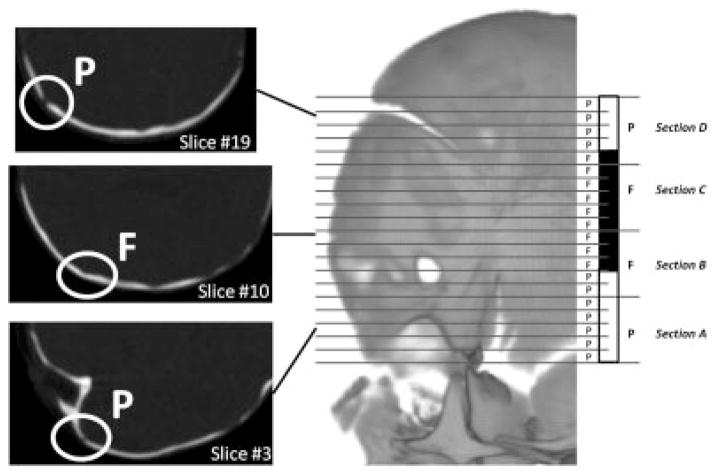
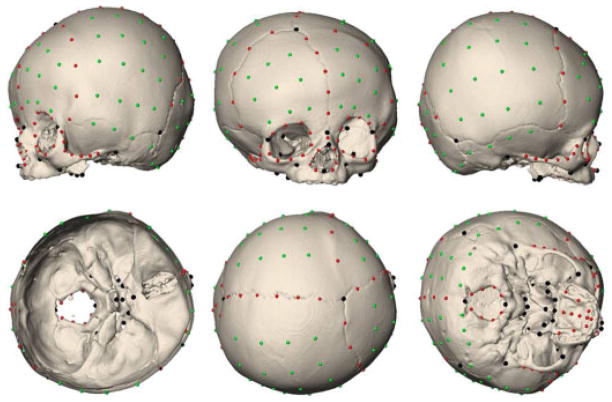
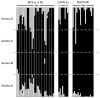
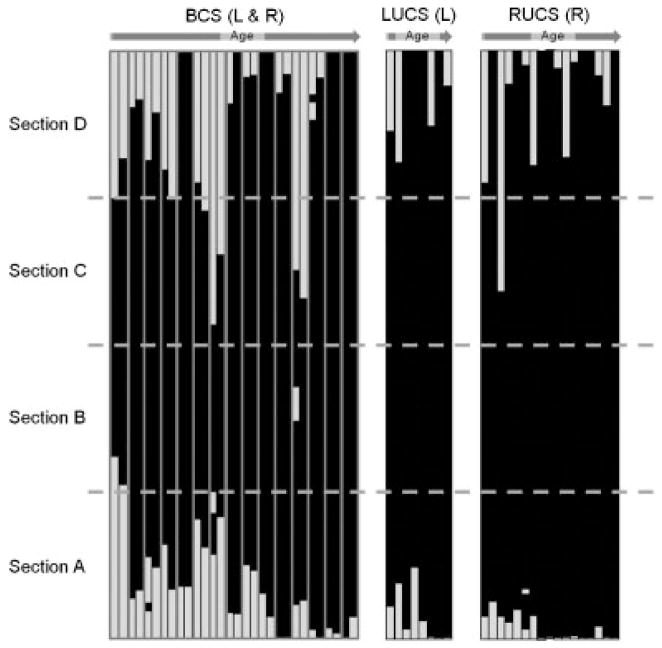
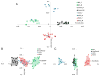
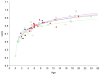
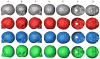
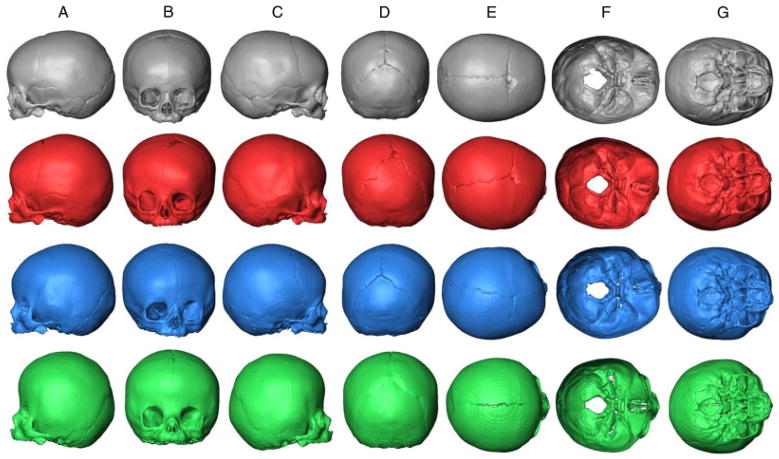
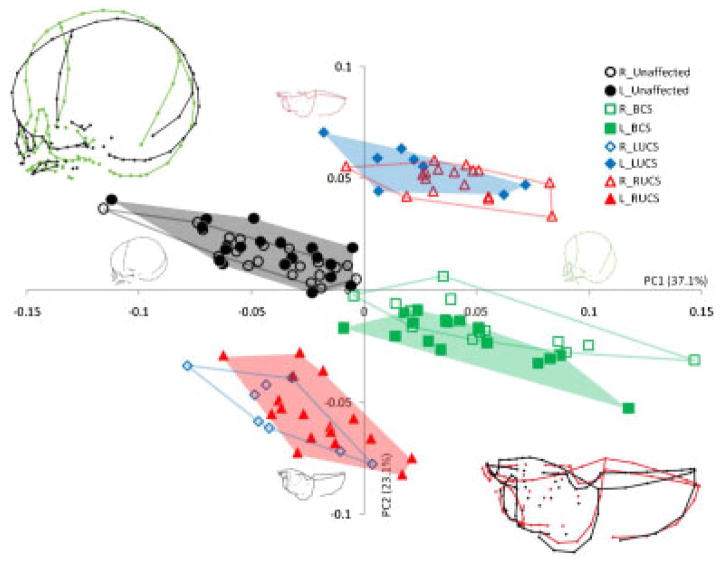
Description:Bilateral symmetry in vertebrates is imperfect and mild asymmetries are found in normal growth and development. However, abnormal development is often characterized by strong asymmetries. Coronal craniosynostosis, defined here as consisting of premature suture closure and a characteristic skull shape, is a complex trait. The premature fusion of the coronal suture can occur unilaterally associated with skull asymmetry (anterior plagiocephaly) or bilaterally associated with a symmetric but brachycephalic skull. We investigated the relationship between coronal craniosynostosis and skull bilateral symmetry. Three-dimensional landmark coordinates were recorded on preoperative computed tomography images of children diagnosed with coronal nonsyndromic craniosynostosis (N = 40) and that of unaffected individuals (N = 20) and analyzed by geometric morphometrics. Our results showed that the fusion pattern of the coronal suture is similar across individuals and types of coronal craniosynostosis. Shape analysis showed that skulls of bilateral coronal craniosynostosis (BCS) and unaffected individuals display low degrees of asymmetry, whereas right and left unilateral coronal craniosynostosis (UCS) skulls are asymmetric and mirror images of one another. When premature fusion of the coronal suture (without taking into account cranial dysmorphology) is scored as a qualitative trait, the expected relationship between trait frequency and trait unilateral expression (i.e. negative correlation) is confirmed. Overall, we interpret our results as evidence that the same biological processes operate on the two sides in BCS skulls and on the affected side in UCS skulls, and that coronal craniosynostosis is a quantitative trait exhibiting a phenotypic continuum with BCS displaying more intense shape changes than UCS.
-
Subjects:
-
Source:J Exp Zool B Mol Dev Evol. 2011; 318(2):109-122
-
Pubmed ID:22532473
-
Pubmed Central ID:PMC3315613
-
Document Type:
-
Funding:R01 DE016886/DE/NIDCR NIH HHS/United States ; R01 DE018500-02S1/DE/NIDCR NIH HHS/United States ; 3R01 DE18500-02S1/DE/NIDCR NIH HHS/United States ; R01 DE018500-03/DE/NIDCR NIH HHS/United States ; R01 DE016886-03/DE/NIDCR NIH HHS/United States ; R01 DE018500/DE/NIDCR NIH HHS/United States ; 5R01 DD000350/DD/NCBDD CDC HHS/United States ; R01 DD000350/DD/NCBDD CDC HHS/United States
-
Volume:318
-
Issue:2
-
Download URL:
-
File Type:
 [PDF - 2.63 MB]
 -
Collection(s):
-
Main Document Checksum:urn:sha256:8931322757614b5a6575de3e196b09768f77f4e64fdfb1bb63f0c0ab2af97305
Supporting Files


File Language:
English
 Was this page helpful?
 Found an issue?







CDC STACKS serves as an archival repository of CDC-published products including
scientific findings, journal articles, guidelines, recommendations, or other public health information authored or
co-authored by CDC or funded partners.
As a repository, CDC STACKS retains documents in their original published format to ensure public access to scientific information.
As a repository, CDC STACKS retains documents in their original published format to ensure public access to scientific information.
You May Also Like
COLLECTION
CDC Public Access