


Distinguishing the common components of oil- and water-based metalworking fluids for assessment of cancer incidence risk in autoworkers
Supporting Files

-
6 2011
-
File Language:
English
Details
-
Alternative Title:Am J Ind Med
-
Personal Author:
-
Description:Background
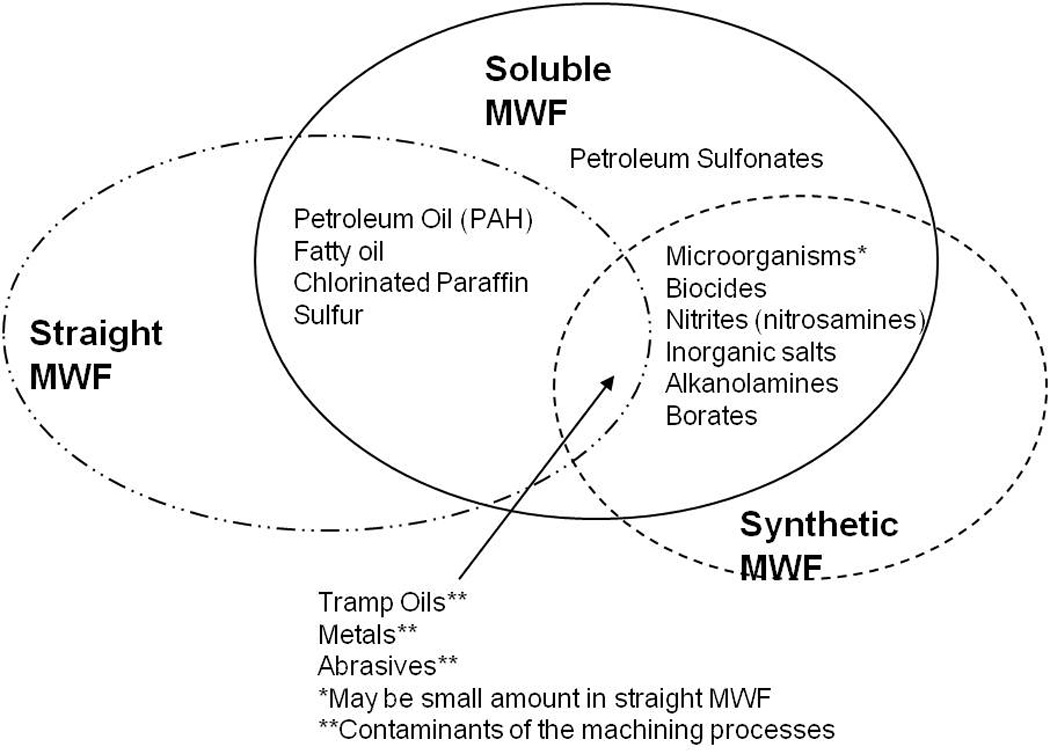
Metalworking fluids (MWF) — straight, soluble, and synthetic — have overlapping components. We derived constituent-based metrics of polycyclic aromatic hydrocarbons (PAHs), water-based MWF, biocides, and nitrosamines to account for this overlap and examined their relations with cancer incidence.
Methods
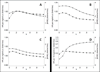
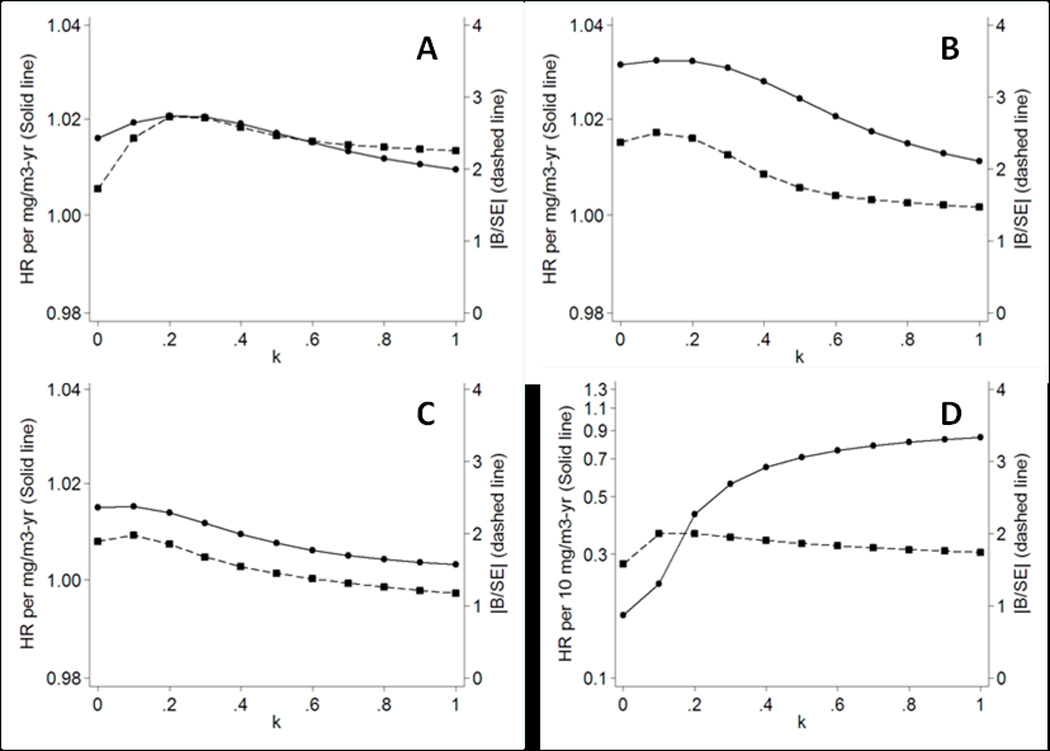
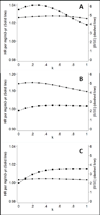
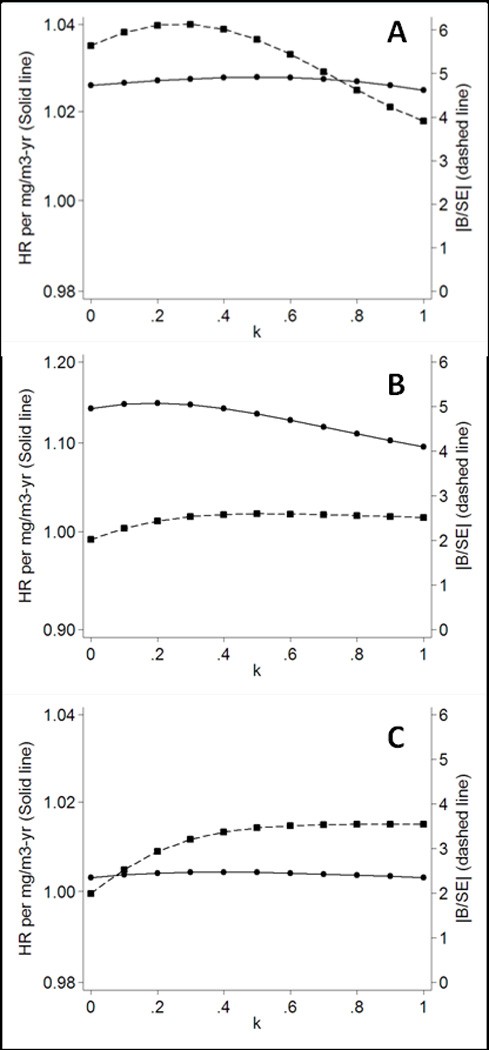
An autoworkers cohort of 30,000 was followed for cancer incidence. Hazard ratios were estimated for each cancer and cumulative exposure (lagged) to each new metric; soluble MWF contributed variably to several metrics with weight k=0–1.
Results
For most cancer sites, the constituent-based metrics resulted in stronger exposure-disease associations than the MWF classes alone. Laryngeal and bladder cancer were most strongly associated with PAH (k=0). Protective effects for stomach and lung cancer were observed with biocide, a component that may be a surrogate for endotoxin.
Conclusions
Our findings provide support and clarification of possible etiologies for previous positive associations and provide support for distinguishing exposure from oil- and water-based MWF in epidemiologic studies.
-
Subjects:
-
Keywords:
-
Source:Am J Ind Med. 54(6):450-460
-
Pubmed ID:21328414
-
Pubmed Central ID:PMC3301446
-
Document Type:
-
Funding:
-
Volume:54
-
Issue:6
-
Collection(s):
-
Main Document Checksum:urn:sha256:f3fe620831cd5866f08056ec4f2b84f2c4e66fc6c4ca6d6933e1b463306130d3
-
Download URL:
-
File Type:
 [PDF
- 824.34 KB
]
[PDF
- 824.34 KB
]
Supporting Files


File Language:
English
ON THIS PAGE

CDC STACKS serves as an archival repository of CDC-published products including
scientific findings,
journal articles, guidelines, recommendations, or other public health information authored or
co-authored by CDC or funded partners.
As a repository, CDC STACKS retains documents in their original published format to ensure public access to scientific information.
As a repository, CDC STACKS retains documents in their original published format to ensure public access to scientific information.
You May Also Like
COLLECTION
CDC Public Access