


Race Disparities in Wilms Tumor Incidence and Biology
Supporting Files

-
March 31 2011
-
File Language:
English
Details
-
Alternative Title:J Surg Res
-
Personal Author:
-
Description:Background
Wilms tumor (WT) is thought to arise in children of black African ancestry with greater frequency than whites. To clarify the biological basis for race disparities in WT, we first verified that black children residing in Tennessee have an increased incidence of WT, and second, established molecular profiles in WT that are specific to race.
Materials and Methods
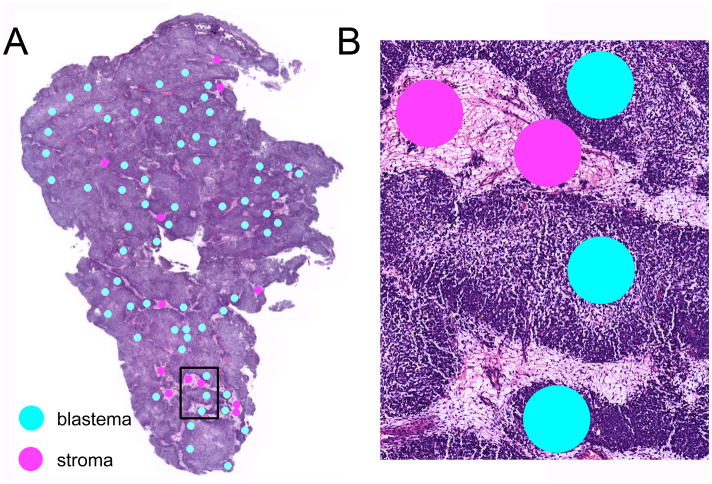
To assess race disparities in WT epidemiology, the Tennessee Cancer Registry (TCR) was queried for all in-state patients less than 20 years of age and registered between 1999–2008. To explore race disparities in WT biology, six black and four white WT specimens acquired in Tennessee were analyzed using imaging mass spectrometry (IMS).
Results
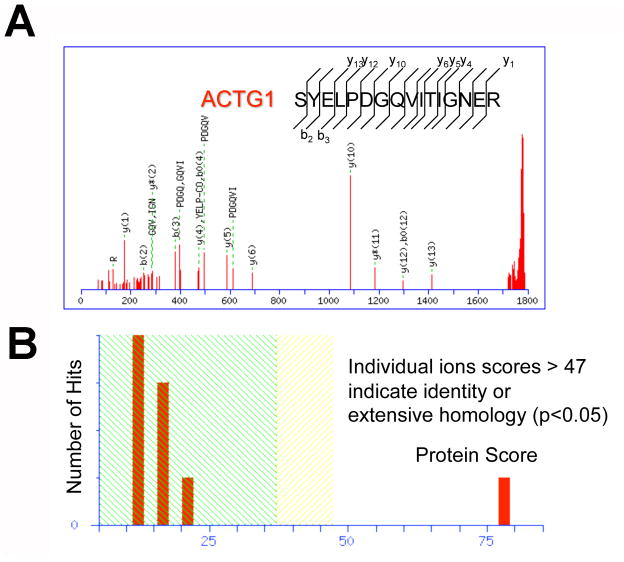
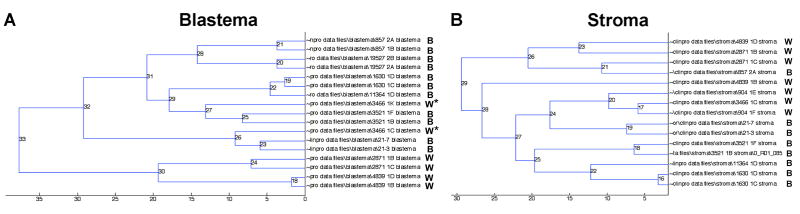
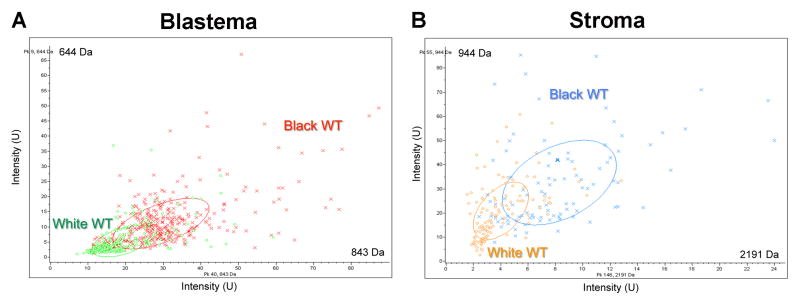
TCR data show that black children are overrepresented among WT patients (29%) relative to all other childhood cancers (18.5%; p=0.01). WT ranked the 5th most common cancer diagnosis among blacks, but 9th among whites. The diagnosis of WT occurred 79% more frequently among blacks (n=28) than whites (n=69; p=0.01), and proportionally more blacks tended to present with distant disease. Although overall survival from WT was not statistically different between blacks (92.9%) and whites (94.0%), black males showed the lowest survival (85%; p=0.21). IMS analysis identified peptide spectra from both WT blastema and stroma that independently classify specimens according to race with greater than 80% accuracy.
Conclusions
In Tennessee, black children appear more susceptible than whites to develop WT. Race-specific molecular profiles can be determined that may help to clarify pathways of Wilms tumorigenesis and the biological basis for race disparities in WT incidence and biology.
-
Subjects:
-
Source:J Surg Res. 2011; 170(1):112-119
-
Pubmed ID:21529835
-
Pubmed Central ID:PMC3150230
-
Document Type:
-
Funding:R00 CA135695/CA/NCI NIH HHS/United States ; T32 CA106183/CA/NCI NIH HHS/United States ; T32 CA106183-06A1/CA/NCI NIH HHS/United States ; R00 CA135695-03/CA/NCI NIH HHS/United States ; U58 DP000822/DP/NCCDPHP CDC HHS/United States ; P30-CA68485/CA/NCI NIH HHS/United States ; 4R00CA135695-03/CA/NCI NIH HHS/United States ; P30 CA068485/CA/NCI NIH HHS/United States ; DP07-703 DP00822-04/DP/NCCDPHP CDC HHS/United States ; UL1 RR024975/RR/NCRR NIH HHS/United States ; 5T32CA106183-06A1/CA/NCI NIH HHS/United States
-
Name as Subject:
-
Volume:170
-
Issue:1
-
Collection(s):
-
Main Document Checksum:urn:sha256:465872e1e55e338182f22cbe281f0c3615bff3fe53358319f7ebd674b96f8e7f
-
Download URL:
-
File Type:
 [PDF
- 958.97 KB
]
[PDF
- 958.97 KB
]
Supporting Files


File Language:
English
ON THIS PAGE

CDC STACKS serves as an archival repository of CDC-published products including
scientific findings,
journal articles, guidelines, recommendations, or other public health information authored or
co-authored by CDC or funded partners.
As a repository, CDC STACKS retains documents in their original published format to ensure public access to scientific information.
As a repository, CDC STACKS retains documents in their original published format to ensure public access to scientific information.
You May Also Like
COLLECTION
CDC Public Access