


Prime Time: 12-Month Sexual Health Outcomes of a Clinic-Based Intervention to Prevent Pregnancy Risk Behaviors
Supporting Files

-
8 2011
-
File Language:
English
Details
-
Alternative Title:J Adolesc Health
-
Personal Author:
-
Description:Purpose
Prime Time, a youth development intervention, aims to reduce pregnancy risk among adolescent girls seeking clinic services who are at high risk for pregnancy. This paper examines sexual risk behaviors and hypothesized psychosocial mediators after 12 months of the Prime Time intervention.
Methods
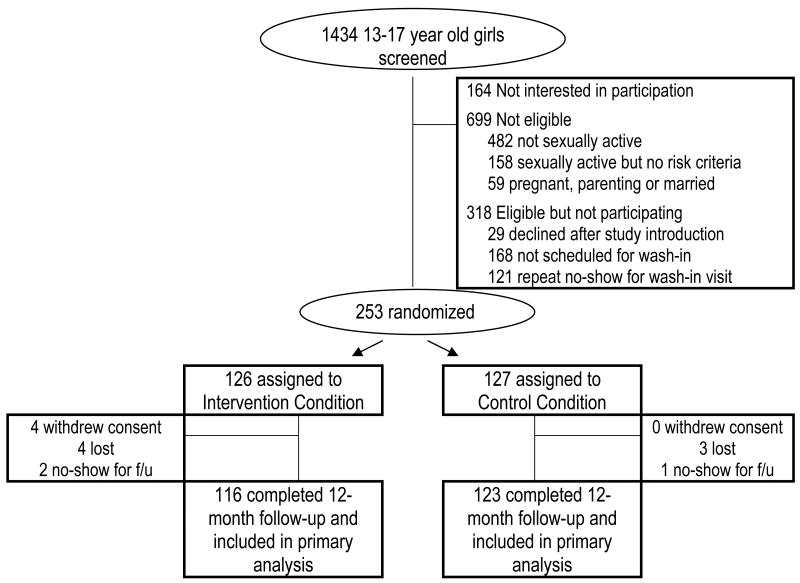
Randomized controlled trial with 253 girls ages 13-17 years meeting specified risk criteria. Intervention participants were involved in Prime Time programming plus usual clinic services for 18 months, control participants received usual clinic services. The intervention employed a combination of case management and peer leadership programs. Participants in this interim outcomes study completed self-report surveys at baseline and 12 months following enrollment. Surveys assessed sexual risk behaviors and psychosocial factors targeted for change by Prime Time.
Results
At the 12-month interim, the intervention group reported more consistent use of condoms, hormonal contraception and dual contraceptive methods with their most recent partner than did the control group. The intervention group also reported greater stress management skills with trends towards higher levels of pro-social connectedness at school and with family. No between-group differences were noted in psychosocial measures specific to sex and contraceptive use.
Conclusions
Preventing early pregnancy among high-risk adolescents requires multifaceted, sustained approaches. An important research focus involves testing youth development interventions offered through clinic settings, where access to high-risk adolescents is plentiful and few efforts have emphasized a dual approach of building protective factors while addressing risk. Findings suggest that youth development interventions through clinic settings hold promise in reducing pregnancy risk among high-risk youth.
-
Subjects:
-
Source:J Adolesc Health. 49(2):172-179
-
Pubmed ID:21783050
-
Pubmed Central ID:PMC3143373
-
Document Type:
-
Funding:R01 NR008778-03/NR/NINR NIH HHSUnited States/ ; U48 DP001939/DP/NCCDPHP CDC HHSUnited States/ ; R01 NR008778-02/NR/NINR NIH HHSUnited States/ ; 5R01-NR008778/NR/NINR NIH HHSUnited States/ ; R01 NR008778-04/NR/NINR NIH HHSUnited States/ ; R01 NR008778/NR/NINR NIH HHSUnited States/ ; T01-DP000112/DP/NCCDPHP CDC HHSUnited States/ ; U48-DP001939/DP/NCCDPHP CDC HHSUnited States/ ; T01 DP000112/DP/NCCDPHP CDC HHSUnited States/ ; R01 NR008778-05/NR/NINR NIH HHSUnited States/ ; R01 NR008778-01A2/NR/NINR NIH HHSUnited States/
-
Volume:49
-
Issue:2
-
Collection(s):
-
Main Document Checksum:urn:sha256:c42e4bae78f816b7dc05338df68a7ceb1b51bb1b9b1ae9b1d623a13e763ea25f
-
Download URL:
-
File Type:
 [PDF
- 335.83 KB
]
[PDF
- 335.83 KB
]
Supporting Files


File Language:
English
ON THIS PAGE

CDC STACKS serves as an archival repository of CDC-published products including
scientific findings,
journal articles, guidelines, recommendations, or other public health information authored or
co-authored by CDC or funded partners.
As a repository, CDC STACKS retains documents in their original published format to ensure public access to scientific information.
As a repository, CDC STACKS retains documents in their original published format to ensure public access to scientific information.
You May Also Like
COLLECTION
CDC Public Access